
S9 Ep32: The digital money supply

S9 Ep32: The digital money supply

Every day, billions of transactions settle between strangers who have no idea which bank the other uses. That lack of friction is not automatic. Nine-tenths of the money in daily circulation has been created by commercial banks, but it stays trustworthy only because central banks stand behind it, and keep the system in balance.

In this week’s episode Tim Phillips talks to Stephen Cecchetti (Brandeis University, CEPR) about what happens when new forms of digital money test that architecture. Cecchetti is one of the authors of the eighth Barcelona Report in The Future of Banking series, part of the Banking Initiative at IESE Business School, just published by CEPR as a free download.

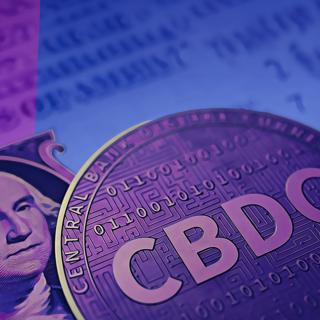
Will retail central bank digital currencies, tokenised deposits, and stablecoins upset the delicate balance of system that has been running for decades? Stablecoins, for example, do not create money, but they claim the status of money without the institutional guarantee that makes money trustworthy. Three jurisdictions — the US, the EU, and the UK — are each resolving the same underlying contradiction in different ways. None has fully resolved it.

The research behind this episode:

Niepelt, Dirk, Stephen G. Cecchetti, Hélène Rey, and Xavier Vives. 2026. Digital Money: The Future of Banking 8. London: CEPR Press. Available as a free download from CEPR.

To cite this episode:

Phillips, Tim, and Stephen G. Cecchetti. 2026. “The digital money supply.” VoxTalks Economics (podcast).

Assign this as extra listening. The citation above is formatted and ready for a reading list or VLE.

About the guest

Stephen Cecchetti is the Rosen Family Chair in International Finance at Brandeis University, a Research Fellow of the Centre for Economic Policy Research (CEPR), and a Research Associate at the NBER. He was previously Economic Adviser and Head of the Monetary and Economic Department at the Bank for International Settlements, and Director of Research at the Federal Reserve Bank of New York. His research spanning monetary policy, financial stability, and banking regulation has shaped both academic and policy debate over three decades. He blogs at moneyandbanking.com.

Research cited in this episode

Walter Bagehot's lender of last resort doctrine. In Lombard Street: A Description of the Money Market (1873), Bagehot argued that a central bank under stress should lend freely against good collateral at a penalty rate. The prescription remains the intellectual foundation for how central banks manage runs and systemic crises. Cecchetti invokes it to make the point that no private substitute for a central bank backstop has ever proved durable, and that the doctrine is now, one hundred and fifty years on, being tested by instruments its author could not have imagined.

Monetary uniformity, mobility, and elasticity. The three institutional conditions underpinning general acceptance of money, developed in analysis by the Bank for International Settlements and discussed extensively in the report. Uniformity means a pound is a pound regardless of which bank holds it. Mobility means claims move between users and institutions at low cost and settle with finality. Elasticity means the supply of money can expand when it is under stress. Together they explain why we accept a deposit at face value without doing any analysis of the bank that issued it; and together they identify exactly where new forms of digital money create institutional gaps.

Silicon Valley Bank failure, March 2023. SVB's collapse illustrates both the lender of last resort functioning and the limits of no-bailout commitments. Cecchetti notes that SVB's liabilities were still trading at par on the Thursday before its Friday failure because the Federal Reserve stood behind them. He also notes that Circle, the issuer of USDC, held $3.3 billion of its reserves at SVB and was effectively bailed out in the resolution. The episode is one of two occasions in the past twenty years where money market fund-like instruments have been backstopped by the Federal Reserve under stress.

Genius Act (United States). Principle-based stablecoin regulation expected to come into effect in the US around 2027. Under its provisions, only stablecoins issued by bank-affiliated issuers will have access to the Federal Reserve; only those will therefore have the institutional backing needed to function as money. Stablecoins issued by non-bank entities will not.

Markets in Crypto Assets Regulation (MiCA), European Union. The EU framework for crypto assets, which entered into force in 2024. For stablecoins, MiCA requires issuers to hold 30 to 60% of their reserves in bank deposits, with no provision for central bank backing. The stated rationale is to keep deposits within the banking system; Cecchetti notes this creates a different category of vulnerability and leaves the question of what happens under stress unresolved.

Bank of England stablecoin proposal (United Kingdom). The Bank of England's approach differs from both US and EU frameworks by explicitly requiring large stablecoin issuers to hold significant reserve deposits at the Bank of England, making them in effect narrow banks with a direct central bank backstop. Cecchetti regards this as the most coherent of the three approaches in terms of institutional logic, though the same fundamental question applies: whether holding to that design under stress would be politically sustainable.

Tether and the jurisdictional challenge. Tether, the largest stablecoin issuer, is registered in El Salvador having previously operated out of the British Virgin Islands. Its tokens are held by users in multiple countries, traded on exchanges in multiple jurisdictions, and backed by US Treasury securities. Cecchetti uses this to illustrate why local regulation, however well-designed, is necessary but not sufficient; effective oversight of instruments that are genuinely global requires international standards and coordination.

Fractional reserve banking and the goldsmith model. The institutional structure described in the episode has roots in mid-seventeenth century England, when goldsmiths began issuing more paper receipts than they had gold in their vaults. The goldsmiths became bankers; the paper became money; the vulnerability to runs became a structural feature of private money creation that persists today. Cecchetti uses the history to make the point that while technology changes how we store and transmit information, the underlying architecture of trust in private money is as old as Newtonian physics.

More VoxTalks Economics episodes

Making banking safe, Stephen Cecchetti and Kermit Schoenholtz. Our financial system is supposed to be more resilient than before the global financial crisis, but that didn’t save Silicon Valley Bank, Signature Bank or First Republic. So what went wrong?

Related reading on VoxEU

New coins on the block: Digital currencies and the financial system. The authors of the Barcelona Report warn that “Digital money will be reliable only where sound institutions and robust technology come together.”

Det här avsnittet är hämtat från ett öppet RSS-flöde och publiceras inte av Podme. Det kan innehålla reklam.

Avsnitt(483)

S9 Ep56: Decoupling from China after Trump's Trade Wars

S9 Ep56: Decoupling from China after Trump's Trade Wars

In March 2025, Apple chartered cargo flights to deliver 600 tonnes of iPhones from India to the United States. A year earlier, four in five smartphones that imported to the US came from China. One of ...

25 Sep 29min

S9 Ep55: Loosening inheritance law

S9 Ep55: Loosening inheritance law

In most of the world you do not get to choose who inherits your money. Across continental Europe, Latin America, and countries governed by Islamic law, a minimum share of your estate will be reserved ...

18 Sep 25min

S9 Ep54: Does sacking the manager work?

S9 Ep54: Does sacking the manager work?

Your football team keeps losing. The season is slipping away. One thing can be changed by Friday, and the crowd is already singing about it: sack the manager.Jan van Ours (Erasmus School of Economics,...

11 Sep 18min

S9 Ep53: Lessons from Populism in Latin America

S9 Ep53: Lessons from Populism in Latin America

The new episode of VoxTalks Economics traces the effects of South Americans populism, left and right. Alejandro Werner (Georgetown Americas Institute) is one of the authors of a new paper that traces ...

4 Sep 33min

S9 Ep52: The Dollar Anchor Is Slipping

S9 Ep52: The Dollar Anchor Is Slipping

April 2025: Liberation Day. President Trump announces sweeping new tariffs. And then, the dollar did something a safe haven currency is not supposed to do: it fell.Tarek Hassan (Boston University, CEP...

2 Sep 26min

S9 Ep51: Fiscal Populism and Monetary Policy

S9 Ep51: Fiscal Populism and Monetary Policy

There is a saying in Spanish: get burned by hot milk, and the sight of a cow makes you cry. New research implies that, decades after a populist government leaves office, the central bank it once tried...

28 Aug 16min

S9 Ep50: Tariffs, Uncertainty, and the Exchange Rate

S9 Ep50: Tariffs, Uncertainty, and the Exchange Rate

Textbook economics says a tariff should strengthen a country's currency. Since the start of 2025, as US tariffs rose ... and the dollar fell.In the first of four episodes of Voxtalks based on papers p...

26 Aug 24min

S9 Ep49: Combatting sexual harassment in the military

S9 Ep49: Combatting sexual harassment in the military

Norwegian conscripts arrive at boot camp straight out of school. They are assigned at random to a shared room and they live in it for the next eight weeks. Whatever the culture of that room turns out ...

21 Aug 21min

Populärt inom Business & ekonomi

framgangspodden
varvet
rss-jossan-nina
badfluence
24fragor
rss-borsens-finest
avanzapodden
svd-tech-brief
uppgang-och-fall
rss-inga-dumma-fragor-om-pengar
rss-kort-lang-analyspodden-fran-di
tabberaset
lastbilspodden
fill-or-kill
rss-dagen-med-di
rikatillsammans-om-privatekonomi-rikedom-i-livet
rss-veckans-trade
rss-wallnor-pm
borsmorgon
bathina-en-podcast