PFC Podcast 282: Blast Lung - Expert Tactics for Blast Lung Injury in Prolonged Field Care

PFC Podcast 282: Blast Lung - Expert Tactics for Blast Lung Injury in Prolonged Field Care

In this high-signal PFC Podcast episode, Dennis sits down with Dr. John Wightman — former 24th Special Operations Wing Surgeon, emergency physician, and one of the world’s leading experts on blast injuries. Drawing from decades of clinical, combat, and academic experience (including co-authoring a seminal paper on blast injuries just before 9/11 and multiple combat deployments), Dr. Wightman breaks down the unique pathophysiology, recognition, and prolonged field care management of blast lung injury — the often-hidden threat that can kill even when penetrating trauma doesn’t.

From the physics of the supersonic pressure wave to practical field decisions on tension pneumothorax, ventilation strategies, fluid management, and avoiding air embolism, this is essential listening for medics, operators, and anyone preparing for large-scale combat operations, urban warfare, or confined-space blasts.


Key Takeaways:

  • Primary blast lung injury is caused by the blast wave itself — not fragments or being thrown — and creates unique pulmonary contusions, air leaks, and arterial air emboli risks.
  • Most significant blast lung develops within the first 1–6 hours; subtle dyspnea on exertion can be an early warning.
  • MARCH priorities still rule — aggressively rule out (or treat) tension pneumothorax, even bilaterally, before assuming blast lung.
  • Positive pressure ventilation can worsen outcomes (especially air embolism risk) — use judiciously; CPAP or PEEP may be better bridges when possible.
  • PAO₂/FiO₂ ratio (or SpO₂ on room air) helps stratify severity and predict need for advanced support.
  • Tympanic membrane rupture proves blast exposure but is not required for blast lung.
  • Fluid management must be careful — permissive hypotension may be dangerous in blast lung + shock.
  • Don’t forget occult blast bowel injury — delayed perforation is real (up to 8 days).

Whether you're running a team in Ukraine-style trench warfare, preparing for mass casualty events, or just want to stay on the bleeding edge of combat medicine, this episode delivers critical, actionable knowledge.


Chapters:

  • 00:43 - John Wightman Introduction: 32 Years as Air Force EM Physician & Blast Injury Expert
  • 02:54 - What Is Blast Lung? Defining Primary vs Secondary, Tertiary, Quaternary & Collateral Injuries
  • 05:23 - The Physics of the Blast Wave: Overpressure, Stress Waves & Alveolar Damage
  • 09:50 - Pathophysiology: Pulmonary Contusion, Pneumothorax, Air Embolism & Traumatic Pseudocysts
  • 12:30 - Timelines: When Does Blast Lung Declare Itself? (Israeli & Combat Data)
  • 15:56 - Epidemiology: Confined Spaces, Buses, Buildings vs Open-Air Blasts
  • 23:12 - Field Diagnosis & MARCH Priorities — Tension Pneumothorax First
  • 28:30 - Advanced Assessment: P/F Ratio, Ultrasound Findings, SpO₂ Guidance
  • 35:55 - Ventilation Strategies: When to Intubate, CPAP/PEEP, Lung Protective Settings
  • 41:18 - Oxygenation Goals, Fluid Management & Permissive Hypotension Risks
  • 52:16 - Air Embolism Management & Patient Positioning
  • 56:12 - Other Critical Considerations: Blast Bowel Injury, TM Rupture, Resource Triage
  • 01:04:36 - Final Thoughts & Key Advice for Deploying Medics

For more content, go to ⁠⁠⁠⁠⁠⁠⁠⁠⁠⁠⁠⁠⁠⁠⁠⁠⁠⁠⁠⁠⁠⁠⁠⁠⁠⁠⁠⁠⁠⁠⁠⁠⁠⁠⁠⁠⁠⁠⁠⁠⁠⁠⁠⁠⁠⁠⁠⁠⁠⁠⁠⁠⁠⁠⁠⁠⁠⁠⁠⁠⁠⁠⁠⁠⁠⁠⁠⁠www.prolongedfieldcare.org⁠⁠⁠⁠⁠⁠⁠⁠⁠⁠⁠⁠⁠⁠⁠⁠⁠⁠⁠⁠⁠⁠⁠⁠⁠⁠⁠⁠⁠⁠⁠⁠⁠⁠⁠⁠⁠⁠⁠⁠⁠⁠⁠⁠⁠⁠⁠⁠⁠⁠⁠⁠⁠⁠⁠⁠⁠⁠⁠⁠⁠⁠⁠⁠⁠⁠⁠⁠⁠


Consider supporting us: ⁠⁠⁠⁠⁠⁠⁠⁠⁠⁠⁠⁠⁠⁠⁠⁠⁠⁠⁠⁠⁠⁠⁠⁠⁠⁠⁠⁠⁠⁠⁠⁠⁠⁠⁠⁠⁠⁠⁠⁠⁠⁠⁠⁠⁠⁠⁠⁠⁠⁠⁠⁠⁠⁠⁠⁠⁠⁠⁠⁠⁠⁠⁠⁠⁠⁠⁠⁠⁠patreon.com/ProlongedFieldCareCollective⁠⁠⁠⁠⁠⁠⁠⁠⁠⁠⁠⁠⁠⁠⁠⁠⁠⁠⁠⁠⁠⁠⁠⁠⁠⁠⁠⁠⁠⁠⁠⁠⁠⁠⁠⁠⁠⁠⁠⁠⁠⁠⁠⁠⁠⁠⁠⁠⁠⁠⁠⁠⁠⁠⁠⁠⁠ or ⁠⁠⁠⁠⁠⁠⁠⁠⁠⁠⁠⁠⁠⁠⁠⁠⁠⁠⁠⁠⁠⁠⁠⁠⁠⁠⁠⁠⁠⁠⁠⁠⁠⁠⁠⁠⁠⁠⁠⁠⁠⁠⁠⁠⁠⁠⁠⁠⁠⁠⁠⁠⁠⁠⁠⁠⁠www.lobocoffeeco.com/product-page/prolonged-field-care⁠

Det här avsnittet är hämtat från ett öppet RSS-flöde och publiceras inte av Podme. Det kan innehålla reklam.

Avsnitt(624)

294 - Do Antibiotics Really Reduce Mortality in Trauma? Wound Care First in Prolonged Field Care

294 - Do Antibiotics Really Reduce Mortality in Trauma? Wound Care First in Prolonged Field Care

Antibiotics are not magic. In this episode of the PFC Podcast, Dennis sits down with Ryan to cut through the common myth that “I’ve given antibiotics, so the wound is protected.” They unpack why vigor...

31 Aug 36min
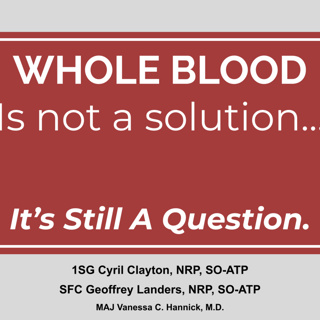
SOMA 26' - Fresh Whole Blood is Not The Answer: It's Still a Question

SOMA 26' - Fresh Whole Blood is Not The Answer: It's Still a Question

Whole Blood Is Not a Solution (Until Conventional Forces Can Deliver It)Recorded live at SOMA 26Dr. Vanessa Hanick (emergency physician, former active-duty Army, now National Guard) and 1SG Cy Clayton...

27 Aug 28min
293 - Dead Tissue Kills in Prolonged Field Care: 4 C’s, Early Debridement & Delayed Primary Closure Lessons from the Field

293 - Dead Tissue Kills in Prolonged Field Care: 4 C’s, Early Debridement & Delayed Primary Closure Lessons from the Field

In this episode of the PFC Podcast, Dennis sits down with missionary surgeon Jason to cut through the noise on real-world wound care in austere and unconventional warfare environments. From the bridge...

24 Aug 49min
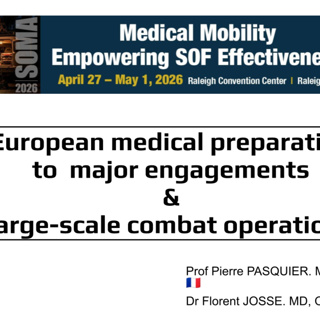
SOMA 26' - European Medical Preparations for Major Engagements and Large-Scale Combat Operations

SOMA 26' - European Medical Preparations for Major Engagements and Large-Scale Combat Operations

Recorded live at SOMA 26Pierre Pasquier (France) and his German counterpart deliver a clear-eyed assessment of how European military medical systems are preparing for large-scale combat operations and...

20 Aug 31min
292-Building Mobile Surgical Capability in Denied Environments

292-Building Mobile Surgical Capability in Denied Environments

In this episode of the Prolonged Field Care Podcast, Dennis sits down with Mitch (U.S. family practice/ER physician) and Augustine (frontline surgeon with five years of experience) to unpack what it a...

17 Aug 41min
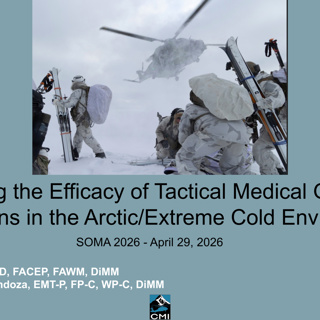
SOMA 26 - Optimizing the Efficacy of Commonly Used Tactical Medical Gear and Medications In The Arctic Extreme Cold Operational Environment

SOMA 26 - Optimizing the Efficacy of Commonly Used Tactical Medical Gear and Medications In The Arctic Extreme Cold Operational Environment

Recorded live at SOMA 26Dr. Emily Johnston (Cascadia Mountain Institute) and SFC Ezequiel Mendoza (Arctic Dustoff, Fairbanks) deliver a hard-hitting, field-validated look at how standard tactical medi...

13 Aug 29min
291 - Pediatric Burns In Prolonged Field Care Assessment, Resuscitation & Airway Management

291 - Pediatric Burns In Prolonged Field Care Assessment, Resuscitation & Airway Management

In this essential episode of the Prolonged Field Care Podcast, Dennis sits down with pediatric intensivist Dr. Sara Bibbens to tackle one of the most challenging and anxiety-inducing scenarios in aust...

10 Aug 30min
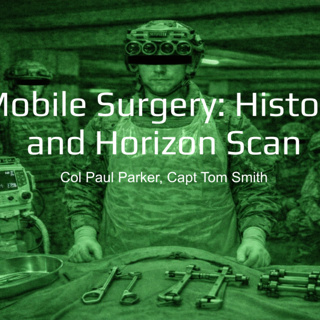
SOMA 26 - A History of Mobile Surgical Teams Role 1-3 and Horizon Scan

SOMA 26 - A History of Mobile Surgical Teams Role 1-3 and Horizon Scan

In this presentation, we take a deep dive into the 300-year history of mobile surgery supporting land campaigns — from Dominique Larrey’s ambulance volantes through the Letterman system, Arnhem, the F...

6 Aug 28min

Populärt inom Utbildning

historiepodden-se
det-skaver
rss-bara-en-till-om-beroende-medberoende
nu-blir-det-historia
harrisons-dramatiska-historia
roda-vita-rosen
not-fanny-anymore
rss-viktmedicinpodden
johannes-hansen-podcast
i-vantan-pa-katastrofen
allt-du-velat-veta
sa-in-i-sjalen
rss-max-tant-med-max-villman
rikatillsammans-om-privatekonomi-rikedom-i-livet
rss-foraldramotet-bring-lagercrantz
rss-basta-livet
rss-ar-det-rimligt
sektledare
rss-traningsklubben
rss-sjalsligt-avkladd