The radical plan to rethink work, wealth and planetary well-being

The radical plan to rethink work, wealth and planetary well-being

A group of more than 40 researchers spent 20 months devising a plan for the world to achieve ecological sustainability within planetary boundaries, all while seeing incomes rise for 98% of the global population and reducing working hours for everybody by half to two and a half days a week. The plan to achieve this by 2100 is laid out in the recent "Global Justice Report."

If it sounds utopian, Lucas Chancel, the co-director of the World Inequality Lab and editor of the report, is the first person to acknowledge this, but explains why it's not only possible — there's even historical precedent for many of the measures the report outlines.

Achieving this plan rests on three pillars: decarbonization and the energy transition; a shift towards "sufficiency," defined here as the reduction of labor and production of superfluous products not needed for human survival; and a "drastic reduction in inequality of income, wealth and power."

"Basically, our plan is thought in a way that it can work with [an] incomplete coalition of actors," he says. "That is, you can start to implement it even though you don't have a global wealth tax. But our argument is that progressively, more and more countries [are] doing exactly these things."

Please take a minute to let us know what you think of our podcast here.

Mike DiGirolamo is the host & producer for the Mongabay Newscast based in Sydney. Find him on LinkedIn and Bluesky.

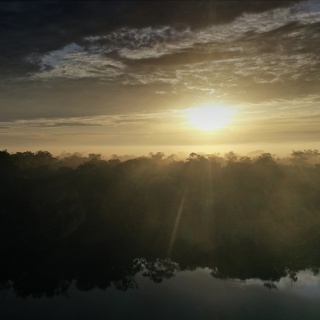
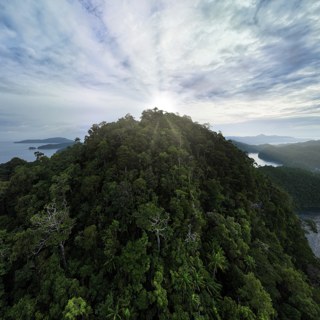
Cover image: Bay near Pulau Rayo, Raja Ampat, Indonesia. Image by Rhett A. Butler/Mongabay.

——

Timecodes

(00:00) A habitable, equitable world is possible

(14:19) How we accomplish it

(30:56) Rebutting the arguments against it

(40:15) 98% of the world would see their income rise

(44:55) Gender equality is at the heart of it

Det här avsnittet är hämtat från ett öppet RSS-flöde och publiceras inte av Podme. Det kan innehålla reklam.

Avsnitt(369)

Historic fire seasons are the 'new normal' without 'serious action' on climate change

Historic fire seasons are the 'new normal' without 'serious action' on climate change

Elizabeth Goldman is a co-director of Global Nature Watch, previously known as Global Forest Watch, a database measuring forest loss that's frequently cited in Mongabay reporting. She joins this week'...

11 Aug 28min

The 'quiet revolution' inspired by Delhi's urban wildlife

The 'quiet revolution' inspired by Delhi's urban wildlife

In her upcoming book, My Wild City: Finding Nature, Meaning, and Hope in India's Capital, conservation biologist Neha Sinha takes readers to the hidden and not-so-hidden ecosystems of India's largest...

4 Aug 54min

Why are forests in Liberia disappearing?

Why are forests in Liberia disappearing?

On this week's episode of the Mongabay Newscast, we speak with features writer Ashoka Mukpo, who traveled to southeastern Liberia to investigate what satellite images indicated was a spike in deforest...

28 Juli 38min

Oil has brought destruction to the Niger Delta; women and human rights may save it

Oil has brought destruction to the Niger Delta; women and human rights may save it

On this week's episode of the Mongabay Newscast, I speak with travel writer Noo Saro-Wiwa. She has documented the violence and natural destruction that the presence of oil companies have brought to th...

21 Juli 42min

The Mediterranean Sea's beauty hides an ecosystem under pressure

The Mediterranean Sea's beauty hides an ecosystem under pressure

The Mediterranean Sea accounts for less than 1% of the world's ocean surface water, but it contains roughly 18% of global marine biodiversity. It is home to 150 million people along its coastline (rou...

14 Juli 33min

Wildlife crossings are having a moment

Wildlife crossings are having a moment

Nearly three years ago, Newscast guest, author and journalist Ben Goldfarb discussed his book Crossings, which is about wildlife crossings and road ecology. Wildlife crossings help reconnect habitats...

7 Juli 37min

Addressing the 'toxic legacy' of mining in Bougainville

Addressing the 'toxic legacy' of mining in Bougainville

Theonila Roka Matbob grew up next to what was — at the time — the world's largest open-pit mine in Bougainville, an autonomous island in Papua New Guinea, operated by a subsidiary of Rio Tinto. This m...

16 Juni 33min

Populärt inom Vetenskap

p3-dystopia
dumma-manniskor
allt-du-velat-veta
hacka-livet
bildningspodden
rss-vetenskapsradion
medicinvetarna
rss-ufobortom-rimligt-tvivel
sexet
ufo-sverige
rss-vetenskapsradion-2
halsorevolutionen
paranormalt-med-caroline-giertz
svd-nyhetsartiklar
det-morka-psyket
vetenskapsradion
ufo-sverige-2
rss-spraket
dumforklarat
rss-kriminologerna