Fun Facts About the Bass

Fun Facts About the Bass

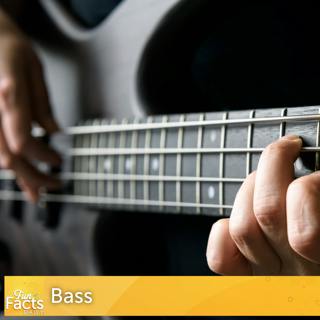
The evolution of bass instruments showcases a rich history of technological innovation and acoustic engineering. Traditionally crafted and maintained by skilled luthiers, stringed bass instruments have continually adapted across centuries to meet the demands of changing musical ensembles. While audiences frequently mistake the orchestral double bass as a member of the violin family, historical evidence reveals it descends from the viola da gamba family. It maintains traditional viol traits such as sloped shoulders, a flat back, and standard tuning in perfect fourths (E-A-D-G). To push the physical boundaries of depth, French luthier Jean-Baptiste Vuillaume constructed the monolithic octobass in 1850. Standing over eleven feet tall, this rare instrument requires complex lever and pedal mechanisms to manipulate the strings, producing profound frequencies as low as 16 Hz that border on subsonic vibrations. As ensemble music grew louder in the 20th century, the need for portable amplification became vital. Paul Tutmarc developed the first fretted, horizontal electric bass guitar in 1936 to help jazz musicians compete with loud horn sections, ultimately paving the way for Leo Fender’s revolutionary, mass-produced Precision Bass in 1951. Beyond their unique construction, bass instruments function on distinctive acoustic principles and performance styles that define modern rhythm sections. A low E note on a standard bass guitar vibrates at 41.2 Hz, producing massive sound waves nearly 27 feet long that easily penetrate physical barriers and require specialized bass traps in recording environments. Navigating these powerful frequencies demands proper ergonomic execution and an understanding of the fretboard layout, which mirrors the lower four strings of a standard guitar dropped by an entire octave. Musician Larry Graham popularized the highly percussive slap bass technique in the late 1960s to fill the structural void of a missing drummer. For musicians mastering the instrument, avoiding physical fatigue requires flattening the thumb against the center of the neck directly behind the middle finger to prevent tendon compression and wrist strain. Furthermore, enduring the initial discomfort of heavy string friction triggers hyperkeratosis, the body's natural thickening of the skin's outer layer to form protective calluses that safeguard nerve endings and brighten overall tonal articulation. ⁠Listen Ad-Free on Patreon. ⁠ For just $3 per month, you can get ad-free versions of Fun Facts Daily, Who ARTed and Art Smart. Head over to ⁠https://www.patreon.com/cw/FunFactsDailyPod⁠ if you are interested. Want to learn more? Head over to my website www.funfactsdailypod.com and be sure to listen to my other podcasts Who ARTed: Weekly Art History for All Ages or Art Smart. For family fun, check out my son's podcast Rainbow Puppy Science Lab The image used in the episode cover art came from Adobe's stock photos. Fun Facts Daily is an Airwave Media Podcast. If you are interested in advertising on this or any other Airwave Media show, email: advertising@airwavemedia.com Learn more about your ad choices. Visit megaphone.fm/adchoices

Det här avsnittet är hämtat från ett öppet RSS-flöde och publiceras inte av Podme. Det kan innehålla reklam.

Avsnitt(314)

Fun Facts About Beetles

Fun Facts About Beetles

Beetles represent one of the most biologically diverse groups on Earth, comprising approximately 25 percent of all documented animal species with over 400,000 distinct variations discovered across nea...

1 Juli 13min

Fun Facts About Peanut Butter

Fun Facts About Peanut Butter

Peanuts, which are scientifically classified as legumes rather than tree nuts, grow in underground pods and serve a variety of purposes, including human consumption, livestock forage, and soil enrichm...

30 Juni 14min

Fun Facts About the Washington Monument

Fun Facts About the Washington Monument

The Washington Monument, a towering obelisk standing at 555 feet and 5 and 1/8 inches, is an architectural marvel constructed from 3,491 blocks of white marble, granite, and blue stone gneiss. Remarka...

29 Juni 14min

Fun Facts About NeeDoh

Fun Facts About NeeDoh

NeeDoh is a popular line of visco-elastic stress balls and fidget toys produced by Schilling Incorporated, a toy company founded in 1975 by Jack Schilling. Unlike traditional stress balls that rely on...

26 Juni 16min

Fun Facts About Crows

Fun Facts About Crows

Crows, belonging to the biological family Corvidae, are highly intelligent birds with cognitive capabilities that rival those of great apes. While they lack a mammalian cerebral cortex, crows possess ...

25 Juni 16min

Fun Facts About Emperor Norton

Fun Facts About Emperor Norton

Joshua Abraham Norton, historically remembered as Emperor Norton, was an English-born resident of San Francisco who famously declared himself "Emperor of these United States" in 1859, adding the secon...

24 Juni 16min

Fun Facts About Pistachios

Fun Facts About Pistachios

Pistachios have a rich history and distinct botanical characteristics. Though commonly categorized as nuts, they are scientifically classified as the edible seeds of a stone fruit, or drupe, closely r...

23 Juni 14min

Populärt inom Utbildning

historiepodden-se
rss-bara-en-till-om-missbruk-medberoende-2
det-skaver
harrisons-dramatiska-historia
nu-blir-det-historia
roda-vita-rosen
sektledare
not-fanny-anymore
rss-viktmedicinpodden
johannes-hansen-podcast
allt-du-velat-veta
kan-jag-sa-kan-du-podden
rikatillsammans-om-privatekonomi-rikedom-i-livet
rss-foraldramotet-bring-lagercrantz
sa-in-i-sjalen
rss-max-tant-med-max-villman
rss-i-skenet-av-blaljus
rss-autismandan
rss-basta-livet
rss-traningsklubben