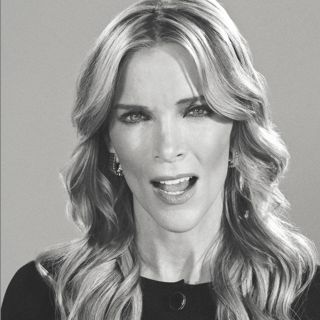
'The Interview': Megyn Kelly Is Embracing Her Bias and Rejecting the 'Old Rules'
The former Fox News and current YouTube host on her professional evolution, conservative media and why she endorsed Trump. Subscribe today at nytimes.com/podcasts or on Apple Podcasts and Spotify. You can also subscribe via your favorite podcast app here https://www.nytimes.com/activate-access/audio?source=podcatcher. For more podcasts and narrated articles, download The New York Times app at nytimes.com/app.
29 Mars 43min
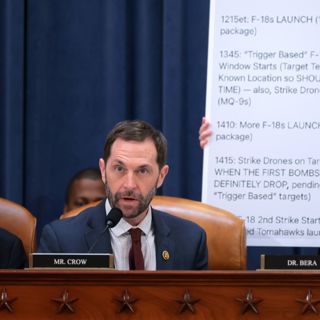
Trump 2.0: Group Chats and a New Spat
What does the continuing fallout from the Signal text security breach tell us about President Trump’s cabinet’s approach to blame and accountability?The Times journalists Michael Barbaro, Eric Schmitt, Julian E. Barnes and Maggie Haberman sit down to make sense of the latest week.Guest: Eric Schmitt, a national security correspondent for The New York Times based in Washington.Julian E. Barnes, a reporter covering the U.S. intelligence agencies and international security matters for The New York Times.Maggie Haberman, a White House correspondent for The New York Times.Background reading: Analysis: President Trump takes government secrecy seriously. But only when it suits him.Intelligence officials faced a fresh round of questions about the Signal leak.A disregard for the rules trickles down from Mr. Trump to his aides.For more information on today’s episode, visit nytimes.com/thedaily. Transcripts of each episode will be made available by the next workday. Photo: Kayla Bartkowski/Getty Images Subscribe today at nytimes.com/podcasts or on Apple Podcasts and Spotify. You can also subscribe via your favorite podcast app here https://www.nytimes.com/activate-access/audio?source=podcatcher. For more podcasts and narrated articles, download The New York Times app at nytimes.com/app.
28 Mars 31min

J.F.K., the C.I.A. and the Original ‘Deep State’
For the past three decades, the U.S. government has released documents related to the assassination of John F. Kennedy with an overriding goal of dispelling conspiracy theories.Julian E. Barnes, who covers the U.S. intelligence agencies, explains why President Trump’s motivations behind releasing the latest batch are far more complicated.Guest: Julian E. Barnes, a reporter covering the U.S. intelligence agencies and international security matters for The New York Times.Background reading: Inside the 24-hour scramble among top national security officials over the Kennedy documents.The thousands of documents posted online this week disappointed assassination buffs. But historians are finding many newly revealed secrets.For more information on today’s episode, visit nytimes.com/thedaily. Transcripts of each episode will be made available by the next workday. Photo: Reuters Subscribe today at nytimes.com/podcasts or on Apple Podcasts and Spotify. You can also subscribe via your favorite podcast app here https://www.nytimes.com/activate-access/audio?source=podcatcher. For more podcasts and narrated articles, download The New York Times app at nytimes.com/app.
27 Mars 28min

The Editor Who Was Accidentally Texted War Plans
This week, top Trump officials inadvertently shared secret U.S. military plans with a prominent journalist after mistakenly adding him to a group chat.The journalist, Jeffrey Goldberg, who is editor in chief at The Atlantic, discusses what he was thinking as he read the messages and what he makes of the fallout.Guest: Jeffrey Goldberg, editor in chief at The Atlantic.Background reading: Read Mr. Goldberg’s piece in The Atlantic about being added to the group chat.Read more about Mr. Goldberg, the editor mistakenly added to the Signal chat.Here’s the leaked chat, annotated.President Trump has downplayed the leak and pointed the finger at Mr. Goldberg.For more information on today’s episode, visit nytimes.com/thedaily. Transcripts of each episode will be made available by the next workday. Photo: Doug Mills/The New York Times Subscribe today at nytimes.com/podcasts or on Apple Podcasts and Spotify. You can also subscribe via your favorite podcast app here https://www.nytimes.com/activate-access/audio?source=podcatcher. For more podcasts and narrated articles, download The New York Times app at nytimes.com/app.
26 Mars 38min

Nixon Dreamed of Breaking the Media. Trump Is Doing It.
As President Trump set out to systematically eliminate or intimidate those who stood in his way — inspectors general, judges, law firms — the news media loomed as one of his most stubborn obstacles. Or so it seemed.Jim Rutenberg, a writer at large for The New York Times, explains how Mr. Trump is circumventing and undermining the fourth estate in a way no president before him ever has.Guest: Jim Rutenberg, a writer at large for The New York Times and The New York Times Magazine.Background reading: President Trump’s blueprint for bending the media to his will has Nixon written all over it.For more information on today’s episode, visit nytimes.com/thedaily. Transcripts of each episode will be made available by the next workday. Photo: Tierney L. Cross for The New York Times Subscribe today at nytimes.com/podcasts or on Apple Podcasts and Spotify. You can also subscribe via your favorite podcast app here https://www.nytimes.com/activate-access/audio?source=podcatcher. For more podcasts and narrated articles, download The New York Times app at nytimes.com/app.
25 Mars 45min

Trump’s Escalating War With Higher Education
In recent weeks, the Trump administration has put the American university system on notice.It has pressed for changes, opened investigations — and in some cases withheld critical funds.Alan Blinder, who covers education in America, explains how schools are responding to the pressure and what it might mean for the future of higher education.Guest: Alan Blinder, a national correspondent for The New York Times, writing about education in America.Background reading: Columbia University promised changes to its protest policies, its security practices and its Middle Eastern studies department after the Trump administration moved to cut off $400 million in funding.President Trump’s battles with colleges could change American culture for a generation.For more information on today’s episode, visit nytimes.com/thedaily. Transcripts of each episode will be made available by the next workday. Photo: Hiroko Masuike/The New York Times Subscribe today at nytimes.com/podcasts or on Apple Podcasts and Spotify. You can also subscribe via your favorite podcast app here https://www.nytimes.com/activate-access/audio?source=podcatcher. For more podcasts and narrated articles, download The New York Times app at nytimes.com/app.
24 Mars 27min

The Sunday Read: ‘What I Found on the 365-Mile Trail of a Lost Folk Hero’
Sometime in the 1850s or ’60s, at a terrible moment in U.S. history, a strange man seemed to sprout, out of nowhere, into the rocky landscape between New York City and Hartford, Conn. The word “strange” hardly captures his strangeness. He was rough and hairy, and he wandered around on back roads, sleeping in caves. Above all, he refused to explain himself. As one newspaper put it: “He is a mystery, and a very greasy and ill-odored one.” Other papers referred to him as “the animal” or (just throwing up their hands) “this uncouth and unkempt ‘What is it?’”But the strangest thing about the stranger was his suit. Subscribe today at nytimes.com/podcasts or on Apple Podcasts and Spotify. You can also subscribe via your favorite podcast app here https://www.nytimes.com/activate-access/audio?source=podcatcher. For more podcasts and narrated articles, download The New York Times app at nytimes.com/app.
23 Mars 51min

'The Interview': Dr. Lindsay Gibson on What We Owe Our 'Emotionally Immature' Parents
The clinical psychologist explains the foundations of egocentric parental behavior, the impact it has on their children and the freedom of saying “no.” Subscribe today at nytimes.com/podcasts or on Apple Podcasts and Spotify. You can also subscribe via your favorite podcast app here https://www.nytimes.com/activate-access/audio?source=podcatcher. For more podcasts and narrated articles, download The New York Times app at nytimes.com/app.
22 Mars 43min