“A number that learned how not to scream”: the case for community-led metrics on protection

“A number that learned how not to scream”: the case for community-led metrics on protection

The international humanitarian system has built a sophisticated architecture for the protection of civilians, namely political resolutions, cluster coordination mechanisms, reporting frameworks, and accountability tools. Yet when conflict-affected people are asked directly whether they feel protected, or whether they trust the actors claiming to protect them, the answer is frequently at odds with the system’s own assessments. Despite commitments under the Grand Bargain to center local actors and affected communities, research consistently reveals a persistent gap between how humanitarian actors evaluate their own performance and how affected communities experience it. In this post, part of our ongoing series “Delivering for people in an evolving humanitarian landscape,” Imane Karimou argues that humanitarian protection faces a trust and legitimacy crisis that cannot be resolved through better coordination or increased funding alone. Drawing on community perception research and the experience of community-centered protection frameworks, she makes the case for reorienting how the system evaluates success, measuring protection through community-reported experiences of safety, trust, and dignity, rather than through system-generated indicators and outputs.

Det här avsnittet är hämtat från ett öppet RSS-flöde och publiceras inte av Podme. Det kan innehålla reklam.

Avsnitt(303)

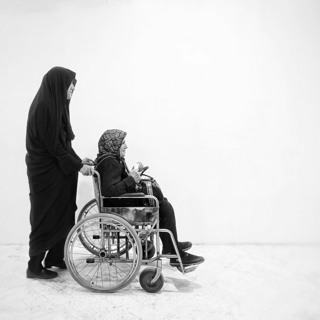
Civilian protection has a dependency-chain problem

Civilian protection has a dependency-chain problem

Civilian protection is often assessed by whether a person has been warned, evacuated, registered, sheltered or reached with relief. For many persons with disabilities, each measure depends on a wider ...

20 Aug 21min

The machines must not choose who dies: a humanitarian case for disarming AI

The machines must not choose who dies: a humanitarian case for disarming AI

As states race to develop autonomous weapons systems, the effort to agree binding international rules on machine decisions over life and death has reached a critical moment. In this post, Eberechukwu...

13 Aug 18min
Memorializing IHL violations in the age of AI: opportunities and risks for transitional justice

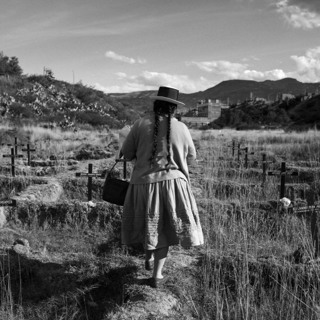
Memorializing IHL violations in the age of AI: opportunities and risks for transitional justice

Memorialization, one of the five pillars of transitional justice, plays a vital role in preserving the memory of international humanitarian law (IHL) violations and gross human rights violations, supp...

23 Juli 17min

Amplifying Pacific voices: the region’s crucial role in advancing IHL

Amplifying Pacific voices: the region’s crucial role in advancing IHL

Pacific Island states have long demonstrated leadership in promoting peace, disarmament, and humanitarian values. From traditional customs that reflect principles contained in contemporary internation...

2 Juli 15min

The shelter that shone in the distance | Written and Performed by Mamuch Bey

The shelter that shone in the distance | Written and Performed by Mamuch Bey

For the world's more than 120 million forcibly displaced people, the idea of refuge is not an abstraction – it is a horizon, an act of imagination, and sometimes the only thing that keeps hope alive. ...

18 Juni 4min
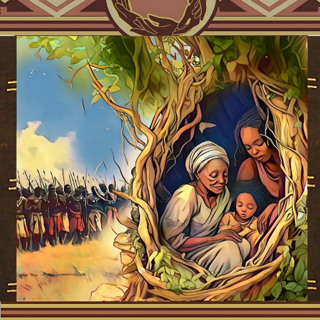
African traditions and the protection of children in armed conflict

African traditions and the protection of children in armed conflict

Across Africa, norms regulating the conduct of hostilities long predate the codification of modern international humanitarian law (IHL). The ICRC Tool on African traditions and the preservation of hum...

16 Juni 12min
We helped individuals while harming persons: what conflict-affected communities deserve beyond beneficiary status

We helped individuals while harming persons: what conflict-affected communities deserve beyond beneficiary status

Conflict and displacement do more than destroy homes, livelihoods, and infrastructure. They also fracture the social relationships through which people sustain dignity, identity, and collective life. ...

11 Juni 14min
Populärt inom Politik & nyheter

aftonbladet-krim
p3-krim
aftonbladet-daily
rss-expressen-dok
flashback-forever
svenska-fall
rss-vad-fan-hande
rss-sanning-konsekvens
rss-krimreportrarna
motiv
svd-ledarredaktionen
rss-krimstad
spar
rss-frandfors-horna
politiken
rss-flodet
fordomspodden
krimmagasinet
grans
olyckan-inifran