S9 Ep41: Making teenagers read newspapers

S9 Ep41: Making teenagers read newspapers

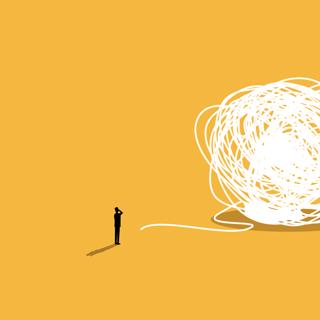
French teenagers carry a smartphone with access to almost anything, but few of them have been using it to read the news.

Julia Cagé (Sciences Po, CEPR) ran an experiment to test the one barrier everyone assumes matters most: the price of a newspaper. She and her co-authors gave free digital subscriptions to Le Monde and media education to thousands of French high school students for a year, and then tracked what the students actually read. It's a bit like persuading kids to eat vegetables when there are fries on the table, she tells Tim Phillips. Can a free subscription persuade France's teens to use their phones differently and eat their media greens, and what changes when they do?

The research behind this episode:

Briole, Simon, Julia Cagé, and Andrea Prat. 2026. "Making Teenagers Read Newspapers: A Nationwide Experiment in French High Schools." CEPR Discussion Paper 21706. Gated.

To cite this episode:

Phillips, Tim, and Julia Cagé. 2026. “Making teenagers read newspapers”. VoxTalks Economics (podcast).

About the guest

Julia Cagé is Professor of Economics at Sciences Po Paris and a Research Fellow at the Centre for Economic Policy Research (CEPR), where she leads the CEPR Research and Policy Network on Media Plurality. Her research spans media economics, political participation, and the economics of information, with a particular focus on how news markets shape political knowledge and democratic engagement. She is the author of several books on the media, including Saving the Media and The Price of Democracy.

Research cited in this episode

Reuters Institute Digital News Report is an annual global survey that tracks how people find, consume, and pay for news across dozens of countries. Cagé cites its long-running data on declining time spent reading news online, a trend she says is sharpest among the young.

Post-Broadcast Democracy, a book by the political scientist Markus Prior, argues that the shift from a small number of broadcast TV channels to an environment of unlimited media choice let people who were never especially interested in news opt out of it entirely. Cagé uses Prior's framework to argue that the internet did not create this problem; television did, and the internet simply deepened it.

Information inequality describes the finding that lower-income, less-educated citizens draw on fewer sources of political information than wealthier, better-educated ones, widening gaps in political knowledge. The concept draws on earlier work by Cagé's co-author Andrea Prat, and it motivates the experiment's focus on whether free access to quality journalism narrows that gap for teenagers from poorer backgrounds.

More VoxTalks Economics episodes

Misinformation and trust in news, in which Ruben Durante discusses a field experiment testing how AI-generated misinformation changes readers' trust in, and demand for, credible journalism.

Related reading on VoxEU

Information inequality, a VoxEU column by Paul Kennedy and Andrea Prat setting out the cross-country evidence that poorer, less-educated voters consume fewer sources of political news, the pattern this episode's experiment sets out to address.

Det här avsnittet är hämtat från ett öppet RSS-flöde och publiceras inte av Podme. Det kan innehålla reklam.

Avsnitt(474)

S9 Ep47: The Next Generation: PSE 2026

S9 Ep47: The Next Generation: PSE 2026

Travel broadens the mind. So the Voxtalks visits a conference, we find the most interesting research from economists just starting out, and hand three of them a microphone. Ad that is today's episode,...

7 Aug 33min

S9 Ep46: Absorbing shocks since 1891

S9 Ep46: Absorbing shocks since 1891

Recorded at the PSE-CEPR Policy Forum 2026.A country wants a stable exchange rate, it wants money to move freely across its borders, and it wants to set its own interest rates. It's a well-known trile...

5 Aug 20min

S9 Ep45: Tariff Confusion

S9 Ep45: Tariff Confusion

If you run a business that exports to the United States, how big is the tariff you have to pay? In 2025 that question was hard to answer. Between February and December, 53 separate announcements intro...

31 Juli 31min

S9 Ep44: How superpowers shape trade

S9 Ep44: How superpowers shape trade

Recorded at the PSE-CEPR Policy Forum, Paris School of Economics.Tariffs move trade around, but so does economic power. When one economy dominates, other countries fall into step with it. They trade w...

29 Juli 15min

S9 Ep43: Navigating industrial policy

S9 Ep43: Navigating industrial policy

Recorded at the PSE-CEPR Policy Forum, Paris.In 2019 the IMF called the increasing adoption of industrial policy: "The return of the policy that shall not be named". No one is scared to name it in 202...

24 Juli 21min

S9 Ep42: The Safety Paradox

S9 Ep42: The Safety Paradox

Recorded at the PSE-CEPR Policy Forum, Paris School of Economics, June 2026.In 1941 the United States banned oil exports to Japan, to punish aggression without fighting a war. Historians now argue the...

22 Juli 20min

S9 Ep40: Are net zero commitments greenwash?

S9 Ep40: Are net zero commitments greenwash?

Sixty-three percent of large companies worldwide had made a net zero commitment by 2023, up from close to none in 2018. But if the target date is 2050, that's several corporate lifetimes away, and the...

15 Juli 24min

Populärt inom Business & ekonomi

framgangspodden
badfluence
dynastin
varvet
uppgang-och-fall
avanzapodden
svd-tech-brief
rss-inga-dumma-fragor-om-pengar
fill-or-kill
lastbilspodden
tabberaset
rss-kort-lang-analyspodden-fran-di
rikatillsammans-om-privatekonomi-rikedom-i-livet
rss-borslunch
rss-dagen-med-di
rss-veckans-trade
borslunch-2
ekonomiekot-extra
rss-hos-psykologen
rss-dominoeffekten