How Colombia Defeated the FARC
The Focus17 Juli

How Colombia Defeated the FARC

How does a democracy defeat one of the world's longest-running insurgencies?


For more than fifty years, Colombia fought a brutal conflict against the Revolutionary Armed Forces of Colombia (FARC)—a war fuelled by ideology, narcotics trafficking and some of the most challenging terrain on Earth. Yet against the odds, Colombia changed the strategic balance.
I

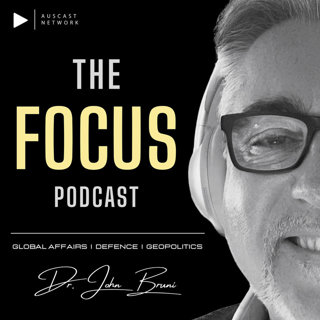
n Part One of this special two-part conversation, Dr John Bruni speaks with General (Ret.) Alberto José Mejía Ferrero, former Commander of the Colombian Army and former General Commander of Colombia's Armed Forces, about the campaign that helped reshape Colombia's modern history.
Drawing on more than four decades of military leadership, General Mejía explains what really weakened the FARC, why Plan Colombia became one of the most significant security partnerships of the 21st century, and whether military success alone is enough to secure lasting peace.

In this episode, we discuss:


• Colombia's decades-long campaign against the FARC


• The turning points that changed the conflict


• Plan Colombia and the role of the United States


• Military leadership and strategic decision-making
• Counterinsurgency lessons for democratic governments


• Why winning the peace can be harder than winning the war


Whether you're interested in military history, counterinsurgency, international security or strategic affairs, this conversation offers rare insights from one of the commanders who helped lead Colombia through one of its defining conflicts.


Part Two continues the discussion with Venezuela after Nicolás Maduro, organised crime, armed drones, emerging technologies and the future of security in the Western Hemisphere.
If you enjoyed this episode, please Like, Subscribe, and share it with colleagues and friends. Your support helps us continue bringing leading strategic thinkers from around the world to The Focus.
What do you think is the greatest lesson other democracies can learn from Colombia's experience?

Let us know in the comments below.

Show Notes:

About General Alberto José Mejía Ferrero

General Alberto José Mejía Ferrero is a retired Colombian Army officer who served as Commander of the Colombian Army and later as General Commander of Colombia’s Armed Forces.During his military career, he held senior operational and strategic appointments during Colombia’s campaign against the FARC and other illegal armed groups. Following his retirement from military service, he served as Colombia’s Ambassador to Australia. His career provides a rare perspective on counterinsurgency, military transformation, strategic leadership, civil-military relations and the changing security environment of Latin America.
Glossary


Operation Sword of Honour (Operación Espada de Honor) was Colombia's national counterinsurgency campaign launched in 2012 under President Juan Manuel Santos. It was designed to intensify military pressure on the Revolutionary Armed Forces of Colombia (FARC) by concentrating operations against the group's strongest rural strongholds and leadership.
Plan Colombia was a joint security, counter-narcotics and institutional reform initiative launched in 1999 by Colombian President Andrés Pastrana in partnership with the United States. The programme formally began in 2000 following approval of substantial U.S. assistance.

The Revolutionary Armed Forces of Colombia, commonly known by its Spanish acronym FARC, was a Marxist-Leninist guerrilla organisation founded in 1964. For more than five decades, the FARC fought the Colombian state through guerrilla warfare, bombings, kidnappings, assassinations and attacks on military and civilian targets. It financed much of its insurgency through narcotics trafficking, extortion, illegal mining and hostage-taking, eventually becoming one of the largest and most powerful armed groups in Latin America.


The National Liberation Army, commonly known by its Spanish acronym ELN, is Colombia's oldest active guerrilla organisation. Founded in 1964, it emerged from a blend of Marxist ideology, Cuban revolutionary influence and liberation theology, seeking to overthrow the Colombian state through armed struggle.


The Maoist way of war is a revolutionary strategy developed by Chinese Communist leader Mao Zedong during the Chinese Civil War. It is based on the principle that a weaker force can defeat a stronger conventional military through a prolonged struggle that combines political mobilisation, guerrilla warfare and, ultimately, conventional military operations.

Chapters:


00:00 Cold Open
00:33 Introduction
02:09 Understanding Colombia's Long War
11:07 The Cocaine Economy: Why the War Endured
17:00 How Colombia Built a Winning Counterinsurgency
18:40 Rebuilding the Colombian Air Force
19:20 The Role of the Colombian Marines
19:57 The Controversial Crop Spraying Campaign
23:57 Discipline, Ethics & Winning Public Trust
34:22 Fighting an Enemy Without Rules of War
44:13 The Toughest Command Decision
59:43 Why Did the FARC Keep Recruiting?

See omnystudio.com/listener for privacy information.

Det här avsnittet är hämtat från ett öppet RSS-flöde och publiceras inte av Podme. Det kan innehålla reklam.

Avsnitt(100)

Seeing Around Corners - Why Strategic Surprises Keep Catching Us Off Guard

Seeing Around Corners - Why Strategic Surprises Keep Catching Us Off Guard

From pandemics and wars to artificial intelligence, geopolitical rivalry, and presidential candidates, the pace of change has never been faster. Yet governments, businesses and intelligence agencies c...

6 Aug 1h 43min

How Colombia defeated the FARC | Part 2

How Colombia defeated the FARC | Part 2

How did Colombia defeat the FARC—and what can other democracies learn from its experience? In Part 2 of my conversation with General Alberto José Mejía Ferrero, former Commander of the Colombian Armed...

24 Juli 1h 15min
Jenny Gordon | Can Australia Afford the Future? Part 2

Jenny Gordon | Can Australia Afford the Future? Part 2

In Part 2 of this in-depth conversation, Dr John Bruni continues his discussion with economist Dr Jenny Gordon to examine one of the defining questions of the 21st century: who shapes the global econo...

10 Juli 1h 3min

Dr. Ramzy Baroud | What the World Gets Wrong About Palestine

Dr. Ramzy Baroud | What the World Gets Wrong About Palestine

Few conflicts have shaped global politics as profoundly—or generated as much division—as the struggle between Israelis and Palestinians. Yet meaningful discussion is often replaced by slogans, outrage...

3 Juli 1h 9min

Can Japan Hold Its Own In The Indo-Pacific?

Can Japan Hold Its Own In The Indo-Pacific?

Can Japan become the Indo-Pacific's indispensable strategic power? For decades, Japan has been viewed as an economic powerhouse constrained by its post-war constitution and reliance on the United Stat...

25 Juni 58min

Jenny Gordon | Can Australia Afford the Future? | Part 1

Jenny Gordon | Can Australia Afford the Future? | Part 1

🌐 The global balance is shifting. For decades, economists claimed trade would keep the peace—but what happens when the world’s two biggest superpowers weaponise trade against each other? 🇺🇸 vs 🇨🇳...

18 Juni 1h 1min

Julian Lindley-French | Britain’s Strategic Reckoning

Julian Lindley-French | Britain’s Strategic Reckoning

Britain’s Defence Secretary has resigned. NATO is transforming. Europe is rearming.So is Britain 🇬🇧 still a serious power? Against this backdrop, the recent resignation of Defence Secretary John Hea...

12 Juni 1h 44min

Populärt inom Politik & nyheter

p3-krim
svenska-fall
aftonbladet-daily
aftonbladet-krim
flashback-forever
rss-krimreportrarna
tv4-nyheterna-story
rss-vad-fan-hande
rss-krimstad
motiv
politiken
rss-sanning-konsekvens
de-fyras-gang
mannen-utan-spar
rss-flodet
svd-ledarredaktionen
spar
rss-aftonbladet-krim
rss-frandfors-horna
olyckan-inifran