

Azure DNS - Simply Explained
Azure DNS is Microsoft's fully managed Domain Name System (DNS) hosting service that translates human-friendly domain names like contoso.com into the IP addresses computers use to communicate. Instead of managing your own DNS servers, patching operating systems, or configuring high availability, Azure DNS hosts your DNS records on Microsoft's global infrastructure. Whether you're publishing a public website, routing email, or managing internal cloud applications, Azure DNS provides a secure, scalable, and highly available platform for name resolution that integrates seamlessly with the rest of Azure.

HOW DNS WORKS BEHIND THE SCENES
Every time you enter a website address into your browser, a series of DNS lookups takes place within milliseconds. Your computer first checks its local cache before asking a recursive DNS resolver, usually operated by your internet provider. If the answer isn't already cached, the resolver queries the internet's DNS hierarchy, beginning with the Root Servers, then the Top-Level Domain (TLD) servers, and finally the authoritative name servers responsible for your domain. Azure DNS acts as that authoritative name server, providing the official DNS records that tell browsers where your Azure resources are located. This entire process happens automatically every time users access your applications or services.

PUBLIC DNS ZONES VS PRIVATE DNS ZONES
Azure DNS supports two distinct types of DNS zones. Public DNS Zones host internet-facing domains such as websites, APIs, and email services that must be reachable from anywhere in the world. Private DNS Zones, on the other hand, are designed exclusively for Azure Virtual Networks and allow internal resources like virtual machines, databases, and application servers to communicate using friendly names without exposing those services to the public internet. Private zones can be linked to multiple virtual networks, support automatic VM registration, and eliminate the need to deploy and maintain traditional internal DNS servers. This makes hybrid and cloud-native environments significantly easier to manage.

UNDERSTANDING DNS RECORDS
Every DNS zone contains records that tell clients where services are located. A Records map hostnames to IPv4 addresses, while AAAA Records perform the same task for IPv6. CNAME Records create aliases that point one hostname to another, making them ideal for Azure App Services and other cloud-hosted resources. MX Records define mail servers for email delivery, and TXT Records are widely used for domain verification, SPF, DKIM, and DMARC email security. Azure DNS also introduces Alias Records, allowing DNS entries to point directly to Azure resources such as Load Balancers, Public IPs, and Traffic Manager profiles. Because Alias Records automatically follow infrastructure changes, administrators no longer need to manually update DNS whenever Azure changes an IP address.

DOMAIN DELEGATION AND AZURE INTEGRATION
Creating a DNS zone inside Azure is only the beginning. For public domains, ownership remains with your domain registrar, while Azure becomes responsible for answering DNS queries after delegation. This is achieved by updating the domain's nameserver records at your registrar to point to Azure's authoritative DNS servers. Once DNS propagation completes, Azure becomes the source of truth for your domain. For private DNS zones, delegation isn't required. Instead, administrators simply link the zone to one or more Azure Virtual Networks, allowing cloud resources to resolve internal names automatically. Azure integrates DNS management with Infrastructure as Code tools such as ARM Templates, Bicep, Terraform, Azure CLI, and PowerShell, making automated deployments straightforward and repeatable.

SECURITY, RELIABILITY, AND BEST PRACTICES
Azure DNS is built on Microsoft's globally distributed Anycast network, providing low-latency DNS responses and enterprise-grade resilience without requiring organizations to operate their own DNS infrastructure. Integration with Azure RBAC allows administrators to control exactly who can modify DNS records, while Azure Policy helps enforce governance across large environments. Azure Monitor provides detailed metrics and diagnostics for DNS zones, enabling organizations to track query volumes, latency, and operational health. For hybrid environments, Azure DNS Private Resolver securely connects on-premises DNS infrastructure with Azure Private DNS Zones without requiring custom DNS virtual machines. Combined with Alias Records, automated deployments, and Microsoft's global network, Azure DNS delivers a modern, scalable, and highly available DNS platform suitable for organizations of every size.

Become a supporter of this podcast: https://www.spreaker.com/podcast/m365-fm-modern-work-security-and-productivity-with-microsoft-365--6704921/support.

Det här avsnittet är hämtat från ett öppet RSS-flöde och publiceras inte av Podme. Det kan innehålla reklam.

Avsnitt(795)

MCP (Model Context Protocol) - Simply Explained

MCP (Model Context Protocol) - Simply Explained

The Model Context Protocol (MCP) is an open standard that allows AI models to securely connect to external tools, applications, and data sources using a single, consistent protocol. Before MCP, every ...

17 Juli 15min

Azure AI Search – Simply Explained

Azure AI Search – Simply Explained

Azure AI Search is Microsoft's fully managed cloud search service that helps developers build fast, intelligent, and AI-powered search experiences for applications, websites, and enterprise systems. U...

17 Juli 13min

Microsoft Fabric OneLake - Simply Explained

Microsoft Fabric OneLake - Simply Explained

Microsoft Fabric OneLake is the unified storage layer at the heart of Microsoft Fabric, designed to eliminate one of the biggest challenges in modern analytics: data duplication. Instead of every depa...

17 Juli 14min
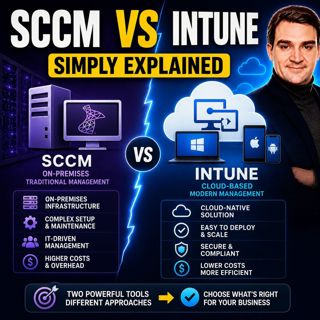
SCCM vs Intune - Simply Explained

SCCM vs Intune - Simply Explained

SCCM (System Center Configuration Manager), now officially known as Microsoft Endpoint Configuration Manager (MECM), and Microsoft Intune are two of Microsoft's most important endpoint management solu...

17 Juli 16min

Microsoft Intune - Simply Explained

Microsoft Intune - Simply Explained

Microsoft Intune is Microsoft's cloud-based endpoint management platform that allows organizations to securely manage laptops, desktops, smartphones, tablets, and applications from a single web-based ...

17 Juli 12min

Azure Virtual Desktop - Simply Explained

Azure Virtual Desktop - Simply Explained

Azure Virtual Desktop (AVD) is Microsoft's cloud-based desktop virtualization platform that delivers a complete Windows desktop and business applications securely from Azure to virtually any device. I...

17 Juli 18min

Azure ExpressRoute - Simply Explained

Azure ExpressRoute - Simply Explained

Azure ExpressRoute is Microsoft's private network connection service that links your on-premises infrastructure directly to Microsoft's global cloud network without using the public internet. Instead ...

17 Juli 13min

Populärt inom Politik & nyheter

aftonbladet-krim
svenska-fall
p3-krim
rss-krimstad
tv4-nyheterna-story
aftonbladet-daily
flashback-forever
de-fyras-gang
mannen-utan-spar
motiv
rss-sanning-konsekvens
rss-vad-fan-hande
spar
rss-aftonbladet-krim
rss-frandfors-horna
rss-krimreportrarna
politiken
olyckan-inifran
rss-flodet
krimmagasinet