Oil has brought destruction to the Niger Delta; women and human rights may save it

Oil has brought destruction to the Niger Delta; women and human rights may save it

On this week's episode of the Mongabay Newscast, I speak with travel writer Noo Saro-Wiwa. She has documented the violence and natural destruction that the presence of oil companies have brought to the people of the Niger Delta in her latest book, The Burning Ground: Oil and Militancy in Nigeria.

Saro-Wiwa is also the daughter of the late activist Ken Saro-Wiwa, who was executed by the Nigerian government in 1995. Her father led a peaceful resistance against the oil companies' presence in the Niger Delta by mobilizing 300,000 people from Ogoniland in 1993. It is fair to say his activism started the movement against the destruction and exploitation led by oil companies in the nation. While peaceful at first, Noo Saro-Wiwa says many people gave up hope on peaceful resistance when the government failed to hold the companies accountable, and men turned to forming violent militant groups.

 "Oil has been literally the worst thing that's happened to the Niger Delta. If I could go back in time and I had the power, I would never have allowed oil to have been discovered," she says.

While her latest book chronicles the harm of oil and the resulting violence, I put it to her that it's also a story about how the absence of women's rights is destroying societies. Saro-Wiwa explains how Nigeria isn't unique in this regard, but rather a stark example of how this dynamic plays out.

" Going around the Niger Delta and talking to activists like Emem Okon … I could see very clearly how women's rights directly affects the environment … and society, and how the absence of those rights feeds into this militancy which ultimately hurts men."

Please take a minute to let us know what you think of our podcast here.

Mike DiGirolamo is the host & producer for the Mongabay Newscast based in Sydney. Find him on LinkedIn and Bluesky.

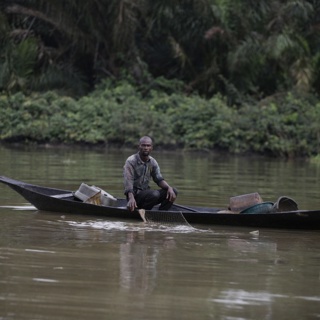
Banner image: A man fishes in the Niger Delta near the village of Diebu, Nigeria, Saturday, May 18, 2013. Image by Jon Gambrell / AP Photo.

——

Timecodes

(00:00) A heavy price to pay for oil

(06:09) The Movement for the Survival of the Ogoni People

(16:17) Militancy

(21:54) Governments are 'not interested in sustainable peace'

(26:11) Women as a stabilizing force

(29:44) Women's rights directly affects the environment

(36:54) Oil has been 'the worst thing to happen to the Niger Delta'

Det här avsnittet är hämtat från ett öppet RSS-flöde och publiceras inte av Podme. Det kan innehålla reklam.

Avsnitt(378)

The exotic pet trade fuels biodiversity and disease risks. Here's how to curb it

The exotic pet trade fuels biodiversity and disease risks. Here's how to curb it

The global pet trade, particularly in exotic reptiles and amphibians, poses significant biodiversity and potential human health risks, scientists say; yet compared to other pressing crises like climat...

13 Okt 35min
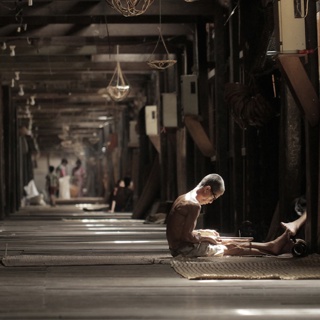
Kynan Tegar wants 'a future that exists' for Indonesia's Indigenous communities

Kynan Tegar wants 'a future that exists' for Indonesia's Indigenous communities

Indigenous activist and filmmaker Kynan Tegar joins the Mongabay Newscast this week to discuss the impacts of the fires devastating Kalimantan, the Indonesian portion of the island of Borneo. Some 48,...

6 Okt 39min

Iwi and communities bring kiwi back to Wellington after 150 years

Iwi and communities bring kiwi back to Wellington after 150 years

For the first time in 150 years, kiwi once again live in the hills surrounding Wellington, Aotearoa New Zealand. More than 250 manu ("birds" in the Māori language) were successfully translocated back ...

29 Sep 57min
Home Planet Fund succeeds in conservation by investing in local knowledge

Home Planet Fund succeeds in conservation by investing in local knowledge

This week on the Newscast, we're joined by Dilafruz Khonikboyeva, the founder of the Home Planet Fund, an independent, Indigenous-led nonprofit that provides funding for local and Indigenous communiti...

22 Sep 51min
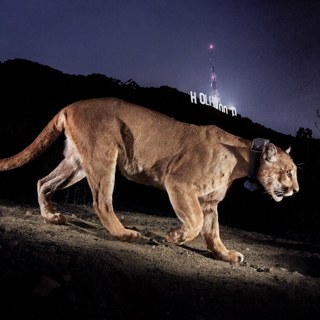
'Big Cats' highlights the remarkable power of photojournalism

'Big Cats' highlights the remarkable power of photojournalism

Jeff Sikich, the biologist for the National Park Service in Griffith Park, Los Angeles, thought that Steve Winter "was crazy" for wanting to capture a photograph of a mountain lion in front of the Hol...

15 Sep 47min
A health crisis for Peru's recently contacted people brings planetary health to the fore

A health crisis for Peru's recently contacted people brings planetary health to the fore

Mongabay staff writer Aimee Gabay joins the Newscast this week to discuss her reporting trip to the Peruvian Amazon, where she spoke with the Indigenous Matsés community. She made the trip initially ...

8 Sep 38min
Christiana Figueres and Garik Israelian on Jane Goodall's legacy and the search for truth

Christiana Figueres and Garik Israelian on Jane Goodall's legacy and the search for truth

A new award has been created in honor of late conservation icon Jane Goodall by the board of the Starmus Festival, an international gathering of scientists and artists to be held from Oct. 17-22 in Te...

1 Sep 51min
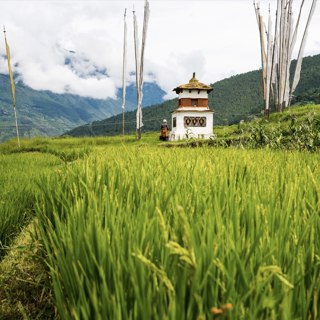
In Bhutan, the pursuit of happiness extends to the food system

In Bhutan, the pursuit of happiness extends to the food system

Bhutan is a Himalayan kingdom sandwiched between China and India. Forty percent of its 800,000 citizens work in the agriculture sector. The mountainous country is famous for its breathtaking landscape...

25 Aug 33min

Populärt inom Vetenskap

p3-dystopia
dumma-manniskor
allt-du-velat-veta
kapitalet-en-podd-om-ekonomi
angestpodden
rss-ai-med-jonas-benjamin
rss-ronden
rss-mottagningen
halsorevolutionen
medicinvetarna
det-morka-psyket
sexet
rss-vetenskapsradion-2
bildningspodden
rss-experimentet
rss-ufobortom-rimligt-tvivel
bildningskomplexet
rss-spraket
ufo-sverige
rss-vetenskapsradion