
S9 Ep44: How superpowers shape trade

S9 Ep44: How superpowers shape trade

Recorded at the PSE-CEPR Policy Forum, Paris School of Economics.

Tariffs move trade around, but so does economic power. When one economy dominates, other countries fall into step with it. They trade with the dominant economy, and also with each other.

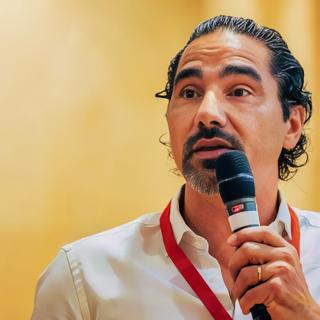
Alberto Martin (Barcelona School of Economics, CEPR) is one of a team that has tracked the influence of hegemons, large dominant economies, on trade from the start of the 19th century. In our latest VoxTalk he tells Tim Phillips about how they used treaties (not necessarily about trade) as a proxy for alignment, and built a database of 77,000 of them signed between 1800 and 2020 to test their theory.

Hegemons sign a disproportionate share of these international agreements. After treaty-signing, trade links become stronger. But treaty-signing has fallen sharply over the past 15 years, as much as it did during the two world wars. If we are heading towards a multipolar world, might what will the absence of a global hegemony do to trade?

The research behind this episode:

Broner, Fernando, Alberto Martin, Josefin Meyer, and Christoph Trebesch. 2025. "Hegemonic Globalization." CEPR Discussion Paper 20339 (gated).

To cite this episode:

Phillips, Tim, and Alberto Martin. 2025. "How superpowers shape trade." VoxTalks Economics (podcast).

About the guest

Alberto Martin is a Senior Researcher at the Center for Research in International Economics (CREI), an Adjunct Professor at Universitat Pompeu Fabra, a Research Professor at the Barcelona School of Economics, and a Research Fellow at the Centre for Economic Policy Research, where he directs the International Macroeconomics and Finance programme. His research spans macroeconomics, finance, and international economics, including asset bubbles, credit cycles, sovereign debt, and the political economy of trade.

Research cited in this episode

Global Treaty Database. The dataset at the heart of the paper, assembled by the authors from the United Nations Treaty Collection, the League of Nations archive, and country-specific historical sources. It records roughly 77,000 international agreements signed between 1800 and 2020, most of them bilateral, sorted into economic and non-economic categories such as trade, taxation, migration, borders, and military cooperation.

Hegemonic stability. The idea, introduced by Charles Kindleberger in 1973, that an open and stable world economy needs a single dominant power to underwrite it. This paper builds a formal model of the mechanism Kindleberger described, and asks what happens to openness when dominance is contested.

Alignment and UN voting. The most common existing proxy for how closely two countries are aligned is whether they vote together at the United Nations. The authors' treaty measure correlates with UN voting in some periods and less in others, partly because many UN votes turn on narrow questions; treaties cover more policy areas and reach back 200 years, which UN voting cannot.

The recent decline in treaty-signing. Since 1800 treaty-signing has trended upward, interrupted by three sharp falls: the First World War, the Second World War, and a decline over the last 15 years that is proportionally comparable to the first two. The authors checked large-country sources directly to rule out a reporting lag, and the fall appears real.

More VoxTalks Economics episodes

The safety paradox. Isabelle Méjean on how, when countries impose trade restriction to protect themselves, it also makes conflict more likely.

Related reading on VoxEU.org

Why globalisation needs a leader: Hegemons, alignment, and trade, the authors' own VoxEU column setting out the theory of hegemonic globalisation and what a shift from a unipolar to a multipolar world might mean for trade.

From bilateralism to a system: Europe's early trade treaties and lessons for EU trade policy in a contested world, a VoxEU column by Laura Panza and Maria Ptashkina drawing on nearly 900 commercial treaties from 1815 to 1919 to argue for expanding networks of agreements even without universal multilateralism.

Det här avsnittet är hämtat från ett öppet RSS-flöde och publiceras inte av Podme. Det kan innehålla reklam.

Avsnitt(482)

S9 Ep55: Loosening inheritance law

S9 Ep55: Loosening inheritance law

In most of the world you do not get to choose who inherits your money. Across continental Europe, Latin America, and countries governed by Islamic law, a minimum share of your estate will be reserved ...

18 Sep 25min

S9 Ep54: Does sacking the manager work?

S9 Ep54: Does sacking the manager work?

Your football team keeps losing. The season is slipping away. One thing can be changed by Friday, and the crowd is already singing about it: sack the manager.Jan van Ours (Erasmus School of Economics,...

11 Sep 18min
S9 Ep53: Lessons from Populism in Latin America

S9 Ep53: Lessons from Populism in Latin America

The new episode of VoxTalks Economics traces the effects of South Americans populism, left and right. Alejandro Werner (Georgetown Americas Institute) is one of the authors of a new paper that traces ...

4 Sep 33min

S9 Ep52: The Dollar Anchor Is Slipping

S9 Ep52: The Dollar Anchor Is Slipping

April 2025: Liberation Day. President Trump announces sweeping new tariffs. And then, the dollar did something a safe haven currency is not supposed to do: it fell.Tarek Hassan (Boston University, CEP...

2 Sep 26min

S9 Ep51: Fiscal Populism and Monetary Policy

S9 Ep51: Fiscal Populism and Monetary Policy

There is a saying in Spanish: get burned by hot milk, and the sight of a cow makes you cry. New research implies that, decades after a populist government leaves office, the central bank it once tried...

28 Aug 16min

S9 Ep50: Tariffs, Uncertainty, and the Exchange Rate

S9 Ep50: Tariffs, Uncertainty, and the Exchange Rate

Textbook economics says a tariff should strengthen a country's currency. Since the start of 2025, as US tariffs rose ... and the dollar fell.In the first of four episodes of Voxtalks based on papers p...

26 Aug 24min

S9 Ep49: Combatting sexual harassment in the military

S9 Ep49: Combatting sexual harassment in the military

Norwegian conscripts arrive at boot camp straight out of school. They are assigned at random to a shared room and they live in it for the next eight weeks. Whatever the culture of that room turns out ...

21 Aug 21min

S9 Ep48: What price to save Japan's ghost towns?

S9 Ep48: What price to save Japan's ghost towns?

In the oldest Japanese municipalities, close to half the residents are already over 65. As young people move to cities, the retailers close, then the clinics, then the bus that used to reach the next ...

14 Aug 18min

Populärt inom Business & ekonomi

framgangspodden
varvet
rss-jossan-nina
badfluence
24fragor
rss-borsens-finest
avanzapodden
svd-tech-brief
uppgang-och-fall
rss-inga-dumma-fragor-om-pengar
rss-kort-lang-analyspodden-fran-di
tabberaset
lastbilspodden
fill-or-kill
rss-dagen-med-di
rikatillsammans-om-privatekonomi-rikedom-i-livet
rss-veckans-trade
rss-wallnor-pm
borsmorgon
bathina-en-podcast