
EP 386: Surf Life Saving & Ironman Racing: Injuries, Training & Recovery (Part 1)

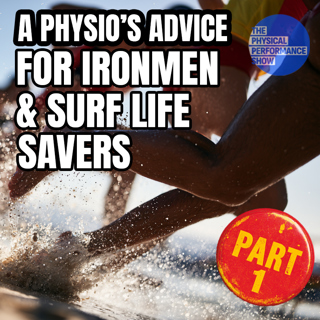
EP 386: Surf Life Saving & Ironman Racing: Injuries, Training & Recovery (Part 1)

In episode 386 of The Physical Performance Show, host Tim Studley sits down with fellow Pogo Physio physiotherapist Lewis Craig to explore the world of surf life saving and Ironman racing — a sport many listeners may be unfamiliar with, but one that shares a huge amount in common with traditional triathlon and endurance sport.

Tim and Lewis unpack what a typical training week looks like for a semi-professional surf ironman/ironwoman athlete, the most common injuries seen across swimming, ski paddling, board paddling and soft sand running, the disproportionate impact running-based injuries can have on an athlete's ability to race, and why energy availability, sleep and recovery are just as critical in this sport as they are in any other high-volume endurance discipline.

SHOW SPONSORS:

💯 Today's episode is brought to you by Pillar Performance and Pogo Physio's telehealth consultations. If you are an endurance runner battling with bone, tendon, joint related concerns, our online Telehealth consultations are an ideal platform to help get you back to your physical best - book online at https://pogophysio.com.au.

💯 PILLAR Performance is leading a new frontier in sports nutrition through micronutrition innovation. Their new Collagen Repair formula, developed in collaboration with Gelita Laboratories, is designed to support tendon and ligament health while promoting collagen synthesis to help athletes stay healthy and perform at their best.

For 15% off your first order, visit https://pillarperformance.shop (or https://thefeed.com for North American listeners) and use the discount code PHYSICALPERFORMANCE (one word, capitals) at checkout.

In this episode, you'll hear:

An introduction to surf life saving and Ironman racing: swimming, ski paddling, board paddling and soft sand running combined into one demanding sport

The semi-professional nature of the sport, and how prize money from series like the Shaw and Partners Ironman Series and World Ocean Series has helped athletes

A snapshot of a typical training day and week: double training sessions, four swim sessions, two to three ski paddling and board sessions, two gym sessions, two standalone runs, and Irons sessions combining all disciplines

Typical weekly training hours for competitive athletes — estimated in the range of 15 to 20+ hours per week

Similarities to other endurance sports: shared challenges around shoulder health, running-related injuries, and managing training load, intensity and recovery

Whether discipline-dominant athletes (runners, swimmers, paddlers) experience different injury patterns, and the possible link between strong runners and higher bone stress injury risk via REDs

What first drew Lewis to working with surf life saving and Ironman athletes, including his early experience working alongside elite athletes at Pogo Physio

Common injuries in the sport: shoulder tendinopathies (supraspinatus, subscapularis), low back pain, Achilles tendinopathy, calf strains, ankle sprains, toe injuries, knee pain, bone stress injuries, and trauma-related injuries from craft or contact

Why shoulder health is a season-long priority, while injuries that prevent running (calf strains, ankle sprains, bone stress injuries) carry the biggest time cost due to their impact on race ability

Estimated prevalence of athletes competing while managing a shoulder or low back niggle, and how this may fluctuate across the competitive calendar

An overview of the surf life saving racing calendar: trials, the Coolangatta Gold, and a condensed back-to-back race season with minimal true off-season

Why the Coolangatta Gold's extra soft sand running volume increases physical demand and potential injury risk

Common misconceptions about the physical demands of the sport, including underestimation of the aerobic and neuromuscular demands of soft sand running

The energy cost and muscle activation differences of soft sand running compared to running on grass or road (roughly 1.4–1.6x energy cost, near-double EMG activity in key running muscles)

Why maintaining some running — and ideally some soft sand running — year-round may help reduce injury risk when returning to high-intensity training

Physical qualities to develop for soft sand running: calf capacity, forefoot strength, neuromuscular control, balance and proprioception, and specific gym-based calf training strategies

Why strong road runners can't assume they have the capacity needed for soft sand running

Common training and recovery mistakes: under-fuelling relative to high training demands, and the potential role of low energy availability and REDs in this population

Warning signs of under-fuelling to watch for, including low iron, frequent illness, low libido in males, and menstrual cycle changes in females

The key pillars of recovery for these athletes: sleep, nutrition, well-structured and individualised training programming, and secondary recovery tools like massage, compression and cryotherapy

Quotes / takeaways:

"These athletes are really, really impressive... it really is akin to the traditional triathlete."

"It's a real juggling act, but also then makes it really meaningful to try and help these athletes."

"If we can't sand run, then often that's no racing."

"Go for a run on the sand and see how hard it is."

"I have a hypothesis that if these athletes all did more running, we'd see a heap of bone stress injuries."

"It gets tricky to do it well and do it right consistently."

Time Stamps:

00:00 – Episode introduction: surf life saving and Ironman racing with Lewis Craig

00:31 – What is surf life saving and Ironman racing?

01:30 – Semi-professional status and recent growth in prize money

02:27 – A typical training day and week for a competitive athlete

04:23 – Typical weekly training hours

05:23 – Comparisons to other endurance sports like triathlon

06:23 – Do discipline-dominant athletes get different injury types?

08:05 – What sparked Lewis's interest in the sport

11:28 – Most common injuries: shoulder, low back, running-related

13:26 – Which injuries carry the biggest performance and time cost

14:21 – Prevalence of athletes competing through shoulder or back niggles

16:34 – The surf life saving racing calendar and trials

18:24 – Biggest misconceptions about the physical demands of the sport

18:54 – The energy cost and muscle demands of soft sand running

20:24 – Bone stress injury risk around high-intensity competition periods

20:52 – Underestimating the aerobic demands of soft sand running

23:17 – Why maintaining year-round running and sand running may help

24:16 – Physical capacities to develop for soft sand running: calf, foot strength, balance

26:14 – Why road running fitness doesn't guarantee sand running capacity

26:43 – Common training mistakes: under-fuelling and REDs risk

29:35 – Warning signs of low energy availability to watch for

30:05 – Recovery pillars: sleep, nutrition, training structure

31:34 – Individualised recovery tools: massage, compression, cryotherapy

32:32 – Recap of key recovery pillars and closing thoughts

THE TEAM:

Join the The Physical Performance Show LEARNINGS membership through weekly podcasts here: https://www.patreon.com/TPPShow

Our goal is to get you back to your Physical Best. Find out more about Telehealth Consultations and book online.

Your Hosts:

🏃‍♂️‍➡️ Timothy Studley - Physiotherapist at Pogo Physio: Instagram @timothy_physio

💪 Lewis Craig - Physiotherapist and Clinical Lead, Pogo Physio: Instagram @_lewiscraig_

The Physical Performance Show can be found at: Facebook: facebook.com/thephysicalperformanceshowpodcast X: @tppshow1 Instagram: @physicalperformanceshow

Please direct any questions, comments, and feedback to the above social media handles.

Det här avsnittet är hämtat från ett öppet RSS-flöde och publiceras inte av Podme. Det kan innehålla reklam.

Avsnitt(387)

Ep 385: Lateral Ankle Sprains Masterclass

Ep 385: Lateral Ankle Sprains Masterclass

In episode 385 of The Physical Performance Show, host Brad Beer sits down with fellow physiotherapist Lewis Craig for a lateral ankle sprain masterclass. Drawing on material the pair recently presente...

14 Aug 41min
Ep 384: Tibial Bone Injury Q&A - All Your Questions Answered

Ep 384: Tibial Bone Injury Q&A - All Your Questions Answered

In episode 384 of The Physical Performance Show, Brad Beer and fellow physiotherapist Tim Studley tackle a wide-ranging Q&A on tibial bone stress injuries. Following the recent bone stress injury mini...

7 Aug 34min

Ep 383: Prof  Franco Impellizzeri on Load Management, Data & the Truth About ACWR

Ep 383: Prof Franco Impellizzeri on Load Management, Data & the Truth About ACWR

Physical Performance Show – Episode 383 Show Notes In episode 383 of The Physical Performance Show, host Brad Beer sits down with Professor Franco Impellizzeri, one of the most influential and outspok...

30 Juli 50min
Ep 382: Tibial Bone Stress Masterclass Part 2 (Fixing Shin Pain & Tibia Injuries)

Ep 382: Tibial Bone Stress Masterclass Part 2 (Fixing Shin Pain & Tibia Injuries)

Physical Performance Show – Episode 382 Show Notes In this episode of The Physical Performance Show, host Brad Beer sits down with Pogo Physio's Tim Studley for Part 2 of their two-part mini-series o...

24 Juli 33min
Ep 381: Tibial Bone Stress Masterclass Part 1 (Shin Pain, Shin Splints or Stress Fracture?)

Ep 381: Tibial Bone Stress Masterclass Part 1 (Shin Pain, Shin Splints or Stress Fracture?)

In episode 381 of The Physical Performance Show, host Brad Beer — sports and exercise physiotherapist — sits down with Pogo physiotherapist Tim Studley for the first instalment of a two-part mini-seri...

17 Juli 36min
Ep 380: Bone Stress Injuries: Recovery, Rehabilitation & Return to Running (Part 3)

Ep 380: Bone Stress Injuries: Recovery, Rehabilitation & Return to Running (Part 3)

In episode 380 of The Physical Performance Show, host Brad Beer and Pogo Physio physiotherapist Tim Studley conclude their three-part expert series on bone stress injuries by focusing on what happens ...

10 Juli 29min
Ep 379: Bone Stress Injuries: Risk Factors, Diagnosis & Prevention (Part 2)

Ep 379: Bone Stress Injuries: Risk Factors, Diagnosis & Prevention (Part 2)

In episode 379 of The Physical Performance Show, host Brad Beer and Pogo Physio physiotherapist Tim Studley continue their three-part expert series on bone stress injuries by shifting the focus from t...

3 Juli 28min

Populärt inom Hälsa

somna-med-henrik
rss-jossan-nina
rss-bara-en-till-om-beroende-medberoende
inga-beiga-morsor
bullfika
rss-vuxna-pa-latsas
not-fanny-anymore
rss-viktmedicinpodden
angestpodden
sexnoveller-deluxe
brottarbroder
johannes-hansen-podcast
rss-hos-psykologen
sova-med-dan-horning
rss-basta-livet
sa-in-i-sjalen
rss-traningsklubben
rss-angra-inget-3
tyngre-traningssnack
halsoveckan-by-tyngre