


The First Post-Affirmative Action Class Enters College
The Supreme Court’s decision to ban affirmative action last summer was expected to drastically change the demographics of college campuses around the country.David Leonhardt, who has written about affirmative action for The Times, explains the extent and nature of that change as the new academic year gets underway.Guest: David Leonhardt, a senior writer who runs The Morning, The Times’s flagship daily newsletter.Background reading: Two elite colleges have seen shifts in racial makeup after the affirmative action ban.The Supreme Court decision last year rejected affirmative action programs at Harvard and North Carolina.For more information on today’s episode, visit nytimes.com/thedaily. Transcripts of each episode will be made available by the next workday. Subscribe today at nytimes.com/podcasts or on Apple Podcasts and Spotify. You can also subscribe via your favorite podcast app here https://www.nytimes.com/activate-access/audio?source=podcatcher. For more podcasts and narrated articles, download The New York Times app at nytimes.com/app.
6 Sep 202430min

Kamala Harris’s Record on Immigration
As Vice President Kamala Harris moves into the final stretch of her campaign, one of the biggest issues both for voters and for Republicans attacking her is the surge of migrants crossing the southern border over the past four years.Zolan Kanno-Youngs, who covers the White House for The Times, discusses Ms. Harris’s record on border policy.Guest: Zolan Kanno-Youngs, a White House correspondent for The New York Times.Background reading: As Republicans attack Ms. Harris on immigration, here’s what her record shows.For more information on today’s episode, visit nytimes.com/thedaily. Transcripts of each episode will be made available by the next workday. Subscribe today at nytimes.com/podcasts or on Apple Podcasts and Spotify. You can also subscribe via your favorite podcast app here https://www.nytimes.com/activate-access/audio?source=podcatcher. For more podcasts and narrated articles, download The New York Times app at nytimes.com/app.
5 Sep 202423min

The Battle to Control the World’s Most Powerful Technology
The American company Nvidia has created one of the world’s most sought-after inventions: a computer chip that powers artificial intelligence.Amid concerns that the technology could help China modernize its military, however, the United States has tried to control the export of the chips.Ana Swanson, who covers trade and international economics for The New York Times, discusses her investigation into the escalating war over the technology.Guest: Ana Swanson, who covers trade and international economics for The New York Times.Background reading: With smugglers and front companies, China is skirting American A.I. restrictions.Read takeaways from our investigation into the trade in the chips.For more information on today’s episode, visit nytimes.com/thedaily. Transcripts of each episode will be made available by the next workday. Subscribe today at nytimes.com/podcasts or on Apple Podcasts and Spotify. You can also subscribe via your favorite podcast app here https://www.nytimes.com/activate-access/audio?source=podcatcher. For more podcasts and narrated articles, download The New York Times app at nytimes.com/app.
4 Sep 202425min
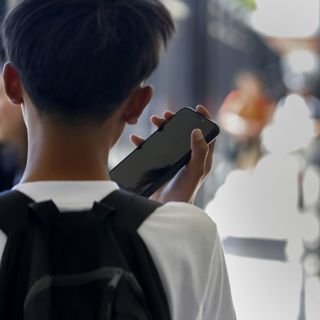
The Push to Ban Phones in School
As students around the United States head back to school, many are encountering a new reality: bans on their use of cellphones.Natasha Singer, a technology reporter for The New York Times, discusses the restrictions and the contentious debate they have prompted.Guest: Natasha Singer, a technology reporter for The New York Times.Background reading: So far this year, at least eight states have passed laws, issued orders or adopted rules to curb phone use among students during school hours.This Florida school district banned cellphones. Here’s what happened.How has tech changed your school experience? We want to hear about it.For more information on today’s episode, visit nytimes.com/thedaily. Transcripts of each episode will be made available by the next workday. Subscribe today at nytimes.com/podcasts or on Apple Podcasts and Spotify. You can also subscribe via your favorite podcast app here https://www.nytimes.com/activate-access/audio?source=podcatcher. For more podcasts and narrated articles, download The New York Times app at nytimes.com/app.
3 Sep 202427min

What Phil Donahue Meant to Me
Phil Donahue, the game-changing daytime television host, died last week at 88. Mr. Donahue turned “The Phil Donahue Show” into a participation event, soliciting questions and comments on topics as varied as human rights and orgies.Michael Barbaro explains what Phil Donahue meant to him.Background reading: An obituary for Mr. Donahue, who died last week at 88.Here are 3 episodes that explain Mr. Donahue’s daytime dominance.For more information on today’s episode, visit nytimes.com/thedaily. Transcripts of each episode will be made available by the next workday. Subscribe today at nytimes.com/podcasts or on Apple Podcasts and Spotify. You can also subscribe via your favorite podcast app here https://www.nytimes.com/activate-access/audio?source=podcatcher. For more podcasts and narrated articles, download The New York Times app at nytimes.com/app.
30 Aug 202434min
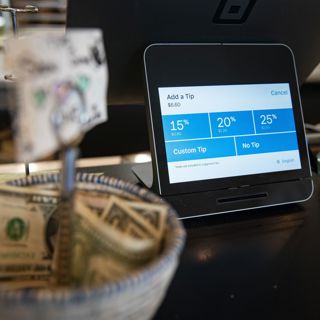
Why Tipping Is Everywhere
Tipping, once contained to certain corners of the economy, has exploded, creating confusion and angst. Now, it is even becoming an issue in the U.S. presidential campaign.Ben Casselman, who covers the U.S. economy for The New York Times, cracks open the mystery of this new era of tipping.Guest: Ben Casselman, a reporter covering the U.S. economy for The New York Times.Background reading: How to deal with the many requests for tips.Former President Donald J. Trump called Vice President Kamala Harris a “copycat” over her “no tax on tips” plan.For more information on today’s episode, visit nytimes.com/thedaily. Transcripts of each episode will be made available by the next workday. Subscribe today at nytimes.com/podcasts or on Apple Podcasts and Spotify. You can also subscribe via your favorite podcast app here https://www.nytimes.com/activate-access/audio?source=podcatcher. For more podcasts and narrated articles, download The New York Times app at nytimes.com/app.
29 Aug 202425min

The War That Won’t End
It’s been nearly a year since the Hamas-led Oct. 7 attacks in Israel and the subsequent war in Gaza.Patrick Kingsley, the Jerusalem bureau chief for The New York Times, explains why the war is still going, and what it would take to end it.Guest: Patrick Kingsley, the Jerusalem bureau chief for The New York Times.Background reading: Here’s a look at the twists and turns over months of talks and what the main sticking points have been recently.Cease-fire talks will continue in Cairo, officials said.For more information on today’s episode, visit nytimes.com/thedaily. Transcripts of each episode will be made available by the next workday. Subscribe today at nytimes.com/podcasts or on Apple Podcasts and Spotify. You can also subscribe via your favorite podcast app here https://www.nytimes.com/activate-access/audio?source=podcatcher. For more podcasts and narrated articles, download The New York Times app at nytimes.com/app.
28 Aug 202427min

The First Major Cyberattack of the 2024 Election
The U.S. authorities have repeatedly warned that foreign governments would seek to meddle in the upcoming presidential election. It now appears they were right.David E. Sanger, a White House and national security correspondent for The New York Times, tells the story of the first major cyberattack of the 2024 campaign.Guest: David E. Sanger, a White House and national security correspondent for The New York Times.Background reading: The hacking of presidential campaigns has started, with the usual fog of motives.The finding that Iran had breached the campaign of former President Donald J. Trump was widely expected.For more information on today’s episode, visit nytimes.com/thedaily. Transcripts of each episode will be made available by the next workday. Subscribe today at nytimes.com/podcasts or on Apple Podcasts and Spotify. You can also subscribe via your favorite podcast app here https://www.nytimes.com/activate-access/audio?source=podcatcher. For more podcasts and narrated articles, download The New York Times app at nytimes.com/app.
27 Aug 202429min