32. The NSA Director on Special Forces, Cyber, AI & the Threats Ahead

32. The NSA Director on Special Forces, Cyber, AI & the Threats Ahead

What does a career in Special Forces teach you about the threats America faces today?

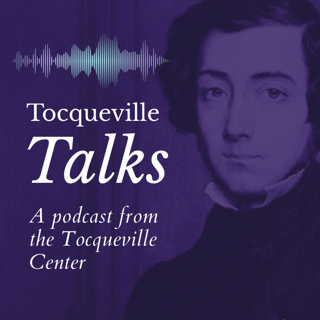
General Joshua Rudd has spent his career at the intersection of military service, national security, and a rapidly changing world. Now Director of the National Security Agency and Commander of U.S. Cyber Command, he joins Tocqueville Talks for a wide-ranging conversation about his path from Furman University to Special Forces and ultimately to the highest levels of American intelligence and cyber defense.

Rudd did not initially envision a career in the military. A Furman graduate and ROTC student, he entered the Army expecting to serve for several years before returning to graduate school. Instead, an unexpected opportunity led him to Special Forces. After September 11, 2001, he made the decision to stay.

That began a career shaped by military service, deployments, command, and the changing nature of the threats facing the United States.

Rudd reflects on what Special Forces taught him about curiosity, discipline, preparation, risk, trust, and the relentless pursuit of excellence. Special operations may require audacity, but, as Rudd explains, audacity is inseparable from careful preparation and a clear understanding of risk.

The conversation then turns to the changing character of warfare itself.

Information now travels at extraordinary speed. Cheap drones and unmanned systems are transforming battlefields. Digital networks increasingly connect military operations across domains. Cyber capabilities can reach into the infrastructure on which ordinary civilian life depends. And artificial intelligence is creating both extraordinary opportunities and new vulnerabilities.

Rudd discusses the role of the NSA and U.S. Cyber Command in this environment and considers how the United States should think about AI, cyber threats, deterrence, and the possibility of attacks on critical infrastructure. He describes a scenario in which AI-enabled cyber capabilities could become a “weapon of mass disruption,” affecting systems such as power, water, transportation, telecommunications, and finance.

But the conversation is not only about technology.

Again and again, Rudd returns to the human questions beneath national security: What makes a good leader? What creates trust? How should leaders think about risk? What obligations accompany military service? And what kind of judgment will be required as our technological power increases?

That last question leads to one of the conversation's most unexpected themes: the importance of the humanities in the age of AI.

Rudd argues that the future of national security cannot be left solely to technical specialists. Computer science, data analytics, and engineering matter enormously—but so do philosophy, ethics, policy, and the liberal arts. Knowing what a technology can do is different from knowing how it should be used.

The conversation also explores a new educational partnership between the NSA and Furman University designed to prepare students to think across those boundaries.

From Special Forces to cyber defense, Rudd's career offers an unusual perspective on both the enduring demands of military service and the rapidly changing threats confronting the United States.

At its heart, this conversation asks:

What kind of leaders—and what kind of citizens—will America need to meet the security challenges ahead?

Det här avsnittet är hämtat från ett öppet RSS-flöde och publiceras inte av Podme. Det kan innehålla reklam.

Avsnitt(32)

31. Finland's President Alexander Stubb on Political Philosophy, Power & a World in Transition

31. Finland's President Alexander Stubb on Political Philosophy, Power & a World in Transition

What can political philosophy teach a president about leadership, power, and a changing international order?In this episode of Tocqueville Talks, Alexander Stubb, President of the Republic of Finland,...

24 Sep 31min

30. Why College Should Challenge What You Believe | Tocqueville Fellows on Learning to Disagree

30. Why College Should Challenge What You Believe | Tocqueville Fellows on Learning to Disagree

What if the purpose of college isn't to confirm what you believe—but to teach you how to question it?In this episode of Tocqueville Talks, Furman University students Laura Grace McSwain and Liza Sherb...

21 Sep 22min

29. The Big Questions Facing American Democracy | Tocqueville Talks 2026–27 Preview

29. The Big Questions Facing American Democracy | Tocqueville Talks 2026–27 Preview

What are the biggest questions facing American democracy—and how can universities create spaces where they are seriously debated?In this season-opening episode of Tocqueville Talks, Tocqueville Center...

10 Sep 30min

28. Why Americans Are So Patriotic | Tocqueville's Surprising Answer

28. Why Americans Are So Patriotic | Tocqueville's Surprising Answer

Why does patriotism seem so powerful in America—and what happens when it begins to disappear?As Americans celebrate the nation's 250th anniversary, Alexis de Tocqueville's reflections on patriotism ma...

10 Juli 23min

27. Why the Old Political Order Is Cracking | Populism, MAGA, and the Future of Democracy

27. Why the Old Political Order Is Cracking | Populism, MAGA, and the Future of Democracy

For generations, politics in Europe and America was dominated by large, stable political parties. Today, those old political alignments are breaking down.Why are voters abandoning established parties?...

3 Juli 35min

26. What Swimming Can Teach Us About Democracy | Tocqueville's Forgotten Insight

26. What Swimming Can Teach Us About Democracy | Tocqueville's Forgotten Insight

What can a neighborhood swim league teach us about democracy?More than you might think.When Alexis de Tocqueville visited America in 1831, he was astonished by what he called associations—ordinary cit...

25 Juni 41min

25. Is the Postwar Order Ending? Europe, Trump, Ukraine, and the Future of the West — Eleanor Beardsley

25. Is the Postwar Order Ending? Europe, Trump, Ukraine, and the Future of the West — Eleanor Beardsley

For eighty years, Europe and the United States built a common political, economic, and military order.Today, many Europeans wonder whether that world is ending.In this episode of Tocqueville Talks, Br...

18 Juni 27min

Populärt inom Politik & nyheter

svenska-fall
aftonbladet-krim
fordomspodden
p3-krim
rss-krimstad
aftonbladet-daily
flashback-forever
spar
de-fyras-gang
rss-vad-fan-hande
rss-sanning-konsekvens
omni-podd
svd-ledarredaktionen
rss-krimreportrarna
politiken
en-runda-till
rss-flodet
motiv
rss-expressen-dok
ett-rent-noje