Machine Learning Platforms at Uber with Mike Del Balso - TWiML Talk #115
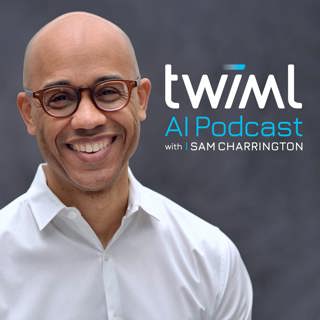
In this episode, I speak with Mike Del Balso, Product Manager for Machine Learning Platforms at Uber. Mike and I sat down last fall at the Georgian Partners Portfolio conference to discuss his presentation “Finding success with machine learning in your company.” In our discussion, Mike shares some great advice for organizations looking to get value out of machine learning. He also details some of the pitfalls companies run into, such as not have proper infrastructure in place for maintenance and monitoring, not managing their expectations, and not putting the right tools in place for data science and development teams. On this last point, we touch on the Michelangelo platform, which Uber uses internally to build, deploy and maintain ML systems at scale, and the open source distributed TensorFlow system they’ve created, Horovod. This was a very insightful interview, so get your notepad ready! Vote on our #MyAI Contest! Over the past few weeks, you’ve heard us talk quite a bit about our #MyAI Contest, which explores the role we see for AI in our personal lives! We received some outstanding entries, and now it’s your turn to check them out and vote for a winner. Do this by visiting our contest page at https://twimlai.com/myai. Voting remains open until Sunday, March 4th at 11:59 PM Eastern time. Be sure to check out some of the great names that will be at the AI Conference in New York, Apr 29–May 2, where you'll join the leading minds in AI, Peter Norvig, George Church, Olga Russakovsky, Manuela Veloso, and Zoubin Ghahramani. Explore AI's latest developments, separate what's hype and what's really game-changing, and learn how to apply AI in your organization right now. Save 20% on most passes with discount code PCTWIML at twimlai.com/ainy2018. The notes for this show can be found at twimlai.com/talk/115.
1 Mars 201849min
Inverse Programming for Deeper AI with Zenna Tavares - TWiML Talk #114
For today’s show, the final episode of our Black in AI Series, I’m joined by Zenna Tavares, a PhD student in the both the department of Brain and Cognitive Sciences and the Computer Science and Artificial Intelligence Lab at MIT. I spent some time with Zenna after his talk at the Strange Loop conference titled “Running Programs in Reverse for Deeper AI.” Zenna shares some great insight into his work on program inversion, an idea which lies at the intersection of Bayesian modeling, deep-learning, and computational logic. We set the stage with a discussion of inverse graphics and the similarities between graphic inversion and vision inversion. We then discuss the application of these techniques to intelligent systems, including the idea of parametric inversion. Last but not least, zenna details how these techniques might be implemented, and discusses his work on ReverseFlow, a library to execute tensorflow programs backwards, and Sigma.jl a probabilistic programming environment implemented in the dynamic programming language Julia. This talk packs a punch, and I’m glad to share it with you. Be sure to check out some of the great names that will be at the AI Conference in New York, Apr 29–May 2, where you'll join the leading minds in AI, Peter Norvig, George Church, Olga Russakovsky, Manuela Veloso, and Zoubin Ghahramani. Explore AI's latest developments, separate what's hype and what's really game-changing, and learn how to apply AI in your organization right now. Save 20% on most passes with discount code PCTWIML at twimlai.com/ainy2018. The notes for this show can be found at twimlai.com/talk/114. For complete contest details, visit twimlai.com/myai. For complete series details, visit twimlai.com/blackinai2018
26 Feb 201828min
Statistical Relational Artificial Intelligence with Sriraam Natarajan - TWiML Talk #113
In this episode, I speak with Sriraam Natarajan, Associate Professor in the Department of Computer Science at UT Dallas. While at NIPS a few months back, Sriraam and I sat down to discuss his work on Statistical Relational Artificial Intelligence. StarAI is the combination of probabilistic & statistical machine learning techniques with relational databases. We cover systems learning on top of relational databases and making predictions with relational data, with quite a few examples from the healthcare field. Sriraam and his collaborators have also developed BoostSRL, a gradient-boosting based approach to learning different types of statistical relational models. We briefly touch on this, along with other implementation approaches. Join the #MyAI Discussion! As a TWiML listener, you probably have an opinion on the role AI will play in our lives, and we want to hear your take. Sharing your thoughts takes two minutes, can be done from anywhere, and qualifies you to win some great prizes. So hit pause, and jump on over twimlai.com/myai right now to share or learn more. Be sure to check out some of the great names that will be at the AI Conference in New York, Apr 29–May 2, where you'll join the leading minds in AI, Peter Norvig, George Church, Olga Russakovsky, Manuela Veloso, and Zoubin Ghahramani. Explore AI's latest developments, separate what's hype and what's really game-changing, and learn how to apply AI in your organization right now. Save 20% on most passes with discount code PCTWIML at twimlai.com/ainy2018. The notes for this show can be found at twimlai.com/talk/113. For complete contest details, visit twimlai.com/myai.
23 Feb 201847min
Classical Machine Learning for Infant Medical Diagnosis with Charles Onu - TWiML Talk #112
In this episode, part 4 in our Black in AI series, i'm joined by Charles Onu, Phd Student at McGill University in Montreal & Founder of Ubenwa, a startup tackling the problem of infant mortality due to asphyxia. Using SVMs and other techniques from the field of automatic speech recognition, Charles and his team have built a model that detects asphyxia based on the audible noises the child makes upon birth. We go into the process he used to collect his training data, including the specific methods they used to record samples, and how their samples will be used to maximize accuracy in the field. We also take a deep dive into some of the challenges of building and deploying the platform and mobile application. This is a really interesting use case, which I think you’ll enjoy. Join the #MyAI Discussion! As a TWiML listener, you probably have an opinion on the role AI will play in our lives, and we want to hear your take. Sharing your thoughts takes two minutes, can be done from anywhere, and qualifies you to win some great prizes. So hit pause, and jump on over twimlai.com/myai right now to share or learn more. Be sure to check out some of the great names that will be at the AI Conference in New York, Apr 29–May 2, where you'll join the leading minds in AI, Peter Norvig, George Church, Olga Russakovsky, Manuela Veloso, and Zoubin Ghahramani. Explore AI's latest developments, separate what's hype and what's really game-changing, and learn how to apply AI in your organization right now. Save 20% on most passes with discount code PCTWIML at twimlai.com/ainy2018. The notes for this show can be found at twimlai.com/talk/112. For complete contest details, visit twimlai.com/myai. For complete series details, visit twimlai.com/blackinai2018.
20 Feb 201848min
Learning "Common Sense" and Physical Concepts with Roland Memisevic - TWiML Talk #111
In today’s episode, I’m joined by Roland Memisevic, co-founder, CEO, and chief scientist at Twenty Billion Neurons. Roland joined me at the RE•WORK Deep Learning Summit in Montreal to discuss the work his company is doing to train deep neural networks to understand physical actions. In our conversation, we dig into video analysis and understanding, including how data-rich video can help us develop what Roland calls comparative understanding, or AI “common sense”. We briefly touch on the implications of AI/ML systems having comparative understanding, and how Roland and his team are addressing problems like getting properly labeled training data. Enter Our #MyAI Contest! Are you looking forward to the role AI will play in your life, or in your children’s lives? Or, are you afraid of what’s to come, and the changes AI will bring? Or, maybe you’re skeptical, and don’t think we’ll ever really achieve enough with AI to make a difference? In any case, if you’re a TWiML listener, you probably have an opinion on the role AI will play in our lives, and we want to hear your take. Sharing your thoughts takes two minutes, can be done from anywhere, and qualifies you to win some great prizes. So hit pause, and jump on over twimlai.com/myai right now to share or learn more. The notes for this show can be found at twimlai.com/talk/111.
15 Feb 201832min
Trust in Human-Robot/AI Interactions with Ayanna Howard - TWiML Talk #110
In this episode, the third in our Black in AI series, I speak with Ayanna Howard, Chair of the Interactive School of Computing at Georgia Tech. Ayanna joined me for a lively discussion about her work in the field of human-robot interaction. We dig deep into a couple of major areas she’s active in that have significant implications for the way we design and use artificial intelligence, namly pediatric robotics and human-robot trust. That latter bit is particularly interesting, and Ayanna provides a really interesting overview of a few of her experiments, including a simulation of an emergency situation, where, well, I don’t want to spoil it, but let’s just say as the actual intelligent beings, we need to make some better decisions. Enjoy! Are you looking forward to the role AI will play in your life, or in your children’s lives? Or, are you afraid of what’s to come, and the changes AI will bring? Or, maybe you’re skeptical, and don’t think we’ll ever really achieve enough with AI to make a difference? As a TWiML listener, you probably have an opinion on the role AI will play in our lives, and we want to hear your take. Sharing your thoughts takes two minutes, can be done from anywhere, and qualifies you to win some great prizes. So hit pause, and jump on over twimlai.com/myai right now to share or learn more. Be sure to check out some of the great names that will be at the AI Conference in New York, Apr 29–May 2, where you'll join the leading minds in AI, Peter Norvig, George Church, Olga Russakovsky, Manuela Veloso, and Zoubin Ghahramani. Explore AI's latest developments, separate what's hype and what's really game-changing, and learn how to apply AI in your organization right now. Save 20% on most passes with discount code PCTWIML at twimlai.com/ainy2018. The notes for this show can be found at twimlai.com/talk/110. For complete contest details, visit twimlai.com/myai. For complete series details, visit twimlai.com/blackinai2018.
13 Feb 201846min
Data Science for Poaching Prevention and Disease Treatment with Nyalleng Moorosi - TWiML Talk #109
For today’s show, I'm joined by Nyalleng Moorosi, Senior Data Science Researcher at The Council for Scientific & Industrial Research or CSIR, in Pretoria, South Africa. In our discussion, we discuss two major projects that Nyalleng is apart of at the CSIR, one, a predictive policing use case, which focused on understanding and preventing rhino poaching in Kruger National Park, and the other, a healthcare use case which focuses on understanding the effects of a drug treatment that was causing pancreatic cancer in South Africans. Along the way we talk about the challenges of data collection, data pipelines and overcoming sparsity. This was a really interesting conversation that I’m sure you’ll enjoy. Be sure to check out some of the great names that will be at the AI Conference in New York, Apr 29–May 2, where you'll join the leading minds in AI, Peter Norvig, George Church, Olga Russakovsky, Manuela Veloso, and Zoubin Ghahramani. Explore AI's latest developments, separate what's hype and what's really game-changing, and learn how to apply AI in your organization right now. Save 20% on most passes with discount code PCTWIML at twimlai.com/ainy2018. The notes for this show can be found at twimlai.com/talk/109. For complete contest details, visit twimlai.com/myaicontest. For complete series details, visit twimlai.com/blackinai2018.
8 Feb 201852min
Security and Safety in AI: Adversarial Examples, Bias and Trust w/ Moustapha Cissé - TWiML Talk #108
In this episode I’m joined by Moustapha Cissé, Research Scientist at Facebook AI Research Lab (or FAIR) Paris. Moustapha’s broad research interests include the security and safety of AI systems, and we spend some time discussing his work on adversarial examples and systems that are robust to adversarial attacks. More broadly, we discuss the role of bias in datasets, and explore his vision for models that can identify these biases and adjust the way they train themselves in order to avoid taking on those biases. Be sure to check out some of the great names that will be at the AI Conference in New York, Apr 29–May 2, where you'll join the leading minds in AI, Peter Norvig, George Church, Olga Russakovsky, Manuela Veloso, and Zoubin Ghahramani. Explore AI's latest developments, separate what's hype and what's really game-changing, and learn how to apply AI in your organization right now. Save 20% on most passes with discount code PCTWIML at twimlai.com/ainy2018. Early price ends February 2! The notes for this show can be found at twimlai.com/talk/108. For complete contest details, visit twimlai.com/myaicontest. For complete series details, visit twimlai.com/blackinai2018.
6 Feb 201850min