197: How to Make a Pharaoh's Tomb
Sety I in the Valley of the Kings (Part 1). Archaeological remains and ancient texts reveal a great deal about tomb-building in the 19th and 20th Dynasties (c.1303—1070 BCE). Records, artefacts, and art all combine to inform us of the workers and their practices. In this episode, we use the sepulchre of Sety I (KV17) as a case-study, to understand an ancient tomb project. Explore the tomb of Sety I in a 3D Walkthrough by MuseEd https://mused.com/guided/926/tomb-of-seti-i-valley-of-the-kings/ Archaeological information for Sety's tomb at the Theban Mapping Project: https://thebanmappingproject.com/index.php/tombs/kv-17-sety-i Photos of Sety’s tomb by Kairoinfo4u: https://flickr.com/photos/manna4u/albums/72157687439529835/ For up-to-date studies and discussions of the royal tombs and their history, see The Oxford Handbook of the Valley of the Kings: https://global.oup.com/academic/product/the-oxford-handbook-of-the-valley-of-the-kings-9780190052072. Individual articles may be available via their authors if you do a web search of the author + article title. Music and interludes by Keith Zizza www.keithzizza.net. Music and interludes by Luke Chaos www.chaosmusick.com. The History of Egypt Podcast: Website: www.egyptianhistorypodcast.com. Support the show via Patreon www.patreon.com/egyptpodcast. Make a one-time donation via PayPal payments. Learn more about your ad choices. Visit megaphone.fm/adchoices
29 Nov 202431min

Sety, Thutmose, and Royal Coffins (with Prof. Kara Cooney)
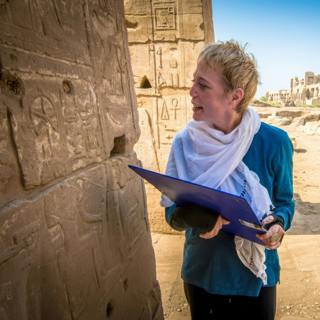
In 1881, a remarkable discovery took place in Luxor, Egypt. In the hills of Deir el-Bahari, a secret tomb held the reburied mummies of Egypt’s famous pharaohs. Figures like Sety I, Ramesses II, Thutmose III, and Amunhotep I lay in rest, in carefully hidden coffins. However, the caskets themselves hold many secrets, which today’s guest has spent years exploring. VIDEO VERSION available on YouTube. Interview guest: Prof. Kara Cooney (UCLA) presents Recycling for Death:Coffin Reuse in Ancient Egypt and the Theban Royal Caches. Part of the UCLA Coffins Project https://arce.org/project/ucla-coffins-project/. Available via AUC Press https://aucpress.com/9781649031280/recycling-for-death/. Kara Cooney’s website: https://karacooney.squarespace.com/. The Deir el-Bahari cache and the royal coffins & mummies: Coffin of Sety I https://www.flickr.com/photos/tags/coffinofsetii. Possible evidence of its origin as a queenly coffin via Dr. Peter Lacovara https://peterlacovara.com/portfolio/coffin-conundrum/. Daressy, G. (1909). Cercueils des cachettes royales: Nos 61001-61044. https://archive.org/details/DaressyCercueils1909. Maspero, G., & Brugsch, É. (1881—1887). La Trouvaille de Deir-el-Bahari, 2 vols. https://digi.ub.uni-heidelberg.de/diglit/maspero1881bd1 and https://digi.ub.uni-heidelberg.de/diglit/maspero1887bd2. Learn more about your ad choices. Visit megaphone.fm/adchoices
22 Nov 20241h 47min

196: The Golden Path
The plan of an honest ruler. Around 1300 BCE, as today, gold was big business. King Sety I personally led an expedition into the eastern desert, to establish a new mining operation. Back in the Nile Valley, high-ranking officials leave monuments testifying to their work delivering, securing, and recording that gold. And thanks to art and artefacts, we can reconstruct the items these gold-workers produced. From the Red Sea Mountains to the Temple of Abydos, we follow the paths of gold… Logo image: Silver and gold statuette of a New Kingdom pharaoh, possibly Sety I (Louvre). For records of Sety and his contemporaries, see Kenneth Kitchen. Ramesside Inscriptions, Volume I. Versions: Hieroglyphs; English translations; References and Commentary. Photos of Sety’s Temple at Kanais in the Wadi Barramiya. Sety’s monuments including the Abydos and Kanais temples, in P. J. Brand, The Monuments of Seti I: Epigraphic, Historical and Art Historical Analysis (2000). Available free online at Academia.edu. Website: www.egyptianhistorypodcast.com. Support the show via Patreon www.patreon.com/egyptpodcast. Make a one-time donation via PayPal payments. Music and interludes by Keith Zizza www.keithzizza.net. Music and interludes by Luke Chaos www.chaosmusick.com. Learn more about your ad choices. Visit megaphone.fm/adchoices
15 Nov 202451min

195: A Quest for Gold
Sety in the Desert. Around 1300 BCE, King Sety led an expedition into the Red Sea hills. His purpose? Gold. The King brought soldiers and charioteers out to mine precious metals for his treasuries. The journey was difficult, traversing a dry and rocky landscape far from the comforts of home. Fortunately, Sety left detailed descriptions of the event; and art and artefacts from this era allow us to reconstruct the journey... Episode details: Logo image: Soldiers make camp, setting up tents for commanders. Tomb of Horemheb at Saqqara (Martin 2016). Website: www.egyptianhistorypodcast.com. Support the show via Patreon www.patreon.com/egyptpodcast. Make a one-time donation via PayPal payments. Music and interludes by Keith Zizza www.keithzizza.net. Music and interludes by Luke Chaos www.chaosmusick.com. The Wadi Barramiya, in which Sety’s expedition travelled, by Hakatani Tenfu at Flickr.com. The Kanais Temple of Sety I, in the Wadi Barramiya, by Mutnedjmet at Flickr.com. Select bibliography: A. Dodson, Sethy I King of Egypt: His Life and Afterlife (Cairo, 2019). H. Gauthier, ‘Le temple de l’Ouâdi Mîyah (el Knaïs)’, Bulletin de l’Institut Français d’Archéologie Orientale 17 (1920), 1--38. Available online. K. A. Kitchen, Ramesside Inscriptions Historical and Biographical, I (Oxford, 1975). R. Klemm and D. Klemm, Gold and Gold Mining in Ancient Egypt and Nubia: Geoarchaeology of the Ancient Gold Mining Sites in the Egyptian and Sudanese Eastern Deserts (Berlin, 2013). G. T. Martin, Tutankhamun’s Regent: Scenes and Texts from the Memphite Tomb of Horemheb (EES Excavation Memoir 111; London, 2016). C. D. Reader, A Gift of Geology: Ancient Egyptian Landscapes and Monuments (Cairo, 2022). R. D. Rothe et al., Pharaonic Inscriptions from the Southern Eastern Desert of Egypt (Winona Lake, 2008). B. M. Sampsell, The Geology of Egypt: A Traveler’s Handbook (Cairo, 2014). See website for complete listing. Learn more about your ad choices. Visit megaphone.fm/adchoices
8 Nov 202437min

194: A Prince of Egypt (feat. Prof. Peter Brand)
Ramesses Rising. Traditionally, Egyptian princes are almost invisible. The pharaohs downplayed the presence of their sons, to reduce political competition and maintain religious order. Sety I (c.1300 BCE) changed this habit. In art and monuments, he promoted young Ramesses II to a position of prominence and power. The exact nature of this promotion is slightly controversial among Egyptologists. In this episode, we explore Ramesses’ rise and some of the thorny issues. Additionally, Prof. Peter Brand joins us to discuss some of the harder questions on these period. Peter Brand, The Monuments of Sety I (2000), available free at Academia.edu. Peter Brand, Ramesses II: Egypt’s Ultimate Pharaoh (2023) available from Lockwood Press. Music and interludes by Keith Zizza www.keithzizza.net. Music and interludes by Luke Chaos www.chaosmusick.com. Outro music: “River Lullaby” from The Prince of Egypt (1998) – Harp cover by The Knitting Harpist (YouTube). The History of Egypt Podcast: Website: www.egyptianhistorypodcast.com. Support the show via Patreon www.patreon.com/egyptpodcast. Make a one-time donation via PayPal payments. Music and interludes by Keith Zizza www.keithzizza.net. Music and interludes by Luke Chaos www.chaosmusick.com. Learn more about your ad choices. Visit megaphone.fm/adchoices
1 Nov 20241h 13min

Cleopatra (All Seven of Them) with Prof. Lloyd Llewellyn-Jones
Recorded May 2024. A name more famous than its owners. The Cleopatras of Egypt (all seven of them) were remarkably influential women and rulers. Frequently taking up power and responsibilities far beyond their more famous husbands (the Ptolemies), the seven Cleopatras of Egypt (and even more in the wider Hellenistic world) are worthy of greater attention and respect. In this interview, Prof. Lloyd Llewellyn-Jones of Cardiff University introduces these figures and his new book The Cleopatras: Forgotten Queens of Egypt. Author details: Lloyd Llewellyn-Jones, The Cleopatras, 2024. Available in hardback, paperback, ebook, and audiobook (read by the author). See Headline Publishing and all good retailers. Lloyd Llewellyn-Jones at Cardiff University and Academia.edu. Rulers discussed in this episode: Cleopatra I Syra: Wikipedia. Cleopatra III: Wikipedia. Cleopatra Thea of the Seleukid Empire: Wikipedia. Cleopatra VI Tryphaena: Wikipedia. Cleopatra VII Thea Philopator: Wikipedia. The History of Egypt Podcast: Website: www.egyptianhistorypodcast.com. Support the show via Patreon www.patreon.com/egyptpodcast. Make a one-time donation via PayPal payments. Music by Michael Levy www.ancientlyre.com. Learn more about your ad choices. Visit megaphone.fm/adchoices
27 Okt 20241h 8min

193: Slaying the Bull of Seth (Ramesses’ First Rodeo)
In the Temple of Sety I at Abydos, an out-of-the-way corridor preserves a unique image. The King of Egypt, and his eldest son, wrangle and subdue a bull. This scene appears simple, at first glance. But it has a wealth of deeper symbolism and meanings. In this episode, we explore the idea of Bulls as images of power and violence, and their relationship with gods like Osiris and Seth… Episode logo: Ramesses and the Bull, by artist Brenna Baines (commissioned by The History of Egypt Podcast). Full version available on my Patreon (link below). The Bull Hall photos by Heidi Kontkanen at Flickr.com. The Bull Hall in Peter Brand, Monuments of Sety I (2000) available free online. The History of Egypt Podcast: Website: www.egyptianhistorypodcast.com. Support the show via Patreon www.patreon.com/egyptpodcast. Make a one-time donation via PayPal payments. Music and interludes by Keith Zizza www.keithzizza.net. Sound effects purchased from Pond5. Select Bibliography: M. Abuel-Yazid, ‘Architecture of the Slaughterhouse of the Seti Temple at Abydos’, in I. Regulski (ed.), Abydos: The Sacred Land at the Western Horizon (2019), 7—24. L. Baqué, ‘“On that Day When the Long-Horned Bull was Lassoed...” (PT [254] 286). A Scene in the “Corridor of the Bull” of the Cenotaph of Sethos I in Abydos: An Iconologic Approach’, Studien zur Altägyptischen Kultur 30 (2002), 43—51. P. J. Brand, The Monuments of Seti I: Epigraphic, Historical and Art Historical Analysis (2000). Available free online. R. H. Wilkinson, The Complete Gods and Goddesses of Ancient Egypt (2003). J. M. Galán, ‘Bullfight Scenes in Ancient Egyptian Tombs’, Journal of Egyptian Archaeology 80 (1994), 81—96. See website for complete reference list. Learn more about your ad choices. Visit megaphone.fm/adchoices
25 Okt 202445min

A Musical Book of the Dead (with Nemuer and Dr. Christian de Vartavan)
Remember “Going Forth by Day”? It’s back! In song form. Many creative projects have explored themes around the Egyptian underworld. But in 2023, the Czech band Nemuer has taken a novel approach. Their album, Book of Going Forth by Day is based on original funerary papyri; and for the pronunciation of the Egyptian language, they consulted with Egyptologist Dr. Christian de Vartavan. This gives us an opportunity to explore excerpts from the Book of the Dead from a new perspective and connect more deeply with the ancient language. The podcast has covered the Book of the Dead previously, but it may be time to revisit it. Would you like me to produce more episodes diving into this text? Let me know in the comments. Episode details: Nemuer, Going Forth by Day (2023). Available on Spotify and Bandcamp. Christian de Vartavan, Vocalised Dictionary of Ancient Egyptian (2022). Available in Open Access. The History of Egypt Podcast Website: www.egyptianhistorypodcast.com. Access expanded materials and support the History of Egypt Podcast at www.patreon.com/egyptpodcast. Make a one-time donation via PayPal payments. Learn more about your ad choices. Visit megaphone.fm/adchoices
19 Okt 20241h 4min