
《ABB黏糊糊》 Speak like a native using ABB (3)

《ABB黏糊糊》 Speak like a native using ABB (3)

Are you a fan of our podcast and hungry for more? Well, we've got a treat for you! By becoming a member, you'll gain exclusive access to our treasure trove of story and story explanation transcripts.
Transcript Membership

Did you know that you can practice your spoken Chinese with Rui & Simeng and other language enthusiasts ? Besides having exclusive access to the transcript, you can also engage in spontaneous conversations with other learners where you can improve your Chinese speaking skills in a friendly, supportive environment.

For a limited time, use code LCTS50 to get 50% off your annual membership at Checkout.

Join LCTS community and Speaking Chinese Now

ReaLife Chinese for beginners Podcast

************************************************************

ABB structures consist of two words or phrases that are similar in meaning or sound. It can be used to create a variety of effects, such as emphasis, humor, or vivid imagery.
黏糊糊 (nián hu hu) is a compound word that combines the words 黏 (nián), the base character, meaning "sticky", 糊 (hu) - meaning "paste-like" or "doughy." When combined, "黏糊糊" (nián hu hu) conveys the idea of something being very sticky or gooey, with an emphasis on its viscosity or adhesive nature.

************************************************************

Brilliant Idea #1

If you need something rock solid in your life and someone shared this podcast with you, or you think you already subscribed on Apple Podcast/Spotify, support us by becoming a transcript member.

And be sure to share with a friend or colleague if you enjoy the podcast because:

  • 2023 marks 8th year of LCTS
  • We want to hear your feedback
  • It will motivate us to continue crafting more stories

************************************************************

Brilliant Idea #2 You're obviously full of wisdom and fluent in Chinese if you are listening to LCTS . We appreciate every feedback we receive, and it helps us craft the following week's Podcast. Leaving us a review on iTunes !

************************************************************

Check out our playlists on Spotify

Chinese for Superior- LCTS

Chinese for Advanced-Playlist

Chinese for Intermediate High-LCTS

Chinese for Intermediate-Playlist

Chinese for Beginners-Playlist

❤️❤️❤️❤️❤️❤️❤️❤️❤️❤️❤️❤️❤️❤️❤️❤️❤️❤️❤️❤️❤️❤️❤️❤️

Follow and subscribe for free

Get the next episode as soon as it is available by following/subscribing it for free at

Apple Podcast

Google Podcast

Spotify

Det här avsnittet är hämtat från ett öppet RSS-flöde och publiceras inte av Podme. Det kan innehålla reklam.

Avsnitt(395)

3.3.2B(1)《他的深圳故事》故事解读(一)

3.3.2B(1)《他的深圳故事》故事解读(一)

深圳 Shēnzhèn Place name, a metropolitan city in Guangdong 市 shì Noun, city as an administrative division \ 北京市,上海市,纽约市…… 区 qū Noun, district as an administrative division 深圳市宝安区,北京市朝阳区 镇 zhèn Noun, tow...

14 Aug 201617min
2.3.2B 过年的由来("年"的故事):故事解读

2.3.2B 过年的由来("年"的故事):故事解读

7 Feb 201624min

2.3.2A 过年的由来("年"的故事)

2.3.2A 过年的由来("年"的故事)

This story tells the origins of Chinese Lunar New year, which is called "Nian" in Chinese. 中国古时候,有一种叫"年"的怪兽,"年"的头上长着尖角,非常凶猛。"年"兽住在海底,每到除夕,就爬上岸来吃人和牲畜,所以每到除夕,人们都要到深山里躲起来。 这一年的除夕,乡亲们正忙着收拾东西躲到山里去。就在这时候,村子...

7 Feb 20162min
2.2.5B《骆驼和羊》故事解读

2.2.5B《骆驼和羊》故事解读

22 Jan 201615min

2.2.5A 故事《骆驼和羊》

2.2.5A 故事《骆驼和羊》

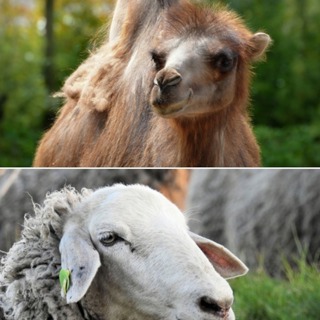
A camel and a sheep started an argument about the advantage of heights. The camel argued being tall is good, while the sheep discussed being short got more advantage.They finally learned their lessons...

22 Jan 20162min

2.1.3B "雪孩子"解读

2.1.3B "雪孩子"解读

17 Jan 20165min

2.1.3A 故事"雪孩子"

2.1.3A 故事"雪孩子"

This is one of the most well-known Chinese class stories for children. The bunny built a snowman with her mom's help and while the mom went searching for food, bunny was taking a nap at home with the ...

17 Jan 20162min

2.2.6B《小马过河》故事解读

2.2.6B《小马过河》故事解读

《小马过河》故事解读 在一座小山旁边,"座"是一个量词,是山的量词。你可以说一座山,一座高山,一座大山,一座小山。住着一匹老马和一匹小马。那这里的"匹"呢是马的量词,除马以外,你还可以说一匹布,布就是你用来做衣服的材料,叫布。小马整天跟着妈妈,整天呢就是从早到晚。从来不肯离开一步。"从来"就是没有发生过的意思。"不肯"呢就是不想、不愿意。"离开"就是小马想一直和妈妈在一起,它不想和妈妈很远。"一步...

6 Dec 201522min

Populärt inom Utbildning

det-skaver
historiepodden-se
rss-bara-en-till-om-missbruk-medberoende-2
allt-du-velat-veta
nu-blir-det-historia
harrisons-dramatiska-historia
johannes-hansen-podcast
not-fanny-anymore
sektledare
rss-viktmedicinpodden
roda-vita-rosen
i-vantan-pa-katastrofen
rss-dr-bjorklund
rss-real-talk-with-jesper-stahl
rss-max-tant-med-max-villman
rss-basta-livet
rss-relationsrevolutionen
sa-in-i-sjalen
rss-sjalsligt-avkladd
rss-foraldramotet-bring-lagercrantz