

200 | Stock Market Fundamentals and Index Fund Investing

200 | Stock Market Fundamentals and Index Fund Investing

Most investors can recite the phrase "buy and hold" in their sleep, but how many actually understand what they're holding? Stocks represent partial ownership in businesses—yet price swings, P/E ratios, and market sentiment can feel more like alchemy than arithmetic. Brian Feroldi, a Motley Fool contributor, breaks down what actually makes a stock valuable. The core insight: stock prices rise because companies generate profits, not because of daily market drama or ticker symbols flashing green. He explains why the price-to-earnings ratio matters more than the share price itself, and why two $50 stocks can represent wildly different values depending on the earnings underneath. The episode also tackles why markets react more to expectations than to actual news—good earnings can send a stock tumbling if investors anticipated better. Feroldi emphasizes that long-term profit growth is what drives business value, which is why index funds work: they capture the aggregate rise in corporate profits over time without requiring you to pick individual winners. Key Topics Discussed Introduction to Stocks [00:00:41] Overview of stocks as ownership vehicles in companies. Understanding Individual Stocks [00:01:50] Why understanding what you own matters for long-term success. What Drives Stock Prices? [00:05:15] Stocks increase in value primarily through profit generation and growth. The Role of P/E Ratio [00:11:01] How to use the price-to-earnings ratio to assess stock value beyond share price alone. Market Sentiment vs. Actual Value [00:24:47] Why market reactions hinge more on expectations than on absolute news value. Conclusion and Key Takeaways [00:40:18] Summary of long-term investment principles and the case for index funds. Key Quotes "Stocks signify ownership in a company." [00:03:14] "Stocks increase in value primarily due to profit generation." [00:05:15] "Index funds appreciate because profits rise over time." [00:25:47] "Market response hinges more on expectations than on news value." [00:24:21] "Long-term profit growth correlates with business value increases." [00:34:02] Resources The Future is Faster Than You Think by Steven Kotler and Peter D. Mendes [00:22:04] FAQs What is a stock? A stock represents partial ownership of a business and provides a claim on its assets and profits. [00:03:14] How do stocks gain value? Stocks gain value primarily through the profits and profit growth of the companies behind them. [00:05:15] What does the P/E ratio indicate? The P/E ratio compares a company's current share price to its earnings per share to assess its valuation. [00:11:01] How can market sentiment affect stock prices? Market sentiment influences stock prices based on how news affects expectations rather than the actual news itself. [00:24:21] Why are index funds recommended? Index funds allow investors to buy a broad slice of the market and benefit from overall profit growth without picking individual stocks. [00:25:47] Terminology Stock A financial instrument that represents ownership in a company. [00:03:14] P/E Ratio Price-to-earnings ratio; a valuation metric used to compare a company's current share price to its earnings. [00:11:01] Market Sentiment The overall attitude of investors toward a particular security or financial market. [00:24:21] Index Funds Mutual funds or exchange-traded funds (ETFs) that track a market index. [00:25:47] Action Items Explore different metrics for evaluating stock value like P/E ratio. [00:11:01] Consider index funds for consistent and diversified investment. [00:25:47] ▶ Listen Next: Ep. 201 — Rule of 55: Early Retirement Withdrawal Strategy | Essential Listening

Det här avsnittet är hämtat från ett öppet RSS-flöde och publiceras inte av Podme. Det kan innehålla reklam.

Avsnitt(692)

609 | How to Talk to Your Partner about FI | Jasper Lee

609 | How to Talk to Your Partner about FI | Jasper Lee

Your spouse shoots down every FI conversation with "we can't afford it" or "retirement at 35 sounds crazy." You respond with better spreadsheets, tighter logic, more compelling numbers—and somehow mak...

27 Juli 59min

608 | Die With Zero, Revisited

608 | Die With Zero, Revisited

Brad Barrett's daughter just graduated high school. She's heading to college in a few months. The number of times he'll see her for the rest of his life? Already countable. This realization—visceral a...

20 Juli 1h 13min

607 | Other Mountains I Want to Climb | Diania Merriam

607 | Other Mountains I Want to Climb | Diania Merriam

Reaching financial independence is supposed to be the goal—but what if you get there and realize the real skill isn't earning or saving, but learning to spend? And what if the metric for business succ...

13 Juli 1h 21min
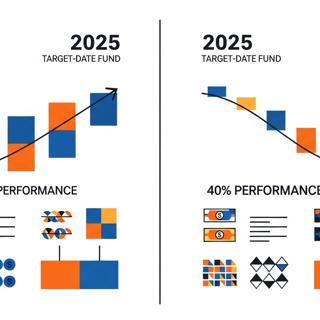
606 | Deep Dive: Target-Date Retirement and Bond Funds | Cody Garrett

606 | Deep Dive: Target-Date Retirement and Bond Funds | Cody Garrett

Most investors think they're buying the same thing when they choose a target date fund—but two people who bought 2025 target date funds 15 years ago could have 40% different returns today. Same target...

6 Juli 1h 8min

605 | Retire in Less Than 10 Years

605 | Retire in Less Than 10 Years

At 21, Cody Berman appeared on ChooseFI as a college student discovering financial independence. Three years later, he retired at 26. Now 30 with a $5 million net worth, he's back to reveal exactly ho...

29 Juni 1h 7min

604 | Getting Personal With Personal Finance: Bill Yount

604 | Getting Personal With Personal Finance: Bill Yount

Bill Yount reached financial independence at 60—then froze. His financial advisor confirmed 100% security, yet instead of relief, he felt disoriented fog. The emergency medicine physician who transfor...

22 Juni 1h

603 | Crash Proof: The Science Of Stock Market Resilience | Brian Feroldi

603 | Crash Proof: The Science Of Stock Market Resilience | Brian Feroldi

The stock market crashes about once every three years—at least a 20% drop. Most investors panic and sell. But if you understood why markets always recover, you'd do the opposite. Brian Feroldi reveals...

15 Juni 51min
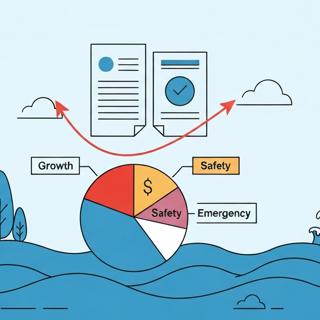
602 | FI 201 Beyond FI Basics: Asset Allocation & Market Psychology Mastery

602 | FI 201 Beyond FI Basics: Asset Allocation & Market Psychology Mastery

Most investors lose to the market because they're trying to pick winners in a game where only 4% of stocks have created 100% of market wealth over the past century. The math isn't in your favor—but th...

8 Juni 1h 1min

Populärt inom Business & ekonomi

badfluence
framgangspodden
dynastin
varvet
uppgang-och-fall
avanzapodden
svd-tech-brief
fill-or-kill
rss-inga-dumma-fragor-om-pengar
rss-kort-lang-analyspodden-fran-di
bathina-en-podcast
tabberaset
rikatillsammans-om-privatekonomi-rikedom-i-livet
montrosepodden
ekonomiekot-extra
rss-borslunch
borslunch-2
rss-veckans-trade
rss-hos-psykologen
rss-dagen-med-di