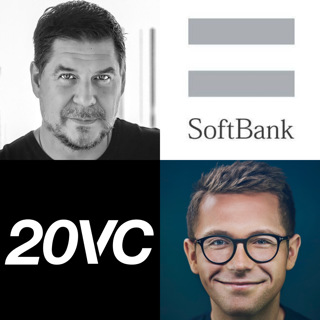
20VC: Marcelo Claure, CEO of Softbank Group International on Lessons From Investing $1BN Per Week with Masa Son, How Softbank Could Have Up To 8 Companies Go Public in LATAM Alone Next Year & How Softbank Analyse Both Deal Pricing and Competition Today
Marcelo Claure serves as CEO of SoftBank Group International and COO of SoftBank Group Corp., the world's largest tech investor. At Softbank, Marcelo oversees the company's strategic direction and its portfolio of operating companies, including WeWork, SB Energy, Fortress, Boston Dynamics, as well as SoftBank's stake in T-Mobile U.S. He also spearheads the SoftBank Latin America Fund, a $5 billion fund dedicated to investing in technology growth opportunities throughout the region. If that was not enough, Marcelo serves as Exec Chairman @ WeWork, is on the board of Arm, is the president of Club Bolívar, Bolivia's most popular and successful soccer team; co-owner and Chairman of Inter Miami CF and most recently co-owner of Girona FC. In Today's Episode with Marcelo Claure You Will Learn: 1.) How Marcelo made his way into the world of startups and came to found his first company, Brightstar? How did Brightstar lead to Marcelo meeting Masa and moving to Tokyo to invest $1BN per week with him? 2.) From spending a year with Masa in Tokyo, what did Marcelo learn about Masa that he did not know before? How did spending this time with Masa impact Marcelo's operating mindset and his investing mindset? What were the most memorable founder meetings that Marcelo and Masa had in that year? Why did those ones stand out? 3.) When starting Softbank's LATAM Fund, what hypothesis did Marcelo have going into investing in LATAM? Which were confirmed? On the flip side, which proved to be wrong? How does Marcelo respond to people that say "LATAM produces copycat companies"? Why does Marcelo bet that Softbank will have 8 portfolio companies in LATAM go public next year? 4.) How does Marcelo think about the importance of price and price discipline today? What is their decision-making framework when determining whether to pay up or not for a deal? What have been some of Marcelo's biggest misses? How did they impact his decision-making process moving forward? How does Softbank approach conflicts when investing today? 5.) How does Marcelo analyze the increasing competition in the LATAM ecosystem? How has his style changed as a result? Through what lens does Marcelo assess the role that Tiger has played over the last 18 months? Why does Marcelo think that other firms have trash-talked Softbank before? How does Marcelo see the venture landscape as fundamentally changed? Item's Mentioned In Today's Episode with Marcelo Claure Marcelo's Favourite Book: Endurance: Shackleton's Incredible Voyage to the Antarctic Marcelo's Most Recent Investment: Uala
30 Aug 202139min
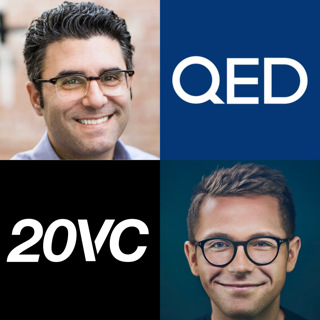
20VC: Has Price Discipline Disappeared? Is it Possible to Build Ownership Over Time? Why Venture Is Less Collaborative Now Than Ever? How fast Do Breakout Companies Become Obvious? How To Construct an Optimised and Repeatable Investment Decision-Making Pr
Frank Rotman is a founding partner of QED Investors, one of the leading fintech-focused venture firms investing today with a portfolio including the likes of Klarna, Kavak, Quinto Andar, Credit Karma and more. As for Frank, prior to QED, Frank was one of the earliest analysts hired into Capital One and spent almost 13 years there helping build many of the company's business units and operational areas. Post Capital One, Frank went on to found a student lending company before joining up again with Nigel Morris to co-found QED. In Today's Episode with Frank Rotman You Will Learn: 1.) How Frank made his way into the world of venture having spent 13 years scaling Capital One? What was the founding moment for Nigel and Frank with QED? How does Nigel compare to poker to venture capital? Where are they similar? Where are they different? 2.) Does Frank feel that price discipline has disappeared in the venture market today? What have been some of Frank's biggest lessons on price? Is Frank concerned by the compression in deployment timelines for funds? How does Frank feel on the rise of pre-emptive rounds? In what way does Frank advise his founders when they are offered pre-emptive rounds? 3.) How important does Frank believe sizing your initial position is, from an ownership perspective? Is it possible to build ownership in your winners? What have been some lessons for Frank with regards to the speed of which breakout companies are clear? How does Frank assess and analyse bridge rounds and whether to participate or not? 4.) Why does Frank believe that the VC world is less collaborative than ever today? What has caused this? What can VCs do to change this? How do we solve the structural problem of VCs needing ownership for their business and founders not wanting excessive dilution? What does Frank believe is the most dangerous trend in the VC market today? 5.) How does Frank think about what he can do to improve his investment decision-making process? What repeatable process has Frank landed on that works? Where do many make mistakes here? How does Frank view the relationship between process and outcome? Item's Mentioned In Today's Episode with Frank Rotman Frank's Favourite Book: Tom Robbins Frank's Most Recent Investment: Hello Alice
26 Aug 202154min
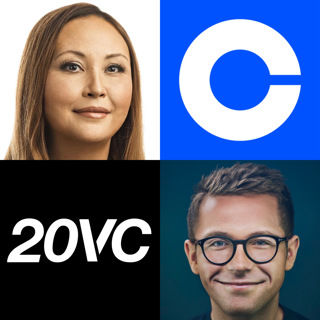
20VC: Coinbase President & COO Emilie Choi on Building Coinbase Ventures into One of the Best Performing Funds with 0 Employees, How Coinbase Thinks Through Internal Resource Allocation and Prioritisation & Why, When and How To Hire Your COO and Head of C
Emilie Choi is the President and Chief Operating Officer @ Coinbase, the easiest place to buy and sell cryptocurrency. Prior to their IPO earlier this year, Coinbase raised funding from some of the best in the business including USV, a16z, Initialized and Ribbit to name a few. As for Emilie, before Coinbase she was Head of Corporate Development for @ LinkedIn and before Linkedin served in various positions at Warner Bros., including as Manager of Corporate Business Development and Strategy. If that was not enough, Emilie currently serves on the board of Naspers and ZipRecruiter. In Today's Episode with Emilie Choi You Will Learn: 1.) How Emilie made her way into the world of startups, came to lead Corp Dev @ Linkedin and how that led to her joining forces with Brian @ Coinbase as COO & President? What lessons did Emilie learn from Reid Hoffman and Jeff Weiner that she has taken with her to Coinbase? 2.) Corp-Dev Guide: Why are so many startups trying to hire Head of Corp Devs today? What are the signals that suggest now is the right time? How would Emilie structure the process of hiring a Head of Corp Dev? What questions should be asked? How can you test their skills? What mistakes do CEOs often make when hiring Head of Corp Devs? 3.) COO Guide: What does the role of COO really mean to Emilie? How does Emilie advise founders on whether they do actually need a COO? How would Emilie structure the process of hiring a COO? What are some common red flags that concern Emilie when hiring COO's? What is the right relationship between CEO and COO? 4.) Resource Allocation: How does Coinbase think about internal resource allocation between core product and their venture products? What was the thinking behind Coinbase Ventures? Why do they have no full-time staff? What is the core objective of the fund? Why does Emilie think it will be one of the best performing funds in venture? Item's Mentioned In Today's Episode with Emilie Choi Emilie's Favourite Book: The Secret History
23 Aug 202145min
20VC LATAM Part 2: a16z's Angela Strange on When To Expand Beyond Your Core Market, Why Serving the Unbanked is Such Good Business & Whether the Startup Will Acquire the Distribution before The Incumbent Acquires the Innovation?
Angela Strange is a General Partner at Andreessen Horowitz, one of the leading venture firms of the last decade with a portfolio including the likes of Facebook, Github, Slack, Airbnb, Asana and more. As for Angela, she largely focuses on investments in financial services and a16z has made significant investments in LATAM in the likes of Loft, Jeeves, Pomelo and Addi to name a few. Prior to a16z, Angela was a product manager at Google where she launched and grew Chrome for Android and Chrome for iOS into two of Google's most successful mobile products. In Today's Episode with Angela Strange You Will Learn: 1.) How Angela made her way into the world of venture from a career of running marathons and product management at Google? 2.) Does Angela believe we are going to see regional winners in LATAM with players owning their segment for Argentina, Mexico, Brazil etc? Why does Angela believe there is a huge business to be had in catering to the unbanked? How does Angela analyze whether startups can acquire distribution before incumbents acquire innovation? 3.) How does Angela respond to the suggestion that LATAM merely produces copycat companies of Western alternatives? How does Angela respond to claims that there is a lack of viable exit opportunities with insufficient local public markets and few international acquirers in the region? Does Angela believe there is a sufficient depth of engineering talent in the region? 4.) What has been Angela's biggest miss? How did it change her investment process? How does Angela analyze TAM? Where does Angela think many make mistakes in their underwriting of market size? How has Angela learned to think through societal and behavioral changes that impact market timing (cash-based economies, COVID etc?) Item's Mentioned In Today's Episode with Angela Strange Angela's Favourite Book: More More Than You Know: Finding Financial Wisdom in Unconventional Places Angela's Most Recent Investment: Jeeves
19 Aug 202137min
20VC LATAM: LATAM's Largest Fund, Kaszek Ventures on Scaling from $100M to $1BN, Why Capital is not a Source of Moat & Why LATAM is More Than Copycat Companies with Nicolas Szekasy, Co-Founder @ Kaszek Ventures
Nicolas Szekasy is a co-founder and Managing Partner of Kaszek Ventures, the largest venture capital firm in Latin America with a portfolio including the likes of Nubank, Notco, Creditas, Bitso and more. Before Kaszek, Nicolás was CFO for 10 years at MercadoLibre (Nasdaq: MELI), Latin America's largest online commerce and payments platform, where he led its $333 million IPO in 2007. Before MercadoLibre, Nico spent 7 years as CFO @ PepsiCo. If that was not enough, Nico is also on the board of Endeavour, empowering a global ecosystem of entrepreneurs. In Today's Episode with Nicolas Szekasy You Will Learn: 1.) How Nico made his way into the world of startups with MercadoLibre? What were the biggest takeaways from his 10 years with MELI? How did his time with MELI and seeing the boom and bust impact his investing mindset? 2.) What have been the most significant changes in the LATAM ecosystem over the last 20 years? What has improved? What has become more challenging? Is Nico concerned by the sheer amount of capital now flowing into the LATAM ecosystem at such speed? 3.) How does Nico respond to the statement that LATAM just produces "copycats" of successful companies from other geographies? How does Nico respond to the common suggestion of the challenges in scaling engineering teams in LATAM? How does Nico respond to the assumption that exit opportunities and IPOs are less available to LATAM companies? 4.) How was the experience of raising the first Kaszek fund? What has been the biggest challenging in the scaling from a $100M fund to a $1BN fund? How has Nico seen his own investing style change over the last decade? What does he know now that he wishes he had known when he started Kaszek? 5.) How does Nico reflect on his own style of board membership? What does Nico believe makes the best board members? What takeaways did he have from his time @ MELI on what makes the truly special board member? Item's Mentioned In Today's Episode with Nicolas Szekasy Nico's Favourite Book: Guns, Germs and Steel: A short history of everybody for the last 13,000 years Nico's Most Recent Investment: Notco
16 Aug 202137min
20VC: The Lyft Memo: Floodgate's Ann Miura Ko on Why Successful Seed Investing Is Not Investing In a Company But The Development of a Set of Secrets, Whether Capital Is a Defensible Moat Today &How Startups Should Approach Competition
Ann Miura Ko is the Co-Founding Partner @ Floodgate, one of the leading early-stage firms of the last decade with a portfolio including the likes of Twitter, Twitch, Lyft, Okta, Outreach and more. As for Ann, not only did she lead the round for Lyft but in the last 12 months has led rounds for 2 of the hottest companies in the valley; Popparazzi and Popshop Live. Due to her immense investing success, Ann is a multiple Forbes Midas Lister and is also a lecturer in entrepreneurship at Stanford, a co-director of the Mayfield Fellows Program at Stanford, and a member of the Board of Trustees for Yale University. In Today's Episode with Ann Miura Ko You Will Learn: 1.) How Ann made her way from a PhD in Quantitative Modelling at Stanford to co-founding one of the leading early-stage firms in the valley? 2.) What does Ann believe is the secret to successful seed investing? What insight development did Ann believe Lyft had? How had they approached customer development in such a unique way? What are the leading signals to Ann today that founders really understand the customer development process? What questions does she ask to discover this? 3.) Why does Ann not engage in the compression of fundraising timelines today? How does she build relationships of trust and honesty with founders so early? Does Ann worry that founders have such large capital injections too early today? Why should employees examine capital efficiency, not capital raised? How does Ann advise founders on pre-emptive rounds? 4.) How did Ann and the Lyft team approach prioritization in the early days? In what ways did Lyft decide to "play their own game" when it came to the competition? How did Uber and its growth impact the financing strategy for Lyft? In what deliberate ways did John and Logan set the culture for Lyft? What have been Ann's biggest lessons from them on culture building? 5.) Does Ann believe that capital in itself is a competitive moat today? What does Ann believe needs to be proven before capital can be used as a weapon to win? In the case of Lyft, what signals or measurements did Ann define as guiding metrics for success? How did they change over time? How can founders determine their own in their businesses?
12 Aug 202141min
20VC: Mike Lazerow on Why How You Operate As a VC Is More Important Than Who You Are and What You Have Done, Why Boards Are More Important for the Entrepreneur than Investor & How The Best Entrepreneurs Prep Their Boards & Extract Value From Them
Mike Lazerow is a serial entrepreneur and now Co-Founder and Managing Partner @ Velvet Sea Ventures alongside his wife, Kass. Prior investments from the Velvet Sea Partners include Twitter, Square, SpaceX, Snap Inc., Facebook, Pinterest, Domo, and more. Prior to becoming an investor, Mike founded Buddy Media in 2007, selling the company to Salesforce just 5 years later for $745M. Before Buddy Media, Mike co-founded Golf.com, a multi-million dollar profitable golf media property that Mike and Kass sold to Time Inc in 2006. In Today's Episode with Mike Lazerow You Will Learn: 1.) How Mike made his way into the world of startups way back in 1993, how that led to Golf.com and Buddy Media? Why did he decide he wanted to be a VC? How did seeing the dotcom era fundamentally impact Mike's approach to business and investing? 2.) Why does Mike believe how you operate as an investor is more important than who you are and what you have done? How does Mike aim to invest and operate with this in mind? What are 3 core elements that Mike looks for in every deal? How does Mike approach his own investment decision-making process? How has it changed over time? How does he use gut to make decisions? 3.) What does Mike believe are his biggest insecurities as an investor? How does Mike think about the challenge of moving from a collaborative angel to a competitive VC? How does Mike think about the importance of ownership today? What has Mike learned about how the best VCs engage with round construction? 4.) How does Mike analyse his own style of board membership today? Why does Mike believe that boards are more helpful for the entrepreneur than for the investor? As an entrepreneur, how did Mike prepare for his boards? How does Mike advise founders to get the most out of their boards? Where do many make mistakes? How can one optimize the board member/founder relationship? 5.) Why does Mike believe that "having sex with your partner is a feature, not a bug"? How do Kass and Mike work together in such a complementary fashion? How do they ensure that personal matters never intrude on work decisions? How does Mike think about his relationship to money today? How does Mike want to imbue the same hard work and ethics to his children? Item's Mentioned In Today's Episode with Mike Lazerow Mike's Favourite Book: Man's Search for Meaning Mike's Most Recent Investment: LeoLabs
2 Aug 202146min
20VC: A Masterclass in Leadership and Scaling Companies: The Decisions only the CEO Can Make, The Secret To Talent Acquisition and Retention and How To Find The Unscalable Things that are Fundamental To Scale with Christa Quarles, CEO @ Corel Corporation
Christa Quarles is the CEO @ Corel Corporation, building software solutions that simplify the task journey for knowledge workers. Prior to Corel, Christa spent close to 4 years as CEO @ Opendoor, driving a chapter of transformational change for the company. Before Opendoor, Christa was Chief Business Officer @ NextDoor, and finally pre-NextDoor, Christa spent 4 years at The Walt Disney Company where she led Disney Interactive to profitability as Senior Vice President, Interactive Games. If that was not enough, Christa is also on the board of Affirm and Kimberly Clark. In Today's Episode with Christa Quarles You Will Learn: 1.) How Christa made her way into the world of startups having spent close to 10 years in investment banking? What were the biggest takeaways from her time at Walt Disney? How did her 3 years as CEO @ Opentable impact how she approaches leadership today? 2.) Company Breakpoints: What are the different breakpoints in the scaling of companies? When did this start to happen at Opendoor? How does decision-making need to change with scale? How can leaders ensure teams feel safe to be the most ambitious they can be? In what ways can leaders create environments of safety for them to be their best selves? 3.) The Role of the CEO: What decisions can only the CEO make? How can leaders determine when a C-Suite hire is a stretch too far? How has Christa's board membership on other boards changed how she runs her board today? Given a board's limited information, how can leaders extract the most out of them? 4.) "Operating is a Full Contact Sport": When has Christa found operating and leading the hardest? When faced with hard times, how does she push through them? How does Christa advise leaders on the challenges of their own scaling process? Where do many make mistakes in their own scaling? What is a "stuck state" and why is it the worst state to be in? 5.) Team Building and Trust: How does Christa approach trust today? Does she start from a position of being fully trusting or not trusting and there to be gained? What is Christa's favourite interview question to ask? In what way does Christa believe truly special candidates represent their passions in interviews? Item's Mentioned In Today's Episode with Christa Quarles Christa's Favourite Book: Caste, The International Bestseller
29 Juli 202145min