The Sensory Awareness Rule of Five

The Sensory Awareness Rule of Five

The Sensory Awareness Rule of Five is a technique that involves shifting one's focus from distressing thoughts or emotions to neutral sensory input. By focusing on what we can see, hear, feel, smell, and taste, we can ground ourselves in the present moment and reduce the intensity of our distress. This technique can be particularly helpful for individuals who experience re-experiencing symptoms associated with PTSD. By focusing on neutral stimuli, we can shift our attention away from distressing memories or flashbacks and regain a sense of control.

To use this technique, you can start by taking a few deep breaths and then focus on the present moment. What can you see around you? What sounds can you hear? What sensations can you feel in your body? What smells can you detect? What tastes can you identify? Take a few moments to observe these neutral sensory inputs and allow yourself to become fully present in the moment. This can help you to calm down and reduce the intensity of your distress.

Improve the Day Mnemonic

The "Improve" the day system is a useful intervention for managing distress that involves focusing on six areas of our lives that can improve our overall well-being and reduce distress. By implementing small changes in these areas, we can improve our mood, reduce distress, and enhance our overall well-being.

The acronym "Improve" stands for:

  1. Imagery: This involves using visualization techniques to imagine positive outcomes or situations. By visualizing positive outcomes, we can create a sense of hope and optimism. For example, if we are feeling distressed about an upcoming presentation, we can visualize ourselves giving a successful presentation and receiving positive feedback from our audience. This can help us feel more confident and less anxious about the upcoming event.
  2. Meaning: This involves identifying activities or experiences that give our lives meaning and purpose. When we engage in activities that are aligned with our values and beliefs, we experience a sense of fulfillment and satisfaction. For example, if we value helping others, we can engage in volunteer work or donate to a charitable organization. This can give us a sense of purpose and meaning, which can help reduce distress.
  3. Prayer: This involves engaging in spiritual or religious practices that provide comfort and support. For individuals who have a spiritual or religious practice, engaging in prayer or meditation can provide a sense of comfort and support. This can help reduce distress and provide a sense of connection to something larger than ourselves.
  4. Relaxation: This involves engaging in activities that promote relaxation and reduce stress, such as deep breathing, meditation, or yoga. When we are stressed or anxious, our body responds by releasing stress hormones, such as cortisol and adrenaline. By engaging in relaxation techniques, we can reduce the amount of stress hormones in our body and promote a sense of calm and relaxation.
  5. One thing: This involves identifying one small thing we can do each day to improve our mood or well-being. This can be something as simple as taking a few minutes to listen to our favorite song, going for a walk, or calling a friend. By focusing on one small thing each day, we can create a sense of accomplishment and positivity, which can help reduce distress.
  6. Vacation: This involves taking time off from work or other responsibilities to engage in enjoyable activities or travel. Vacations provide an opportunity to relax, recharge, and engage in activities that bring us joy and fulfillment. By taking time off from our regular routine, we can reduce stress and improve our overall well-being.

In conclusion, the "Improve" the day system is a useful intervention for managing distress that involves focusing on six areas of our lives that can improve our overall well-being and reduce distress. By implementing small changes in...

Avsnitt(238)

Addiction Is a Brain Disorder, Not a Character Flaw - Addiction Basics EP1

Addiction Is a Brain Disorder, Not a Character Flaw - Addiction Basics EP1

Addiction isn’t a failure of willpower — it’s a brain disorder.And misunderstanding that fact has cost millions of people their recovery.In Part 1 of this 10-part series, you’ll finally understand wha...

6 Feb 4min
Smoking During Recovery Might Be Your Biggest Mistake

Smoking During Recovery Might Be Your Biggest Mistake

What if quitting smoking is the fastest way to strengthen addiction recovery?That sounds backwards… but the science says otherwise.For decades, addiction treatment has repeated the same advice: deal w...

28 Jan 3min
They never told us benzos do this to your brain

They never told us benzos do this to your brain

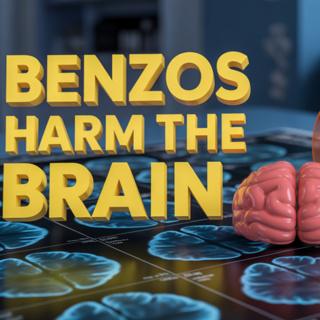
These drugs calm your brain—but what if they’re silently increasing your stroke risk?For decades, benzodiazepines like Valium and Xanax were seen as safe, even neuroprotective. Doctors believed that b...

21 Jan 3min

Is Any Amount of Alcohol Actually Safe? The Science Says No

Is Any Amount of Alcohol Actually Safe? The Science Says No

For decades, alcohol has enjoyed a surprising reputation as a health booster—especially red wine. You’ve heard the claims: stronger hearts, longer life, protection against dementia. But when you dig i...

14 Jan 4min
The Truth About Kava: Benzodiazepine Effects Nobody Explains

The Truth About Kava: Benzodiazepine Effects Nobody Explains

In this episode, we explore "kava kava," a traditional Pacific plant with anxiolytic effects similar to low-dose benzodiazepines. We discuss its active compounds, kavalactones, and how they contribute...

7 Jan 3min
The Brain Pattern That Shows Addiction Risk Years in Advance

The Brain Pattern That Shows Addiction Risk Years in Advance

Can a brain scan predict addiction risk BEFORE first use? 🚨Most people think substances change the brain after experimentation.But this episode flips the script.In Cracking Addiction, Dr. Ferghal Arm...

1 Jan 4min
Kava in Australia: Natural Calm or Silent Liver Damage?

Kava in Australia: Natural Calm or Silent Liver Damage?

Kava is everywhere… but is it silently damaging your patients’ livers?Kava is now turning up in Australian pharmacies, health food stores and online — marketed as a “natural” fix for anxiety, stress a...

28 Dec 20254min
How to Cut Sugar by 78% in 30 Days

How to Cut Sugar by 78% in 30 Days

How to Cut Sugar by 78% in 30 Days.Sugar is hijacking your brain — but you can take control back faster than you think.Most people want to quit sugar… but at 3 p.m., stressed and tired, the biscuits i...

12 Dec 20253min

Populärt inom Hälsa

somna-med-henrik
rss-bara-en-till-om-missbruk-medberoende-2
rss-jossan-nina
inga-beiga-morsor
alska-oss
brottarbroder
rss-vuxna-pa-latsas
not-fanny-anymore
sexnoveller-deluxe
angestpodden
johannes-hansen-podcast
rss-viktmedicinpodden
sova-med-dan-horning
vinterpasset
sa-in-i-sjalen
rss-the-house-podcast-3
rss-sjalsligt-avkladd
tyngre-radio
rss-relationsrevolutionen
tyngre-traningssnack