Britain Should Not Have Fought in the First World War

Britain Should Not Have Fought in the First World War

The First World War is not called the Great War for nothing. It was the single most decisive event in modern history, as well as one of the bloodiest: by the time the war ended, some nine million soldiers had been killed. It was also a historical full stop, marking the definitive end of the Victorian era and the advent of a new age of uncertainty. By 1918, the old order had fallen: the Bolsheviks had seized power in Russia; the German, Austro-Hungarian and Ottoman empires had been destroyed; and even the victorious Allied powers had suffered devastating losses. It was supposed to be the war to end all wars. And yet barely two decades later, the world was again plunged into conflict. Little wonder then that historians still cannot agree whether Britain's engagement was worth it. For some, the war was a vitally important crusade against Prussian militarism. Had we stayed out, they argue, the result would have been an oppressive German-dominated Europe, leaving the British Empire isolated and doomed to decline. And by fighting to save Belgium, Britain stood up for principle: the right of a small nation to resist its overbearing neighbours. For others, the war was a catastrophic mistake, fought at a catastrophic human cost. It brought Communism to power in Russia, ripped up the map of Europe and left a festering sense of resentment that would fuel the rise of Nazism. We often forget that, even a few days before Britain entered the war, it seemed likely that we would stay out. H. H. Asquith's decision to intervene changed the course of history. But was it the right one? Arguing for the motion in this Intelligence Squared debate were John Charmley, Professor of Modern History at the University of East Anglia; and Dominic Sandbrook, historian, columnist and broadcaster. Arguing against them were Max Hastings, historian, journalist and former newspaper editor; and Margaret MacMillan, Warden of St Antony’s College and Professor of International History at the University of Oxford. The debate was chaired by senior editor at The Economist, Edward Lucas. Support this show http://supporter.acast.com/intelligencesquared. See acast.com/privacy for privacy and opt-out information. Learn more about your ad choices. Visit podcastchoices.com/adchoices

Det här avsnittet är hämtat från ett öppet RSS-flöde och publiceras inte av Podme. Det kan innehålla reklam.

Avsnitt(1645)

What Lyse Doucet Has Learned from 40 Years Reporting From War Zones, Live

What Lyse Doucet Has Learned from 40 Years Reporting From War Zones, Live

As the BBC’s Chief International Correspondent, Lyse Doucet has witnessed and reported on some of the most consequential events of our time. She has reported from Iran and Afghanistan since 1988, play...

23 Sep 1h 27min
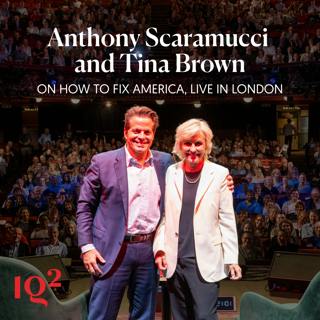
Anthony Scaramucci and Tina Brown on How To Fix America, Live in London

Anthony Scaramucci and Tina Brown on How To Fix America, Live in London

According to Anthony Scaramucci, former White House Communications Director, outspoken Trump critic and co-host of The Rest Is Politics: US, President Trump represents one of the greatest challenges A...

20 Sep 1h 37min
Why Your Plans Will Fail After Five Minutes, and How To Fix Them, with Kevin Fong

Why Your Plans Will Fail After Five Minutes, and How To Fix Them, with Kevin Fong

Kevin Fong has spent his working life in high-risk, high-performance teams. He flies as a Helicopter Emergency Medical Service doctor, has worked on NASA’s human spaceflight programme, and was part of...

19 Sep 51min
Has Tech Lost All Humanity? With Mark Little

Has Tech Lost All Humanity? With Mark Little

The internet was once imagined as a place that would bring us closer together – a shared space for curiosity, creativity and connection. So how did it become a machine for capturing our attention, amp...

18 Sep 42min
Luke Harding and Alastair Campbell: Trump, Putin and the New Age of Conquest (Part Two)

Luke Harding and Alastair Campbell: Trump, Putin and the New Age of Conquest (Part Two)

The post-war international order is under increasing strain. The principle that borders cannot be changed by force is being challenged –not only by Russia’s invasion of Ukraine, but by Donald Trump’s ...

15 Sep 36min
Luke Harding and Alastair Campbell: Trump, Putin and the New Age of Conquest (Part One)

Luke Harding and Alastair Campbell: Trump, Putin and the New Age of Conquest (Part One)

The post-war international order is under increasing strain. The principle that borders cannot be changed by force is being challenged –not only by Russia’s invasion of Ukraine, but by Donald Trump’s ...

13 Sep 33min
Francis Fukuyama on the New World Order (Part Two)

Francis Fukuyama on the New World Order (Part Two)

Francis Fukuyama is one of the most influential political thinkers of our time. His famous 1989 essay, The End of History? – written as the Berlin Wall fell and communism collapsed – posed a provocati...

12 Sep 39min
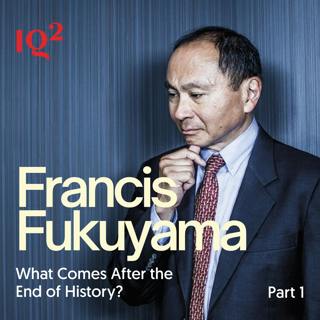
What Comes After the End of History? with Francis Fukuyama (Part One)

What Comes After the End of History? with Francis Fukuyama (Part One)

Francis Fukuyama is one of the most influential political thinkers of our time. His famous 1989 essay, The End of History? – written as the Berlin Wall fell and communism collapsed – posed a provocati...

10 Sep 36min
Populärt inom Politik & nyheter

aftonbladet-krim
svenska-fall
fordomspodden
p3-krim
rss-krimstad
flashback-forever
rss-expressen-dok
rss-vad-fan-hande
aftonbladet-daily
spar
rss-sanning-konsekvens
rss-krimreportrarna
svd-ledarredaktionen
rss-flodet
rss-frandfors-horna
motiv
omni-podd
en-runda-till
politiken
rss-utopia-2