The Rise of the Smart City: Urban Wonderland or Fool’s Paradise?

The Rise of the Smart City: Urban Wonderland or Fool’s Paradise?

More humans than ever before live in cities. Technology is now being rolled out across the world’s urban areas, making day-to-day city living more pleasant, more efficient and more sustainable. For example, traffic flows are being improved by sensors that detect snarl-ups, allowing a central computer to coordinate traffic lights and even change the direction of a highway during rush hour – saving commuters time and lowering the pollution caused by stop-start congestion. Smart energy meters are allowing the power companies to provide the energy we need from the best sources, at the right times of day. But what we’re already seeing is just the beginning. By using computing, automation and big data, the cities of tomorrow will be transformed by practical, disruptive solutions, helping us tackle the energy challenge and achieve a lower carbon future. But there’s a flip side to letting technology take over the way our cities are run. Automation opens up systems like traffic, communications and power to hackers and hijackers. Increasing reliance on AI systems and complex networks makes us more vulnerable when outages occur. And the collection of data about you and your life from millions of sensors across the city raises serious concerns about personal freedom. And then there’s the question of what kind of places we actually want to live in. Most of the urban areas people flock to are attractive because of their charm, their history and their sheer haphazardness; will smart-city technology inevitably rationalise these charms away? And let’s not forget that many of the most urgent challenges facing cities, such as inequality and crime, will never be solved by endless number-crunching and smartphone apps. So what do we really want from our cities? The kind of connectivity that comes from technology, making our cities smooth-functioning and sustainable? Or the deeper human connection and sense of meaning that technology can never provide? We were joined by Anjana Ahuja, the award-winning science writer ; Jamie Bartlett, one of the UK's leading thinkers on the politics and social influence of the internet; Finlay Clark, UK Country Manager of the crowd-sourced traffic and navigation app Waze; and Stephen Lorimer, Smart London Strategy and Delivery Officer at the Greater London Authority. The debate was chaired by comedian, actor and television presenter Alexander Armstrong. This event, hosted by Shell in partnership with Intelligence Squared, brought together big thinkers from diverse backgrounds to debate how the digital revolution taking place in our cities is impacting our lives. Join us to learn how together we can #makethefuture today. Support this show http://supporter.acast.com/intelligencesquared. See acast.com/privacy for privacy and opt-out information. Learn more about your ad choices. Visit podcastchoices.com/adchoices

Avsnitt(1536)

Sir Sajid Javid – Lessons From the Front Bench (Part Two)

Sir Sajid Javid – Lessons From the Front Bench (Part Two)

For more than a decade, Sir Sajid Javid was at the heart of power in Britain. First elected in 2010, he rapidly rose to his first cabinet position as Culture Secretary. The son of a bus driver and com...

8 Feb 36min
Sir Sajid Javid – Lessons From the Front Bench (Part One)

Sir Sajid Javid – Lessons From the Front Bench (Part One)

For more than a decade, Sir Sajid Javid was at the heart of power in Britain. First elected in 2010, he rapidly rose to his first cabinet position as Culture Secretary. The son of a bus driver and com...

6 Feb 41min

Can Water Shape Our Future?

Can Water Shape Our Future?

In today’s episode, the second in our series in partnership with WaterAid, journalist and author Coco Khan speaks to Helen Rumford, WaterAid’s Lead Policy Analyst for Climate Policy and Campaigns and ...

4 Feb 29min

Julian Barnes in conversation with Ian McEwan (Part Two)

Julian Barnes in conversation with Ian McEwan (Part Two)

Julian Barnes and Ian McEwan are widely celebrated as two of the finest writers of their generation. Along with Salman Rushdie and Kazuo Ishiguro, they were included on Granta’s prescient Best Young B...

3 Feb 43min

Julian Barnes in conversation with Ian McEwan (Part One)

Julian Barnes in conversation with Ian McEwan (Part One)

Julian Barnes and Ian McEwan are widely celebrated as two of the finest writers of their generation. Along with Salman Rushdie and Kazuo Ishiguro, they were included on Granta’s prescient Best Young B...

2 Feb 39min
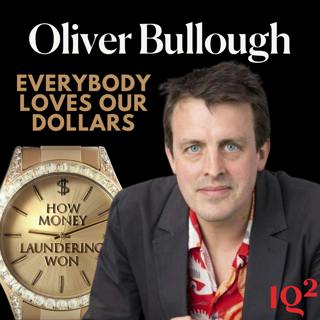
Why Can’t We Stop Money Laundering? With Oliver Bullough

Why Can’t We Stop Money Laundering? With Oliver Bullough

In an increasingly digital world, hardly anyone relies on cash. $100 bills are essentially absent from global commerce. So how come the US Federal Reserve printed 752 million and 867.2 million of them...

1 Feb 42min

Is the Arctic the World’s Next War Zone? With Kenneth R. Rosen

Is the Arctic the World’s Next War Zone? With Kenneth R. Rosen

Why Is Everyone Suddenly Fighting Over the Arctic? In this episode, Adam McCauley speaks to journalist and author Kenneth R. Rosen about the Arctic’s shifting geopolitical role in the new world order...

30 Jan 51min
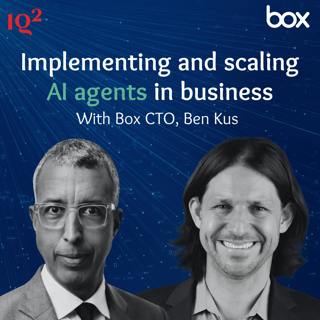
Implementing and scaling AI agents in business

Implementing and scaling AI agents in business

Many organisations are experimenting with AI and AI agents. But far fewer are seeing real, measurable impact. The challenge isn’t ambition, it’s readiness. As we explored in the first episode of this ...

29 Jan 35min

Populärt inom Politik & nyheter

aftonbladet-krim
svenska-fall
rss-krimstad
p3-krim
fordomspodden
spar
flashback-forever
rss-sanning-konsekvens
rss-expressen-dok
rss-vad-fan-hande
aftonbladet-daily
motiv
grans
rss-frandfors-horna
rss-krimreportrarna
rss-flodet
krimmagasinet
blenda-2
rss-aftonbladet-krim
olyckan-inifran