
The Sunday Debate: The Battle Over Free Speech: Are Trigger Warnings, Safe Spaces and No-Platforming Harming Young Minds?

The Sunday Debate: The Battle Over Free Speech: Are Trigger Warnings, Safe Spaces and No-Platforming Harming Young Minds?

For this week's episode of The Sunday Debate, we revisit our event from 2018. Many would argue that these are the fundamental goals of a good education. So why has Cambridge University taken to warning its students that the sexual violence in Titus Andronicus might be traumatic for them? Why are other universities in America and increasingly in Britain introducing measures to protect students from speech and texts they might find harmful? Safe spaces, trigger warnings and no-platforming are now campus buzzwords – and they’re all designed to limit free speech and the exchange of ideas. As celebrated social psychologist Jonathan Haidt argues in his book The Coddling of the American Mind, university students are increasingly retreating from ideas they fear may damage their mental health, and presenting themselves as fragile and in need of protection from any viewpoint that might make them feel unsafe.The culture of safety, as Haidt calls it, may be well intentioned, but it is hampering the development of young people and leaving them unprepared for adult life, with devastating consequences for them, for the companies that will soon hire them, and for society at large. That, Haidt’s critics argue, is an infuriating misinterpretation of initiatives designed to help students. Far from wanting to shut down free speech and debate, what really concerns the advocates of these new measures is the equal right to speech in a public forum where the voices of the historically marginalised are given the same weight as those of more privileged groups. Warnings to students that what they’re about to read or hear might be disturbing are not an attempt to censor classic literature, but a call for consideration and sensitivity. Safe spaces aren’t cotton-wool wrapped echo chambers, but places where minority groups and people who have suffered trauma can share their experiences without fear of hostility. Joining Haidt on stage were the former chief rabbi Jonathan Sacks, who believes that educating young people through debate and argument helps foster robustness, author and activist Eleanor Penny, and sociologist Kehinde Andrews, one of the UK’s leading thinkers on race and the history of racism. The event was chaired by Emily Maitlis. Support this show http://supporter.acast.com/intelligencesquared. See acast.com/privacy for privacy and opt-out information. Learn more about your ad choices. Visit podcastchoices.com/adchoices

Det här avsnittet är hämtat från ett öppet RSS-flöde och publiceras inte av Podme. Det kan innehålla reklam.

Avsnitt(1644)

Anthony Scaramucci and Tina Brown on How To Fix America, Live in London

Anthony Scaramucci and Tina Brown on How To Fix America, Live in London

According to Anthony Scaramucci, former White House Communications Director, outspoken Trump critic and co-host of The Rest Is Politics: US, President Trump represents one of the greatest challenges A...

20 Sep 1h 37min
Why Your Plans Will Fail After Five Minutes, and How To Fix Them, with Kevin Fong

Why Your Plans Will Fail After Five Minutes, and How To Fix Them, with Kevin Fong

Kevin Fong has spent his working life in high-risk, high-performance teams. He flies as a Helicopter Emergency Medical Service doctor, has worked on NASA’s human spaceflight programme, and was part of...

19 Sep 51min
Has Tech Lost All Humanity? With Mark Little

Has Tech Lost All Humanity? With Mark Little

The internet was once imagined as a place that would bring us closer together – a shared space for curiosity, creativity and connection. So how did it become a machine for capturing our attention, amp...

18 Sep 42min
Luke Harding and Alastair Campbell: Trump, Putin and the New Age of Conquest (Part Two)

Luke Harding and Alastair Campbell: Trump, Putin and the New Age of Conquest (Part Two)

The post-war international order is under increasing strain. The principle that borders cannot be changed by force is being challenged –not only by Russia’s invasion of Ukraine, but by Donald Trump’s ...

15 Sep 36min
Luke Harding and Alastair Campbell: Trump, Putin and the New Age of Conquest (Part One)

Luke Harding and Alastair Campbell: Trump, Putin and the New Age of Conquest (Part One)

The post-war international order is under increasing strain. The principle that borders cannot be changed by force is being challenged –not only by Russia’s invasion of Ukraine, but by Donald Trump’s ...

13 Sep 33min
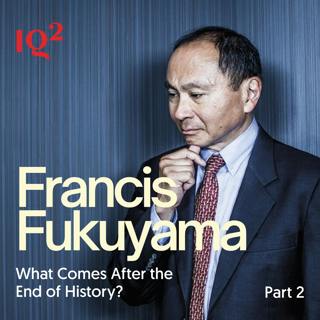
Francis Fukuyama on the New World Order (Part Two)

Francis Fukuyama on the New World Order (Part Two)

Francis Fukuyama is one of the most influential political thinkers of our time. His famous 1989 essay, The End of History? – written as the Berlin Wall fell and communism collapsed – posed a provocati...

12 Sep 39min
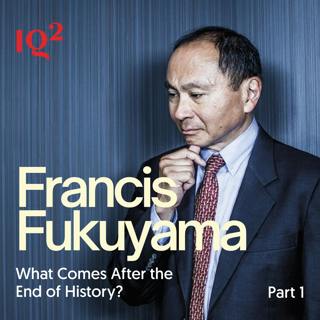
What Comes After the End of History? with Francis Fukuyama (Part One)

What Comes After the End of History? with Francis Fukuyama (Part One)

Francis Fukuyama is one of the most influential political thinkers of our time. His famous 1989 essay, The End of History? – written as the Berlin Wall fell and communism collapsed – posed a provocati...

10 Sep 36min
The New Silencing: Women Versus the Manosphere (Part Two)

The New Silencing: Women Versus the Manosphere (Part Two)

When the MeToo movement ignited in 2017, many believed it would be a turning point for women after which positive change would become inevitable. And for a brief time, it felt like the world was final...

8 Sep 34min
Populärt inom Politik & nyheter

aftonbladet-krim
svenska-fall
p3-krim
fordomspodden
rss-krimstad
aftonbladet-daily
flashback-forever
rss-vad-fan-hande
rss-sanning-konsekvens
en-runda-till
politiken
svd-ledarredaktionen
rss-krimreportrarna
rss-flodet
omni-podd
motiv
rss-frandfors-horna
kungligt
dagens-eko
spar