
WWII Veteran George Ciampa on Burying the Dead After D-Day

WWII Veteran George Ciampa on Burying the Dead After D-Day

What was D-Day like for an 18-year-old whose job was to bury the dead?

George Ciampa was a kid from Boston, one of 10 children of Italian immigrants, who wanted to fly fighter planes. He failed the Air Corps eye test twice. Drafted at 18, he was put into graves registration, the Army units that recovered and buried American soldiers. He landed on Utah Beach in June 1944, 10 days before his 19th birthday, and spent the next 11 months gathering the fallen across France, Belgium and Germany.

In Episode 115, the first of five conversations, Christian Taylor and co-hosts Josh Lindsay and Jason Rugg sit down with George Ciampa, then 95. He starts with the deaths that frightened him as a little boy, the family's 1934 drive from Boston to California, and his job building Navy dive bombers at Douglas Aircraft. Then he takes us to England, where his company, the 607th Graves Registration Company, lost 18 men in Exercise Tiger before the invasion, and across the Channel, where a torpedo plane attacked his ship at night.

George describes wading ashore on Utah Beach, burying paratroopers in their parachutes, starting the temporary cemeteries at Sainte-Mère-Église, and breaking down two weeks in, when a lieutenant put a pistol to his ribs and sent him back to work. He explains why only about 40% of the Americans who fell in Europe are buried there today, and why the marble markers in those cemeteries carry no date of birth. Decades later, George became a documentary filmmaker himself, and he spent the rest of his life teaching students about what he called "the high price of freedom."

George Ciampa died on January 3, 2024, at the age of 98. We are grateful he trusted us with his story.

In this episode, you'll learn:

  • How a boy from Boston ended up in a World War II graves registration company
  • Why George never became the fighter pilot he wanted to be
  • What happened to the 607th Graves Registration Company in Exercise Tiger
  • What crossing the Channel and wading ashore on Utah Beach was like
  • How the first temporary American cemeteries in Normandy were started
  • What it cost a 19-year-old to handle the dead every day
  • Why most of the Americans who fell in Europe were sent home after the war
  • Why the markers in American military cemeteries show no date of birth
  • What George felt walking down his street when he came home in January 1946

CHAPTERS

0:00 Born in Boston, One of 10 Children

4:06 From Aircraft Plant to Graves Registration

9:05 Exercise Tiger and an English Family

13:47 Crossing the Channel Under Fire

17:03 Wading Ashore on Utah Beach

22:00 Temporary Cemeteries and a Night in Paris

26:46 Breaking Down and the Price of Freedom

30:37 The Bulge and the 40% Who Stayed

37:32 Coming Home to a Christmas Tree in January

FREQUENTLY ASKED QUESTIONS

What did graves registration units do in World War II?

Graves registration companies recovered, identified and buried American soldiers who died in combat. George Ciampa's unit, the 607th Graves Registration Company, landed in Normandy in June 1944 and started temporary cemeteries as the Army moved across France, Belgium and Germany.

What was Exercise Tiger?

Exercise Tiger was a rehearsal for the D-Day landings off Slapton Sands, England, in April 1944. German E-boats attacked the landing ships, and hundreds of American soldiers were killed. George Ciampa says his company, the 607th Graves Registration Company, lost 18 men that night, and the survivors were kept apart afterward to protect the secret of the invasion.

Why are only some of the American soldiers who died in Europe buried there?

According to George Ciampa, after permanent cemeteries were built in 1947, families could choose to bring their soldier home at no cost or leave him in Europe. About 60% came home. So the graves in cemeteries like Normandy or Henri-Chapelle represent only about 40% of the Americans first buried in temporary cemeteries nearby.

Why don't American military cemetery markers in Europe show a date of birth?

George Ciampa noticed it when he returned to Normandy for the 50th anniversary: the white marble markers give the soldier's name, rank, unit, state and date of death, but not a date of birth.

LISTEN AND FOLLOW

Listen and subscribe wherever you get podcasts: https://pod.fo/e/6a83ac

Watch on YouTube: https://www.youtube.com/@documentaryfirst

SUPPORT THE SHOW

Join our community on Patreon: https://www.patreon.com/c/DocumentaryFirst

CONNECT WITH DOCUMENTARY FIRST

All platforms: https://linktr.ee/doc1st

Christian Taylor on LinkedIn: https://www.linkedin.com/in/meetchristiantaylor

ABOUT THE GUEST

George Ciampa

World War II Veteran and Documentary Filmmaker

George Ciampa was born in Boston in 1925 and grew up in Southern California. He served in the 607th Graves Registration Company from Normandy through the Battle of the Bulge to the end of the war, then spent seven months in the army of occupation in Germany. He later worked for the Los Angeles Times. At 81 he began making documentaries about the price of freedom through his nonprofit, Let Freedom Ring, including Let Freedom Ring: The Lesson Is Priceless and Let Freedom Ring: Memories of France, and shared his stories with students in the United States, France and Belgium. He received the French Legion of Honor and the Croix de Guerre. George Ciampa died on January 3, 2024, at the age of 98.

Website: http://www.letfreedomringforall.org

ABOUT DOCUMENTARY FIRST

Documentary First is a weekly podcast about the people behind documentaries and how the work changed them. Host Christian Taylor, director of the award-winning The Girl Who Wore Freedom, talks with filmmakers from Ken Burns to first-time directors. Listen Notes ranks the show in the top 5% of all podcasts worldwide.

THE GEORGE CIAMPA SERIES


RESOURCES MENTIONED


Det här avsnittet är hämtat från ett öppet RSS-flöde och publiceras inte av Podme. Det kan innehålla reklam.

Avsnitt(298)

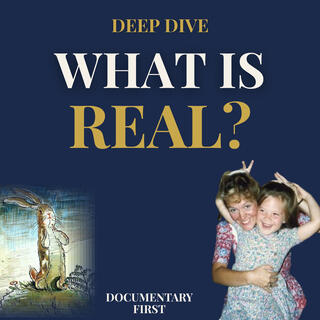
The Velveteen Rabbit and Old Home Movies: What Is Real?

The Velveteen Rabbit and Old Home Movies: What Is Real?

What does The Velveteen Rabbit, a 1922 children's book about a stuffed toy, have to do with old home movies and AI?In Margery Williams' classic story, an old toy called the Skin Horse tells a stuffed ...

15 Okt 16min
Archival Footage: Why Use Home Movies?

Archival Footage: Why Use Home Movies?

What happens to a family's home movies when no one knows what to do with them?Phil Maher was a software engineer looking for a sense of purpose when he started watching his grandfather's family reels ...

8 Okt 49min
How Do You Get a Documentary Made? Ask the Woman Who Co-Runs RKO

How Do You Get a Documentary Made? Ask the Woman Who Co-Runs RKO

Do you have a documentary, or do you have a Wikipedia entry?Somebody decides whether your documentary gets made. Sophia Dilley is one of those people. She runs Concord Originals, the division behind S...

10 Sep 53min

Beyond Banners: How to Make a Documentary With No Film School

Beyond Banners: How to Make a Documentary With No Film School

Who finishes your film if you can't?Andre N. Jackson had never made a film. He had twenty years in technology and security, an idea that arrived while he was sitting in a barber's chair, and no way in...

21 Aug 40min

Why Can't Your Documentary Find an Audience? l Deep Dive on Ep. 284

Why Can't Your Documentary Find an Audience? l Deep Dive on Ep. 284

When did your audience stop being people and become a number?Most independent films and podcasts do not fail because the work is bad. They fail because no one ever felt like they belonged to them. Thi...

13 Aug 13min
Ep. 284 I How to Fund a Documentary Without the Industry

Ep. 284 I How to Fund a Documentary Without the Industry

How do you fund a documentary when the whole industry says no?How do you fund a documentary without film funds, grants, or a commissioning broadcaster, and still reach a huge audience? Dutch filmmaker...

6 Aug 51min
Who Believed in You First?

Who Believed in You First?

Who believed in you before you could believe in yourself? In this Deep Dive, documentary filmmaker Christian Taylor makes a quiet case that we rarely overcome self-doubt on our own. Almost no one fini...

30 Juli 13min

Cold War in Philly: Joe Amodei Directs His First Documentary

Cold War in Philly: Joe Amodei Directs His First Documentary

What happens when a film distributor with more than 40 years in the business finally makes his own documentary?Joe Amodei grew up in Philadelphia watching the Flyers with his parents, sisters and brot...

23 Juli 54min

Populärt inom Samhälle & Kultur

podme-dokumentar
gynning-berg
aftonbladet-krim
svenska-fall
p3-dokumentar
husmodern-med-amanda-schulman
rss-creepypodden
en-mork-historia
hor-har
rss-kansli-med-jessica-sebastian
killradet
p1-dokumentar
flashback-forever
rss-schyffert-sundin-ar-det-har-nat
rss-hemlispodden
aftonbladet-daily
vad-blir-det-for-mord
mardromsgasten
kod-katastrof
rss-mer-an-bara-morsa