Professor Alex Edmans on Misinformation

Professor Alex Edmans on Misinformation

Why is misinformation so prevalent, and what can we do about it? On this episode, I’m speaking with Alex Edmans, a London Business School Finance Professor who has written a book called ‘May Contain Lies: How Stories, Statistics, and Studies Exploit Our Biases and What We Can Do About It’.

Alex’s areas of focus are purposeful business, sustainable investing, corporate governance, and behavioural finance. He’s also very prepared to use his platform to challenge people who propagate inaccuracies or misleading information.

In our discussion, we explore why he wrote his book, the impact of cognitive biases on decision-making, and practical solutions to navigate a world rife with misinformation.

You’ll hear about the pitfalls of relying on research produced with an agenda in mind and why we need to be wary when we’re told that a particular academic establishment has published a piece of research.

Alex also explains why the popular belief that if you spend 10,000 hours on a particular activity, you’ll have to be skilled at it might not be all it seems and why popular management mantras like ‘start with why’ aren’t as effective as those who propose them might like us to believe.

He talks about his own experiences and why his judgement has been just as vulnerable to biases as ours. Find out why cognitive diversity matters and why we shouldn’t listen to everyone’s views.


Timestamp Highlights: (Produced by AI)
  • [00:00:00] Introduction
    • Christian introduces Professor Alex Edmans and discusses his impact on social media and public discourse.
  • [00:01:00] Motivation for Writing "May Contain Lies"
    • Alex explains his transition from academic research to writing about misinformation and the importance of discerning data accuracy over personal biases.
  • [00:02:00] Cognitive Biases and Their Impact
    • Discussion on confirmation bias and black-and-white thinking and how they affect our perception of data and evidence.
  • [00:04:00] Personal Experiences with Bias
    • Alex shares personal anecdotes illustrating how even experts can fall prey to biases and misinformation.
  • [00:08:00] The 10,000 Hours Rule
    • A critical look at Malcolm Gladwell's popular concept and its misinterpretations.
  • [00:13:00] Research and Decision-Making
    • The importance of scrutinising academic research and the pitfalls of relying solely on endorsements and institutional affiliations.
  • [00:21:00] Statistical Literacy
    • Alex emphasises the need for statistical literacy from an early age and practical ways to teach it.
  • [00:23:00] Balancing Data and Anecdotes
    • How to effectively use stories and data to make informed decisions.
  • [00:25:00] Encouraging Cognitive Diversity
    • The value of different perspectives in decision-making processes and organisational settings.
  • [00:29:00] Flaws in Consultant Research
    • Critique of research produced by consultancies like McKinsey and the difference between advocacy and genuine scientific inquiry.
  • [00:36:00] Limits of Cognitive Diversity
    • Discussing when it might be necessary to draw the line in accepting diverse viewpoints, especially in the context of misinformation.
  • [00:41:00] Societal Solutions to Misinformation
    • Proposals for improving transparency in endorsements and the peer review process to combat misinformation.
  • [00:46:00] Role of Gatekeepers
    • The diminishing role of traditional gatekeepers in the age of social media and the importance of self-regulation and critical thinking.
  • [00:55:00] Ethical Presentation of Data
    • Encouraging ethical behaviour in the presentation of data and the potential for individuals to influence organisational culture positively.
  • [00:59:00] Closing Remarks
    • Christian wraps up the conversation, highlighting the key takeaways from the discussion and thanking Alex for his insights.
Key Quotes:
  • "Misinformation has always been around, but the ease with which it spreads today is unprecedented."
  • "The goal is not to enslave the reader to think like a statistician but to allow them to live more freely by being discerning with information."
Resources Mentioned:
  • Book: "May Contain Lies: How Stories, Statistics, and Studies Exploit Our Biases and What We Can Do About It" by Alex Edmans
  • Website: maycontainlies.com
Follow Alex Edmans:Subscribe & Follow:
  • To discover episodes of the show you might have missed, visit the show's website
  • Follow Christian on Twitter and LinkedIn.

Det här avsnittet är hämtat från ett öppet RSS-flöde och publiceras inte av Podme. Det kan innehålla reklam.

Avsnitt(368)

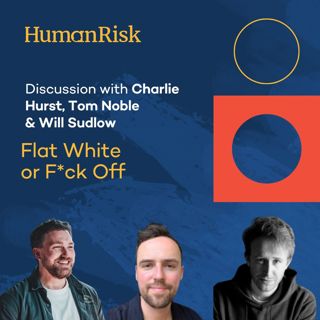
Charlie Hurst, Tom Noble and Will Sudlow on Flat White or F*ck Off

Charlie Hurst, Tom Noble and Will Sudlow on Flat White or F*ck Off

What happens when someone runs with a business idea they've heard as a thought experiment on a podcast? Can a business have an expletive in its name? And is it possible to run a business that sells a ...

22 Feb 1h 15min
Amy Watson on Violence Against Women & Girls

Amy Watson on Violence Against Women & Girls

What if we stopped telling women how to stay safe, and started asking why violence against them keeps happening in the first place? On this episode, I’m joined for a second time, by Amy Watson, the fo...

15 Feb 1h 39min
Professor Veronica Root Martinez on Purpose-Driven Compliance

Professor Veronica Root Martinez on Purpose-Driven Compliance

Who determines what 'good' Compliance actually looks like?  The obvious answer is regulators (and in some jurisdictions) prosecutors. But what if it were the regulated Firms themselves?  That's the id...

7 Feb 1h 2min
Professor Tina Weisser on Trusting AI In An Uncertain World

Professor Tina Weisser on Trusting AI In An Uncertain World

As Artificial Intelligence (AI) gets smarter and tkaes over more tasks, what happens to human dynamics like trust, transparency, leadership and empathy. How can humans and machines wowrk togehter effe...

27 Jan 1h 9min
Becky Holmes on Romance Scams

Becky Holmes on Romance Scams

What lies behind Romance Fraud? Romance fraud is one of the fastest-growing forms of fraud worldwide, and one of the most emotionally devastating. It’s also one of the most misunderstood.On this epis...

21 Jan 1h 8min
Amy Kean on Grief

Amy Kean on Grief

Why do we struggle to talk about grief? Why that matters and what we can do about it, is the subject of this episode.SummaryGrief is something almost all of us will experience, and yet something we st...

12 Jan 1h 4min
Dr Guy Champniss on Business, BeSci and AI

Dr Guy Champniss on Business, BeSci and AI

Are we losing our ability to think critically as we rely more on AI?Episode SummaryMy guest is social psychologist Dr Guy Champniss to explore the role of behavioural science in business and the emerg...

7 Dec 20251h 1min
Professor Yuval Feldman on Can The Public Be Trusted?

Professor Yuval Feldman on Can The Public Be Trusted?

Why do governments rely on coercion and punishment when voluntary cooperation often produces better, more sustainable outcomes?Episode SummaryOn this episode, I’m joined once again by Professor Yuval ...

23 Nov 20251h 5min

Populärt inom Vetenskap

allt-du-velat-veta
p3-dystopia
dumma-manniskor
rss-ufobortom-rimligt-tvivel
ufo-sverige
kapitalet-en-podd-om-ekonomi
svd-nyhetsartiklar
hacka-livet
rss-spraket
paranormalt-med-caroline-giertz
ufo-sverige-2
medicinvetarna
rss-vetenskapsradion
dumforklarat
sexet
det-morka-psyket
rss-dennis-world
rss-vetenskapsradion-2
rss-tidsmaskinen
halsorevolutionen