Episode Eleven: Dr. Aimie Brennan “Challenges for Teacher Educators within the Sociology of Education modules”

Episode Eleven: Dr. Aimie Brennan “Challenges for Teacher Educators within the Sociology of Education modules”

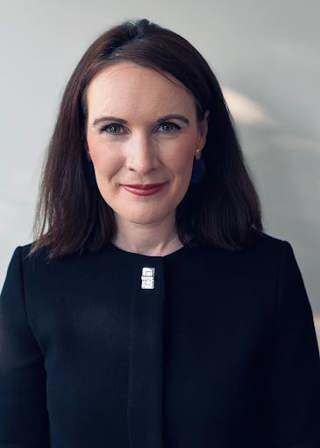
My guest in this episode is Dr. Aimie Brennan. Aimie is a lecturer in Education Policy and Practice and a Teacher Educator in Marino Institute of Education where she teaches Research Methods and also teaches on the Education Studies programme and the BEd programme. Prior to working in Marino Institute of Education, Aimie spent five years teaching in Mary Immaculate College and has taught Sociology to early childhood education, primary, post-primary and Master’s students. Aimie has a PhD in Sociology from University College Cork, which is where she started teaching and tutoring in the Department of Sociology and Philosophy. Aimie is the convenor of the pedagogy of sociology and professional practice study group in the Sociological Association of Ireland (SAI) and is founder and coordinator of the STER project http://www.ster.ie/ The Student Teacher Educational Research (STER) project includes a student peer-reviewed eJournal, a Conference and a podcast. In this episode we discuss challenges for teacher educators when teaching Sociology of Education in Initial Teacher Education (ITE) courses. Aimie’s interest in the challenges for teacher educators teaching Sociology of Education stems from her own interest in the position of sociology and teacher education and changes that have happened throughout the history of Teacher Education, she mentions how there have been several reform periods over time, through the twenties, thirties, sixties and seventies and how sociology has always been a core part of teacher education. She mentions how the position of sociology in policy and curriculum is not necessarily always reflected in practice and how she sometimes finds herself teaching sociology that student teachers sometimes struggle to engage with for very legitimate reasons. We discuss the value of sociology and sociological theory for student teachers at primary education level and also how we might use a sociological lens to consider what the challenges are for teaching sociology and looking at some of those influences. We focus on the kind of rationalisation and the homogeneity of the group that we are teaching as the kind of challenges that face us as teacher educators. As a Teacher Educator Aimie says that her own thinking has probably changed over time and while working in teacher education that she doesn’t actually think as a Sociologist that she can actually fully prepare students to understand all of the complex concepts that exist in the classroom, not with the kind of time that's allocated to sociology, at a sufficiently deep level, but she tries to ensure that students have a nuanced understanding and appreciation of values in different contexts. She says she concentrates on two things (which seem to be the two things that occur all the time when she is talking about sociology, or when she is talking about policy because they overlap). So rather than taking a kind of a thematic approach, which Aimie believes happens a lot in sociology, “where it tends to be, where we’re talking about gender, or we’re talking about class, or we are talking about family or community”... she tends to teach around two things. “So the first thing is encouraging students to see reality as constructors. So social constructionism, on how that underpins everything”. And the second thing, “understanding their own biography, and how that can actually develop more empathy and more understanding of the influence of structure and agency”. She says how one of the important things that students can do is to really spend time and energy unpacking their own biography and unpacking their performance, because all facets of sociology, whether it's class, or gender, or bias, or capital or prejudice, or socialisation are all ingrained in our identity and our performance. Aimie talks about shedding a little bit more light on how we as individuals and as teachers have responsibility for reinforcing and unpacking inequality, and “how we're actually all influenced by power and norms. So for example, like Foucault talks about power, not as one person having a monopoly over somebody else. But as a gaze, you know, a common standard that we all internalise”. She says how student-teachers can kind of appreciate “that actually, we all contribute to fostering conformity on some level. And by that we do that by responding to behaviour of children in the classroom or by reacting in a certain way”. She goes on to describe how it is important that student-teachers understand “that control over what's normal or abnormal, is not located out there in some, you know, powerful individuals or powerful institutions, but actually, it's located in ourselves, then that turns the spotlight inwards. And we have to ask ourselves, you know, how do we behave? What should we understand our role to be? What stigmas do we experience, personally? And how does that influence how we respond to things that happen in the classroom?” We briefly discuss student teachers as reflective practitioners and how challenging it is for student teachers to get time to actually engage critically with sociological theories and to reflect on those theories and make connections in practice when their ITE programmes are so busy and so packed with required modules. Aimie mentions one of her research projects on which she worked with Dr. Angela Canny in Mary Immaculate College in Limerick focusing on students’ engagement with the sociology of education, particularly looking at their experience of it over time, and how relevant they feel it is to their practice and the challenges that they experience. Some student feedback indicates that they don't see the relevance of some of those sociological concepts because they don't directly affect them and there is also evidence of where they do consider sociology useful for addressing different things in practice things like equality and fairness and they do find it useful for increasing tolerance for diversity, and trying to work a little bit more with families and partnership with parents. Tune in and hear much more from Aimie about challenges for Teacher Educators within the Sociology of Education modules in this episode.

Det här avsnittet är hämtat från ett öppet RSS-flöde och publiceras inte av Podme. Det kan innehålla reklam.

Avsnitt(34)

S2 Episode Fifteen:  Dr. Anne Marie Kavanagh "Decolonising the curriculum: Creating a more inclusive, diverse, and critically-engaged approach to education"

S2 Episode Fifteen: Dr. Anne Marie Kavanagh "Decolonising the curriculum: Creating a more inclusive, diverse, and critically-engaged approach to education"

In this episode I chat to Anne Marie Kavanagh (PhD, FHEA). Anne Marie’s episode is called Decolonising the curriculum: Creating a more inclusive, diverse, and critically-engaged approach to education....

10 Apr 202548min
S2 Episode Fourteen: Dr. Alison Egan "Navigating the Third Space in Higher Education Institutions"

S2 Episode Fourteen: Dr. Alison Egan "Navigating the Third Space in Higher Education Institutions"

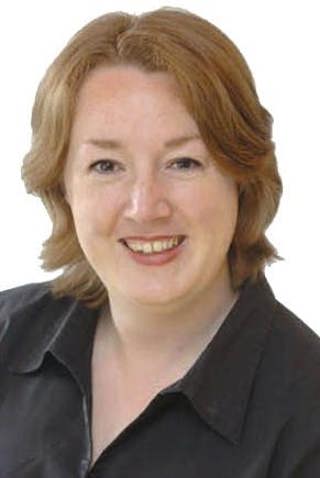
In this episode I speak to Dr. Alison Egan in an episode entitled Navigating the Third Space in Higher Education Institutions where we discuss the concept of the "third space" in higher education, whi...

20 Mars 202554min
S2 Episode Thirteen: Niall Mulpeter "From Policy to Practice: Enacting Values in Publicly Managed Schools through Communities of Practice and Professional Learning Communities"

S2 Episode Thirteen: Niall Mulpeter "From Policy to Practice: Enacting Values in Publicly Managed Schools through Communities of Practice and Professional Learning Communities"

In this episode I speak to Niall Mulpeter in an episode entitled From Policy to Practice: Enacting Values in Publicly Managed Schools through Communities of Practice and Professional Learning Communit...

6 Mars 202547min
S2 Episode Twelve: Professor Dympna Devine "What has social justice got to do with pedagogy?"

S2 Episode Twelve: Professor Dympna Devine "What has social justice got to do with pedagogy?"

In this episode I speak to Professor Dympna Devine in an episode entitled, "What has social justice got to do with pedagogy?" a title which Dympna explains was inspired by a question from a student in...

27 Feb 202551min
S2 Episode Eleven: Declan Qualter “Parents as partners in education: Rhetoric and reality in an era of digital and AI transformation”

S2 Episode Eleven: Declan Qualter “Parents as partners in education: Rhetoric and reality in an era of digital and AI transformation”

Declan Qualter is the Practice Placement Supervisor for the BEd with Gaeilge and/or Modern Languages Programme in the UCD School of Education. He also teaches on the Professional Masters in Education ...

20 Feb 202553min
S2 Episode Ten: Dr. Audrey Bryan “Enduring Inequalities in Education: Whither Sociology?”

S2 Episode Ten: Dr. Audrey Bryan “Enduring Inequalities in Education: Whither Sociology?”

Dr. Audrey Bryan is an Associate Professor of Sociology in the School of Human Development at Dublin City University’s Institute of Education (DCU IoE).  Her teaching spans a number of undergraduate a...

13 Feb 202558min
 S2 Episode Nine: Highlights episode

S2 Episode Nine: Highlights episode

In this episode Dr. Melanie Ní Dhuinn revisits the eight episodes released in the first half of season two. She highlights key discussions from the first eight episodes of Season Two and recaps on to...

7 Feb 202540min
S2 Episode Eight: Dr. Michelle Share "Food Matters: It's not just what you eat, but where, how, and with whom"

S2 Episode Eight: Dr. Michelle Share "Food Matters: It's not just what you eat, but where, how, and with whom"

Dr Michelle Share is a Senior Research Fellow at the School of Education, Trinity College Dublin.  She is a sociologist with extensive experience in the conduct of multi-site research and evaluation p...

19 Dec 202459min

Populärt inom Utbildning

historiepodden-se
det-skaver
rss-bara-en-till-om-missbruk-medberoende-2
nu-blir-det-historia
harrisons-dramatiska-historia
not-fanny-anymore
roda-vita-rosen
johannes-hansen-podcast
rss-viktmedicinpodden
allt-du-velat-veta
sektledare
kan-jag-sa-kan-du-podden
rss-foraldramotet-bring-lagercrantz
sa-in-i-sjalen
i-vantan-pa-katastrofen
rikatillsammans-om-privatekonomi-rikedom-i-livet
rss-ar-det-rimligt
sex-pa-riktigt-med-marika-smith
rss-max-tant-med-max-villman
rss-basta-livet