Episode Seventeen Professor Andrew Loxley “Mucky Pictures, Visual Sociology”

Episode Seventeen Professor Andrew Loxley “Mucky Pictures, Visual Sociology”

My guest in this, the final episode of the ‘Let’s Talk About Sociology of Education’ podcast is Professor Andrew Loxley from the School of Education in Trinity College, Dublin. Andrew is the Director for undergraduate programmes in School of Education and he is also the Director of the Doctor of Education programme in Trinity. Andrew is one of the many colleagues I work with in the School of Education and he was also my doctorate supervisor in TCD and a wonderful mentor to me over the past fifteen years. Andrew and I have taught on the Sociology of Education and Research Methods modules and we have also conducted and published research together over the past number of years. It was an honour and a privilege to interview him for this final episode of the podcast series. In this episode we discuss the use of visual methods and techniques in Sociology of Education. Visual methods and techniques include the creation and use of both participant generated and researcher generated still images as data and analysis and interpretation of the data either as a stand-alone method or as part of a suite of research methods. This approach works particularly well within the Sociology of Education elements. Andrew has used this approach in much of his work to date and under his supervision was one of the many research instruments I also used in my own doctoral work. His title “Mucky Pictures, Visual Sociology” is ‘a nod to the idea of polysemicity’, “of muck of mud, of lack of clarity”, where the same thing has different meanings to different people in the same way that there are many different perspectives and lenses through which we can look to make sense of elements of Sociology of Education. Sometimes we may think that the use of still images presents something very clear to the reader or observer, when in fact still images are not clear at all and can be very messy and open to all sorts of ranges of different interpretations. Andrew mentions how Roland Barthes describes this as “a multiple of different possibilities” with both denotation (the literal description) and connotation (deeper and more nuanced narrative) within each still image that can ‘disrupt’ the doxa. He talks about how we may think that what is a fairly obvious image of the world of a classroom, the school corridor of a textbook of a classroom is just what we see and recognise as something familiar but that there is a “lot of unknown fierceness to when you start picking away and start sort of figuring out what the internal and external narratives of the images actually are”. Andrew believes that using visual techniques is useful and worthwhile as “elements of destabilising how we look at the world, but also in a sense of forcing us to look at the world in another way”, which in itself is a sociological approach of looking and interpreting through multiple lenses to make sense of what we first see (denotation) and through our interpretation understand the many connotations that lie beneath the surface. He describes how in the use of participant generated images, “or trying to persuade why participants should use visual techniques…you need to be very clear as a researcher, why you want to do it, and how you're going to do it, and what you're going to get out of it. And also, what you want your participants to do with it”. Using participant generated images also involves a “huge amount of preparatory work that you need to undertake”. Andrew mentions how this approach really draws on the idea of collaboration from a research perspective, and “it also transfers or hands over a lot of control of the data generation process to your participants.” From a research perspective this empowers participants and gives them an authentic voice in the generation of the data. He also refers to visual autoethnography from a Sociology of Education perspective and he describes how during Covid he has “been documenting my sort of life, usually around my desk”, his “changing workspace, over the past eighteen months and the sort of community that I live in, I just sort of focus in on the desk there and the changing there. In using visual techniques he describes “moving from a very sort of collaborative community collective piece (participant generated images), to very individualistic way of working with it quite nicely (visual autoethnography)”. Use of still images/photographs in visual autoethnography is very compelling and powerful and allows us to explore the ‘studium’ or the elements of the images, rather than just ‘seeing’ the sum or totality of the image’s information or meaning. In ‘looking at a still image we are also exposed to the ‘punctum’ of the image which Barthes describes as that sensory, intensely subjective effect of a photograph or an image on the viewer. Andrew says how “The studium is this, the whole the everything there. But sometimes as a punctum, you're drawn to a specific thing there that you sort of raises certain questions, and you ask certain questions, which may or may not ordinarily be there”. We discuss Bourdieu, Marxism, impacts of Covid on student teachers from a sociological perspective and much more. We talk about how in the Sociology of Education on initial teacher education courses we can enable and support student teachers to construct their professional persona and identities and how “because you've been through this schooling process, both primary, post primary, post graduate, .. students have been through a lot of educational environments and contexts” that inform their identity as teachers as they build their own particular professional identity. Their individual experiences of school settings may be different from the settings they then find themselves in as teachers. He says how it is important that students compare and contrast between one set of experiences and another set of experiences to interpret and understand the setting and how they operate and exist within it. In summary, Andrew advises that student teachers and educators think about their own “starting point”, values and beliefs as they negotiate their way through the dense sociological theories and concepts in trying to make sense of different perspectives, positionality, power dynamics and views in what is “sort of quite a dense network of ideas of concepts of theories”, which can be challenging to understand, identify in reality or make sense of. Tune in for the final episode of this podcast series!

Det här avsnittet är hämtat från ett öppet RSS-flöde och publiceras inte av Podme. Det kan innehålla reklam.

Avsnitt(34)

S2 Episode Fifteen:  Dr. Anne Marie Kavanagh "Decolonising the curriculum: Creating a more inclusive, diverse, and critically-engaged approach to education"

S2 Episode Fifteen: Dr. Anne Marie Kavanagh "Decolonising the curriculum: Creating a more inclusive, diverse, and critically-engaged approach to education"

In this episode I chat to Anne Marie Kavanagh (PhD, FHEA). Anne Marie’s episode is called Decolonising the curriculum: Creating a more inclusive, diverse, and critically-engaged approach to education....

10 Apr 202548min

S2 Episode Fourteen: Dr. Alison Egan "Navigating the Third Space in Higher Education Institutions"

S2 Episode Fourteen: Dr. Alison Egan "Navigating the Third Space in Higher Education Institutions"

In this episode I speak to Dr. Alison Egan in an episode entitled Navigating the Third Space in Higher Education Institutions where we discuss the concept of the "third space" in higher education, whi...

20 Mars 202554min

S2 Episode Thirteen: Niall Mulpeter "From Policy to Practice: Enacting Values in Publicly Managed Schools through Communities of Practice and Professional Learning Communities"

S2 Episode Thirteen: Niall Mulpeter "From Policy to Practice: Enacting Values in Publicly Managed Schools through Communities of Practice and Professional Learning Communities"

In this episode I speak to Niall Mulpeter in an episode entitled From Policy to Practice: Enacting Values in Publicly Managed Schools through Communities of Practice and Professional Learning Communit...

6 Mars 202547min
S2 Episode Twelve: Professor Dympna Devine "What has social justice got to do with pedagogy?"

S2 Episode Twelve: Professor Dympna Devine "What has social justice got to do with pedagogy?"

In this episode I speak to Professor Dympna Devine in an episode entitled, "What has social justice got to do with pedagogy?" a title which Dympna explains was inspired by a question from a student in...

27 Feb 202551min

S2 Episode Eleven: Declan Qualter “Parents as partners in education: Rhetoric and reality in an era of digital and AI transformation”

S2 Episode Eleven: Declan Qualter “Parents as partners in education: Rhetoric and reality in an era of digital and AI transformation”

Declan Qualter is the Practice Placement Supervisor for the BEd with Gaeilge and/or Modern Languages Programme in the UCD School of Education. He also teaches on the Professional Masters in Education ...

20 Feb 202553min
S2 Episode Ten: Dr. Audrey Bryan “Enduring Inequalities in Education: Whither Sociology?”

S2 Episode Ten: Dr. Audrey Bryan “Enduring Inequalities in Education: Whither Sociology?”

Dr. Audrey Bryan is an Associate Professor of Sociology in the School of Human Development at Dublin City University’s Institute of Education (DCU IoE).  Her teaching spans a number of undergraduate a...

13 Feb 202558min
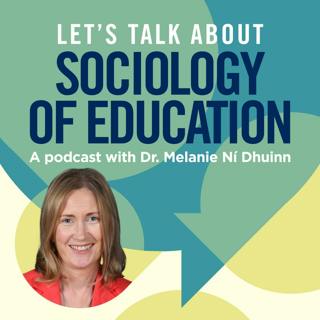
 S2 Episode Nine: Highlights episode

S2 Episode Nine: Highlights episode

In this episode Dr. Melanie Ní Dhuinn revisits the eight episodes released in the first half of season two. She highlights key discussions from the first eight episodes of Season Two and recaps on to...

7 Feb 202540min
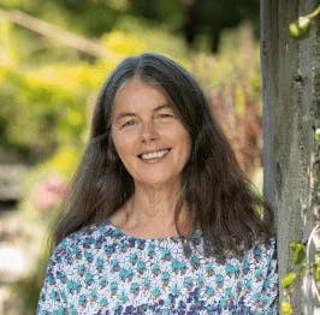
S2 Episode Eight: Dr. Michelle Share "Food Matters: It's not just what you eat, but where, how, and with whom"

S2 Episode Eight: Dr. Michelle Share "Food Matters: It's not just what you eat, but where, how, and with whom"

Dr Michelle Share is a Senior Research Fellow at the School of Education, Trinity College Dublin.  She is a sociologist with extensive experience in the conduct of multi-site research and evaluation p...

19 Dec 202459min
Populärt inom Utbildning

historiepodden-se
det-skaver
rss-bara-en-till-om-missbruk-medberoende-2
nu-blir-det-historia
harrisons-dramatiska-historia
not-fanny-anymore
roda-vita-rosen
johannes-hansen-podcast
rss-viktmedicinpodden
allt-du-velat-veta
sektledare
kan-jag-sa-kan-du-podden
rss-foraldramotet-bring-lagercrantz
sa-in-i-sjalen
i-vantan-pa-katastrofen
rikatillsammans-om-privatekonomi-rikedom-i-livet
rss-ar-det-rimligt
sex-pa-riktigt-med-marika-smith
rss-max-tant-med-max-villman
rss-basta-livet