Prolonged Field Care Podcast 176: High Altitude Illness

Prolonged Field Care Podcast 176: High Altitude Illness

Summary:

In this conversation, Dennis and Ian discuss the new high altitude Clinical Practice Guideline (CPG) in the Joint Trauma System. They cover topics such as acute mountain sickness (AMS), high altitude cerebral edema (HACE), and high altitude pulmonary edema (HAPE). They discuss the pathophysiology, symptoms, diagnosis, and treatment options for these conditions. They also touch on pre-treatment strategies and the use of portable hyperbaric chambers. Overall, the conversation provides a comprehensive overview of altitude-related illnesses and their management. In this conversation, Dennis and Ian discuss the treatment options for altitude illness, specifically AMS, HAPE, and HACE. They cover the use of pharmacologic therapy, oxygen, and portable hyperbaric chambers to stabilize and bring down patients with altitude illness. They also discuss the use of dexamethasone as the primary treatment for HACE and the potential use of hypertonic saline for extreme cases. They touch on the side effects of dexamethasone and the importance of protecting the airway. They also mention the use of acetazolamide for prophylaxis and the benefits of intermittent hypoxic exposure. Finally, they discuss the importance of good nutrition and hydration and the new medic encounter form for recording data on altitude illness.

Takeaways:

Acute mountain sickness (AMS) occurs when the body does not have enough time to acclimatize to the physiological stress of altitude.

High altitude cerebral edema (HACE) is characterized by ataxia and can occur even without AMS symptoms.

High altitude pulmonary edema (HAPE) is characterized by decreased exercise tolerance and tachypnea.

Assessment of vital signs, such as heart rate and respiratory rate, can help differentiate between altitude illnesses.

Portable hyperbaric chambers can be used to stabilize patients with altitude illnesses until they can be brought down to lower altitudes.

Pharmacologic treatments, such as acetazolamide and dexamethasone, can be used for prophylaxis and treatment of altitude illnesses.

Improvement in symptoms of HAPE can be rapid with oxygen therapy.

Pre-treatment strategies, such as using acetazolamide, can help acclimatize the body to altitude before ascent. Pharmacologic therapy, oxygen, and portable hyperbaric chambers can be used to stabilize and bring down patients with altitude illness.

Dexamethasone is the primary treatment for HACE, and hypertonic saline may be considered for extreme cases.

Side effects of dexamethasone include increased sugar, gastric erosions, gastric bleeding, and adrenal suppression.

Acetazolamide can be used for prophylaxis, and intermittent hypoxic exposure may help with acclimatization.

Good nutrition, hydration, and iron status are important for preventing altitude illness.

The new medic encounter form is a valuable tool for recording data on altitude illness.


Thank you to Delta Development Team for in part, sponsoring this podcast. ⁠⁠⁠⁠deltadevteam.com⁠⁠⁠⁠ For more content go to ⁠⁠⁠⁠www.prolongedfieldcare.org⁠⁠⁠⁠ Consider supporting us: ⁠⁠⁠⁠patreon.com/ProlongedFieldCareCollective or www.lobocoffeeco.com/product-page/prolonged-field-care


Det här avsnittet är hämtat från ett öppet RSS-flöde och publiceras inte av Podme. Det kan innehålla reklam.

Avsnitt(629)

Pack to the Vessel: Hemorrhage Control Is Not a Mind-less Skill

Pack to the Vessel: Hemorrhage Control Is Not a Mind-less Skill

Mike Weisman — 25 years as a Navy Corpsman and SARC, 27 years on a busy Vegas fire department, now clinical education at Celox — does not sell magic dust. He sells a hydraulic problem.A femoral-rate b...

17 Sep 38min
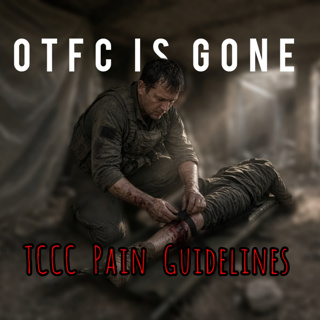
296 - Mission Capable Pain Control: The TCCC Analgesia Update Explained

296 - Mission Capable Pain Control: The TCCC Analgesia Update Explained

OTFC is gone. That was not a small supply hiccup. It punched a hole in the old TCCC pain plan.George Barbee, a PA and co-author of TCCC Guideline Change 25-03, walks Dennis through why the committee r...

14 Sep 39min
SOMA 26' - Ultrasound-Augmented Triage A Proposal To Refine Field Decision Making In Tactical Combat Casualty Care

SOMA 26' - Ultrasound-Augmented Triage A Proposal To Refine Field Decision Making In Tactical Combat Casualty Care

Recorded live at SOMA 26In a near-peer MASCAL, one medic and one junior medic may face twenty penetrating torso casualties, one unit of blood, and no time to empirically needle or finger-decompress ev...

10 Sep 26min
295- Logistics For LSCO: Why SOF Med Supplies Fail When The War Changes

295- Logistics For LSCO: Why SOF Med Supplies Fail When The War Changes

Medical logistics was an afterthought for a lot of us in GWOT. You submitted a request, something showed up, and everyone joked that the warehouse never read the order. That model does not survive lar...

7 Sep 35min
SOMA 26' - Role 1.5: Fighting Tourniquet Syndrome at the Forefront

SOMA 26' - Role 1.5: Fighting Tourniquet Syndrome at the Forefront

Ukrainian orthopedic and reconstructive surgeon describes what prolonged field care actually looks like when evacuation from the front line to Role 2 takes three to four days, and sometimes longer. Af...

3 Sep 21min
294 - Do Antibiotics Really Reduce Mortality in Trauma? Wound Care First in Prolonged Field Care

294 - Do Antibiotics Really Reduce Mortality in Trauma? Wound Care First in Prolonged Field Care

Antibiotics are not magic. In this episode of the PFC Podcast, Dennis sits down with Ryan to cut through the common myth that “I’ve given antibiotics, so the wound is protected.” They unpack why vigor...

31 Aug 36min
SOMA 26' - Fresh Whole Blood is Not The Answer: It's Still a Question

SOMA 26' - Fresh Whole Blood is Not The Answer: It's Still a Question

Whole Blood Is Not a Solution (Until Conventional Forces Can Deliver It)Recorded live at SOMA 26Dr. Vanessa Hanick (emergency physician, former active-duty Army, now National Guard) and 1SG Cy Clayton...

27 Aug 28min
293 - Dead Tissue Kills in Prolonged Field Care: 4 C’s, Early Debridement & Delayed Primary Closure Lessons from the Field

293 - Dead Tissue Kills in Prolonged Field Care: 4 C’s, Early Debridement & Delayed Primary Closure Lessons from the Field

In this episode of the PFC Podcast, Dennis sits down with missionary surgeon Jason to cut through the noise on real-world wound care in austere and unconventional warfare environments. From the bridge...

24 Aug 49min
Populärt inom Utbildning

historiepodden-se
rss-bara-en-till-om-beroende-medberoende
det-skaver
nu-blir-det-historia
harrisons-dramatiska-historia
not-fanny-anymore
roda-vita-rosen
rss-viktmedicinpodden
allt-du-velat-veta
johannes-hansen-podcast
sa-in-i-sjalen
rikatillsammans-om-privatekonomi-rikedom-i-livet
rss-traningsklubben
polisutbildningspodden
rss-foraldramotet-bring-lagercrantz
rss-max-tant-med-max-villman
rss-basta-livet
sektledare
rss-autismandan
i-vantan-pa-katastrofen