To the Male Victims of Domestic Violence

To the Male Victims of Domestic Violence

Men aren’t the problem. But men are the solution.

I didn’t fully understand this statement before getting involved with Domestic and Sexual Abuse Services. But my time in the recording booth with our podcast team has opened my eyes to so much.

First, it’s normal to talk about victims with female pronouns because so many domestic violence victims we see are women, and their assailants, men.

But we know that victims aren’t only women. Men are victims, too. At the hands of both female and male abusers.

Secondly, through interviews with survivors and experts in this organization, I’ve learned that as a man, I don’t need to feel shunned because so often it’s my gender who’s violent. This isn’t an organization or a movement that’s against men. Organizations like DASAS are here to support men, just as we support women.

We want to put a stop to intimate partner violence by shining a light on it. It’s not okay to take the power away from a partner or other relationship. It’s not manly to control others.

I want to speak to the men here tonight. If you’re a man in an abusive relationship, it’s important to know that you’re not alone. Abuse of men happens far more often than you might expect—in both heterosexual and same sex relationships. It happens to men from all cultures and all walks of life regardless of age or occupation. However, men are often reluctant to report abuse because they feel embarrassed, fear they won’t be believed, or are scared that their partner will take revenge.

Domestic violence against men can take many forms, including emotional, sexual and physical abuse and threats of abuse. Abusive relationships always involve an imbalance of power and control. An abuser uses intimidating, hurtful words and behaviors to control his or her partner.

It might not be easy to recognize domestic violence against men. Early in the relationship, your partner might seem attentive, generous and protective in ways that later turn out to be controlling and frightening.

You might be experiencing domestic violence if your partner:

  • Calls you names, insults you or puts you down

  • Prevents you from going to work or school

  • Stops you from seeing family or friends

  • Tries to control how you spend money, where you go or what you wear

  • Acts jealous or possessive or constantly accuses you of being unfaithful

  • Gets angry when drinking alcohol or using drugs

  • Threatens you with violence or a weapon

  • Hits, kicks, shoves, slaps, chokes or otherwise hurts you physically, your children or your pets

  • Forces you to have sex or engage in sexual acts against your will

  • Blames you for his or her violent behavior or tells you that you deserve it

Please. Don't take the blame.

You may not be sure whether you're the victim or the abuser. It's common for survivors of domestic violence to act out verbally or physically against the abuser, yelling, pushing or hitting him or her during conflicts. The abuser may use such incidents to manipulate you, describing them as proof that you are the abusive partner.

You may have developed unhealthy behaviors. Many survivors do. That doesn't mean you are at fault for the abuse.

If you're having trouble identifying what's happening, take a step back and look at larger patterns in your relationship. Then, review the signs of domestic violence. In an abusive relationship, the person who routinely uses these behaviors is the abuser. The person on the receiving end is being abused.

Even if you're still not sure, seek help. Intimate partner violence causes physical and emotional damage — no matter who is at fault.

If you’re gay, bisexual, or transgender, you can experience domestic violence and abuse if you’re in a relationship with someone who:

  • Threatens to tell friends, family, colleagues, or community members your sexual orientation or gender identity

  • Tells you that authorities won’t help a gay, bisexual, or transgender person

  • Tells you that leaving the relationship means you’re admitting that gay, bisexual, or transgender relationships are deviant

  • Justifies abuse by telling you that you’re not “really” gay, bisexual, or transgender

  • Says that men are naturally violent

Regardless of gender, ending a relationship, even an abusive one, is rarely easy. It becomes even harder if you’ve been isolated from friends and family, threatened, manipulated, and controlled, or physically and emotionally beaten down.

You may feel that you have to stay in the relationship due to any of these reasons:

  • You feel ashamed. Many men feel great shame that they’ve been abused, been unable to stand up for themselves, or somehow failed in their role as a male, husband, or father.

  • Your religious beliefs dictate that you stay or your self-worth is so low that you feel this abusive relationship is all you deserve.

  • There’s a lack of resources. Many men worry they’ll have difficulty being believed by the authorities, or that their abuse will be minimized because they’re male, or find there are few resources to specifically help abused men.

  • You’re in a same sex relationship but haven’t come out to family or friends, and are afraid your partner will out you.

  • You’re in denial. Just as with female domestic violence victims, denying that there is a problem in your relationship will only prolong the abuse. You may still love your partner when they’re not being abusive and believe that they will change or that you can help them. But change can only happen once your abuser takes full responsibility for their behavior and seeks professional treatment.

  • You want to protect your children. You worry that if you leave, your spouse will harm your children or prevent you from having access to them. Obtaining custody of children is always challenging for fathers, but even if you are confident that you can do so, you may still feel overwhelmed at the prospect of raising them alone.

If these sound familiar, you are not alone. We see you.

Domestic violence and abuse can have a serious physical and psychological impact. The first step to protecting yourself and stopping the abuse is to reach out. Talk to a friend, family member, or someone else you trust, or call a domestic violence helpline.

Admitting the problem and seeking help does not mean you have failed as a man or as a husband. You are not to blame, and you are not weak. As well as offering a sense of relief and providing some much-needed support, sharing details of your abuse can also be the first step in building a case against your abuser.

If you’re looking for help and need advice or advocacy, I want to encourage you to call 911 if it’s an emergency. Then, please reach out to DASAS. We’re here to help.

Our 24 hour hotline is 800-828-2023 and our website is dasas-mi-dot-org.

Domestic violence against men can have devastating effects. Although you may not be able to stop your partner's abusive behavior, you can seek help. Remember, no one deserves to be abused.

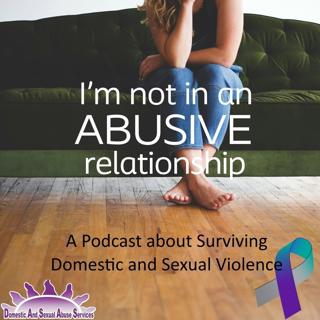
I encourage everyone to listen to our podcast, I’m Not In An Abusive Relationship, for hope, insight and encouragement.

Thank you for being here tonight.

If you need help, please call our 24-hour hotline at 800-828-2023 or visit https://www.dasasmi.org/ for resources. I'm Not In An Abusive Relationship published a new episode every Wednesday morning at 8:00am EST. Please subscribe on your podcast player of choice or sign up for our email list for new episodes each week. We appreciate reviews and social shares, to help us spread the word on domestic and sexual abuse awareness.

Avsnitt(121)

Survivor Story - How Danielle Survived and Now Helps Others

Survivor Story - How Danielle Survived and Now Helps Others

Hear Danielle’s survivor story and how she now helps others who face what she faced as a victim. Domestic Harmony Shelter - Hillsdale, MI Read Danielle's story by Tine University ——————————— If you need resources or help in any way, call our 24 hour hotline at 800-828-2023 or visit www.DASASMI.org. Subscribe for a new episode each week. We publish every Wednesday morning at 8:00am. Subscribe to the weekly email newsletter here or at our website here. We appreciate your help in spreading the message of hope. You can help us reach more listeners by leaving a written review on Apple Podcasts or where you listen, and by sharing on social media.

25 Aug 202132min

Serving the LGBTQ Community at the OutCenter of Southwest Michigan

Serving the LGBTQ Community at the OutCenter of Southwest Michigan

Margo Pierce, Drop-In Center Facilitator at the OutCenter of Southwest Michigan, joins Dan Moyle in this conversation to close out Pride Month 2021. Margo is trained in Youth Mental Health First Aid, CRM, and recently Healthy Relationships (with a focus on the LGBTQ+ community). She and Dan talk about issues facing the LGBTQ+ Community including intimate partner violence, domestic abuse and more. OutCenter of Southwest Michigan ——————————— If you need resources or help in any way, call our 24 hour hotline at 800-828-2023 or visit www.DASASMI.org. Subscribe for a new episode each week. We publish every Wednesday morning at 8:00am. Subscribe to the weekly email newsletter here or at our website here. We appreciate your help in spreading the message of hope. You can help us reach more listeners by leaving a written review on Apple Podcasts or where you listen, and by sharing on social media.

30 Juni 202129min

YWCA and LGBTQIA Resources for Survivors

YWCA and LGBTQIA Resources for Survivors

Domestic abuse and sexual violence is often seen through a lens of cisgender, heterosexual relationships. It's an easy stereotype to fall back on. Unfortunately, abuse occurs across all relationship types, regardless of sexual or gender identity. J. Kyon, Community Impact Lead at the Kalamazoo YWCA, joins Dan Moyle on this episode to talk about the intersections of marginalized community members of the LGBTQIA+ Community as they face abuse while also facing societal judgements. Kalamazoo YWCA Why Pronouns Matter ——————————— If you need resources or help in any way, call our 24 hour hotline at 800-828-2023 or visit www.DASASMI.org. Subscribe for a new episode each week. We publish every Wednesday morning at 8:00am. Subscribe to the weekly email newsletter here or at our website here. We appreciate your help in spreading the message of hope. You can help us reach more listeners by leaving a written review on Apple Podcasts or where you listen, and by sharing on social media.

23 Juni 202125min

Surviving 'Shameguilt' After Abuse with Lois Hollis

Surviving 'Shameguilt' After Abuse with Lois Hollis

Lois Hollis, RN, BSN, REV. is a shame guilt educator, counselor, filmmaker. In this episode, Lois shifts our opinion on the taboo subject, shame and guilt. As a trailblazer, she helped create one of the first Kidney Hemodialysis Units in the USA in 1966. Today Lois establishes shame guilt as an independent study. Her 50 years’ experience in health, 15 years’ researching, and counseling brings NEW knowledge of these misunderstood conditions to release us from shame guilt blaming. Lois’ first film, "Out of Discord Into Harmony," was released in 2008. Her new film "I'm Good" makes shame guilt visible. Links for Lois: Website YouTube Facebook LinkedIn ——————————— If you need resources or help in any way, call our 24 hour hotline at 800-828-2023 or visit www.DASASMI.org. Subscribe for a new episode each week. We publish every Wednesday morning at 8:00am. Subscribe to the weekly email newsletter here or at our website here. We appreciate your help in spreading the message of hope. You can help us reach more listeners by leaving a written review on Apple Podcasts or where you listen, and by sharing on social media.

16 Juni 202136min

What is Elder Abuse with St Joseph County Commission on Aging

What is Elder Abuse with St Joseph County Commission on Aging

Pamela Riley, Executive Director of the St. Joseph County Commission on Aging, joins Dan Moyle to discuss Elder Abuse Awareness Month. In this episode, learn what elder abuse looks like, how you can keep an eye on your aging neighbors, the warning signs and more. Links: St. Joseph County Commission on Aging website Find an enrichment center near you St. Joseph County Commission on Aging on Facebook ——————————— If you need resources or help in any way, call our 24 hour hotline at 800-828-2023 or visit www.DASASMI.org. Subscribe for a new episode each week. We publish every Wednesday morning at 8:00am. Subscribe to the weekly email newsletter here or at our website here. We appreciate your help in spreading the message of hope. You can help us reach more listeners by leaving a written review on Apple Podcasts or where you listen, and by sharing on social media.

9 Juni 202122min

Programming Note: A Brief Hiatus

Programming Note: A Brief Hiatus

A quick programming note: I'm Not In An Abusive Relationship will take a brief hiatus for the month of May. We will return in June with new episodes. Thank you for listening. ——————————— If you need resources or help in any way, call our 24 hour hotline at 800-828-2023 or visit www.DASASMI.org. Subscribe for a new episode each week. We publish every Wednesday morning at 8:00am. Subscribe to the weekly email newsletter here or at our website here. We appreciate your help in spreading the message of hope. You can help us reach more listeners by leaving a written review on Apple Podcasts or where you listen, and by sharing on social media.

5 Maj 20213min

Was That a Red Flag? with Author Dean Anderson

Was That a Red Flag? with Author Dean Anderson

Healthy relationships look different for everyone. And sometimes, an unhealthy relationship isn't the fault of just one person. Looking for the red flags can be hard work. That's the idea behind Dean Anderson's book Was That a Red Flag? Dean shares his story of how he wrote the book and how he's helping people dealing with their relationships, find warning signs, and make better decisions. Links: Was That a Red Flag? Information on Dean ——————————— If you need resources or help in any way, call our 24 hour hotline at 800-828-2023 or visit www.DASASMI.org. Subscribe for a new episode each week. We publish every Wednesday morning at 8:00am. Subscribe to the weekly email newsletter here or at our website here. We appreciate your help in spreading the message of hope. You can help us reach more listeners by leaving a written review on Apple Podcasts or where you listen, and by sharing on social media.

28 Apr 202124min

Child Abuse Prevention Month - What Do Child Advocates at DASAS Do?

Child Abuse Prevention Month - What Do Child Advocates at DASAS Do?

National Child Abuse Prevention Month recognizes the importance of families and communities working together to strengthen families to prevent child abuse and neglect. (National Child Abuse Awareness Month resource) Domestic And Sexual Abuse Services (DASAS) has child advocates to help prevent child abuse, to help children facing abuse and to offer services for families. On this episode, Claudia and a DASAS panel cover what child advocates do for the community. ——————————— If you need resources or help in any way, call our 24 hour hotline at 800-828-2023 or visit www.DASASMI.org. Subscribe for a new episode each week. We publish every Wednesday morning at 8:00am. Subscribe to the weekly email newsletter here or at our website here. We appreciate your help in spreading the message of hope. You can help us reach more listeners by leaving a written review on Apple Podcasts or where you listen, and by sharing on social media.

21 Apr 202120min

Populärt inom Utbildning

rss-bara-en-till-om-missbruk-medberoende-2
historiepodden-se
det-skaver
nu-blir-det-historia
harrisons-dramatiska-historia
johannes-hansen-podcast
alska-oss
sektledare
allt-du-velat-veta
roda-vita-rosen
not-fanny-anymore
rss-sjalsligt-avkladd
sa-in-i-sjalen
vi-gar-till-historien
rss-npf-podden
rss-relationsrevolutionen
polisutbildningspodden
rss-max-tant-med-max-villman
rss-om-vi-ska-vara-arliga
psykologsnack