#21 - Holden Karnofsky on times philanthropy transformed the world & Open Phil’s plan to do the same

#21 - Holden Karnofsky on times philanthropy transformed the world & Open Phil’s plan to do the same

The Green Revolution averted mass famine during the 20th century. The contraceptive pill gave women unprecedented freedom in planning their own lives. Both are widely recognised as scientific breakthroughs that transformed the world. But few know that those breakthroughs only happened when they did because of a philanthropist willing to take a risky bet on a new idea.

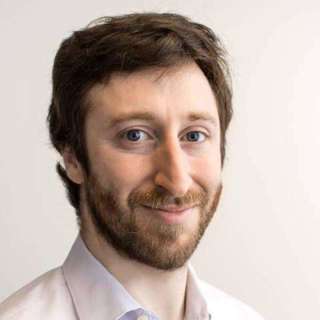
Today’s guest, Holden Karnofsky, has been looking for philanthropy’s biggest success stories because he’s Executive Director of the Open Philanthropy Project, which gives away over $100 million per year - and he’s hungry for big wins.

Full transcript, related links, job opportunities and summary of the interview.

In the 1940s, poverty reduction overseas was not a big priority for many. But the Rockefeller Foundation decided to fund agricultural scientists to breed much better crops for the developing world - thereby massively increasing their food production.

In the 1950s, society was a long way from demanding effective birth control. Activist Margaret Sanger had the idea for the pill, and endocrinologist Gregory Pincus the research team – but they couldn’t proceed without a $40,000 research check from biologist and women’s rights activist Katherine McCormick.

In both cases, it was philanthropists rather than governments that led the way.

The reason, according to Holden, is that while governments have enormous resources, they’re constrained by only being able to fund reasonably sure bets. Philanthropists can transform the world by filling the gaps government leaves - but to seize that opportunity they have to hire outstanding researchers, think long-term and be willing to fail most of the time.

Holden knows more about this type of giving than almost anyone. As founder of GiveWell and then the Open Philanthropy Project, he has been working feverishly since 2007 to find outstanding giving opportunities. This practical experience has made him one of the most influential figures in the development of the school of thought that has come to be known as effective altruism.

We’ve recorded this episode now because [the Open Philanthropy Project is hiring](https://www.openphilanthropy.org/get-involved/jobs) for a large number of positions, which we think would allow the right person to have a very large positive influence on the world. They’re looking for a large number of entry lever researchers to train up, 3 specialist researchers into potential risks from advanced artificial intelligence, as well as a Director of Operations, Operations Associate and General Counsel.

But the conversation goes well beyond specifics about these jobs. We also discuss:

* How did they pick the problems they focus on, and how will they change over time?
* What would Holden do differently if he were starting Open Phil again today?
* What can we learn from the history of philanthropy?
* What makes a good Program Officer.
* The importance of not letting hype get ahead of the science in an emerging field.
* The importance of honest feedback for philanthropists, and the difficulty getting it.
* How do they decide what’s above the bar to fund, and when it’s better to hold onto the money?
* How philanthropic funding can most influence politics.
* What Holden would say to a new billionaire who wanted to give away most of their wealth.
* Why Open Phil is building a research field around the safe development of artificial intelligence
* Why they invested in OpenAI.
* Academia’s faulty approach to answering practical questions.
* What potential utopias do people most want, according to opinion polls?

Keiran Harris helped produce today’s episode.

Avsnitt(333)

'95% of AI Pilots Fail': The hidden agenda behind the viral stat that misled millions

'95% of AI Pilots Fail': The hidden agenda behind the viral stat that misled millions

You might have heard that '95% of corporate AI pilots' are failing. It was one of the most widely cited AI statistics of 2025, parroted by media outlets everywhere. It helped trigger a Nasdaq selloff ...

28 Apr 10min

#242 – Will MacAskill on how we survive the 'intelligence explosion,' AI character, and the case for 'viatopia'

#242 – Will MacAskill on how we survive the 'intelligence explosion,' AI character, and the case for 'viatopia'

Hundreds of millions already turn to AI on the most personal of topics — therapy, political opinions, and how to treat others. And as AI takes over more of the economy, the character of these systems ...

22 Apr 3h 9min

Risks from power-seeking AI systems (article narration by Zershaaneh Qureshi)

Risks from power-seeking AI systems (article narration by Zershaaneh Qureshi)

Hundreds of prominent AI scientists and other notable figures signed a statement in 2023 saying that mitigating the risk of extinction from AI should be a global priority. At 80,000 Hours, we’ve consi...

16 Apr 1h 29min

How scary is Claude Mythos? 303 pages in 21 minutes

How scary is Claude Mythos? 303 pages in 21 minutes

With Claude Mythos we have an AI that knows when it's being tested, can obscure its reasoning when it wants, and is better at breaking into (and out of) computers than any human alive. Rob Wiblin work...

10 Apr 21min

Village gossip, pesticide bans, and gene drives: 17 experts on the future of global health

Village gossip, pesticide bans, and gene drives: 17 experts on the future of global health

What does it really take to lift millions out of poverty and prevent needless deaths?In this special compilation episode, 17 past guests — including economists, nonprofit founders, and policy advisors...

7 Apr 4h 6min

What everyone is missing about Anthropic vs the Pentagon. And: The Meta leaks are worse than you think.

What everyone is missing about Anthropic vs the Pentagon. And: The Meta leaks are worse than you think.

When the Pentagon tried to strong-arm Anthropic into dropping its ban on AI-only kill decisions and mass domestic surveillance, the company refused. Its critics went on the attack: Anthropic and its s...

3 Apr 20min

#241 – Richard Moulange on how now AI codes viable genomes from scratch and outperforms virologists at lab work — what could go wrong?

#241 – Richard Moulange on how now AI codes viable genomes from scratch and outperforms virologists at lab work — what could go wrong?

Last September, scientists used an AI model to design genomes for entirely new bacteriophages (viruses that infect bacteria). They then built them in a lab. Many were viable. And despite being entirel...

31 Mars 3h 7min

#240 – Samuel Charap on how a Ukraine ceasefire could accidentally set Europe up for a bigger war

#240 – Samuel Charap on how a Ukraine ceasefire could accidentally set Europe up for a bigger war

Many people believe a ceasefire in Ukraine will leave Europe safer. But today's guest lays out how a deal could potentially generate insidious new risks — leaving us in a situation that's equally dang...

24 Mars 1h 12min

Populärt inom Utbildning

rss-bara-en-till-om-missbruk-medberoende-2
historiepodden-se
det-skaver
nu-blir-det-historia
harrisons-dramatiska-historia
not-fanny-anymore
rss-viktmedicinpodden
johannes-hansen-podcast
roda-vita-rosen
allt-du-velat-veta
sektledare
rss-foraldramotet-bring-lagercrantz
i-vantan-pa-katastrofen
rss-max-tant-med-max-villman
rss-sjalsligt-avkladd
sa-in-i-sjalen
rikatillsammans-om-privatekonomi-rikedom-i-livet
sex-pa-riktigt-med-marika-smith
rss-npf-podden
rss-dr-bjorklund