#32 - Bryan Caplan on whether his Case Against Education holds up, totalitarianism, & open borders

#32 - Bryan Caplan on whether his Case Against Education holds up, totalitarianism, & open borders

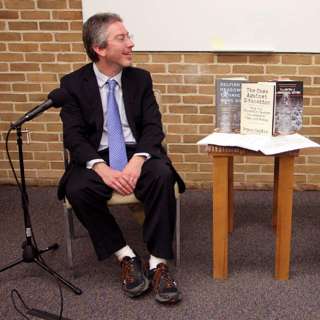
Bryan Caplan’s claim in *The Case Against Education* is striking: education doesn’t teach people much, we use little of what we learn, and college is mostly about trying to seem smarter than other people - so the government should slash education funding.

It’s a dismaying - almost profane - idea, and one people are inclined to dismiss out of hand. But having read the book, I have to admit that Bryan can point to a surprising amount of evidence in his favour.

After all, imagine this dilemma: you can have either a Princeton education without a diploma, or a Princeton diploma without an education. Which is the bigger benefit of college - learning or convincing people you’re smart? It’s not so easy to say.

For this interview, I searched for the best counterarguments I could find and challenged Bryan on what seem like his weakest or most controversial claims.

Wouldn’t defunding education be especially bad for capable but low income students? If you reduced funding for education, wouldn’t that just lower prices, and not actually change the number of years people study? Is it really true that students who drop out in their final year of college earn about the same as people who never go to college at all?

What about studies that show that extra years of education boost IQ scores? And surely the early years of primary school, when you learn reading and arithmetic, *are* useful even if college isn’t.

I then get his advice on who should study, what they should study, and where they should study, if he’s right that college is mostly about separating yourself from the pack.

Full transcript, links to learn more, and summary of key points.

We then venture into some of Bryan’s other unorthodox views - like that immigration restrictions are a human rights violation, or that we should worry about the risk of global totalitarianism.

Bryan is a Professor of Economics at George Mason University, and a blogger at *EconLog*. He is also the author of *Selfish Reasons to Have More Kids: Why Being a Great Parent is Less Work and More Fun Than You Think*, and *The Myth of the Rational Voter: Why Democracies Choose Bad Policies*.

Get this episode by subscribing to our podcast on the world’s most pressing problems and how to solve them: type *80,000 Hours* into your podcasting app.

In this lengthy interview, Rob and Bryan cover:

* How worried should we be about China’s new citizen ranking system as a means of authoritarian rule?
* How will advances in surveillance technology impact a government’s ability to rule absolutely?
* Does more global coordination make us safer, or more at risk?
* Should the push for open borders be a major cause area for effective altruism?
* Are immigration restrictions a human rights violation?
* Why aren’t libertarian-minded people more focused on modern slavery?
* Should altruists work on criminal justice reform or reducing land use regulations?
* What’s the greatest art form: opera, or Nicki Minaj?
* What are the main implications of Bryan’s thesis for society?
* Is elementary school more valuable than university?
* What does Bryan think are the best arguments against his view?
* Do years of education affect political affiliation?
* How do people really improve themselves and their circumstances?
* Who should and who shouldn’t do a masters or PhD?
* The value of teaching foreign languages in school
* Are there some skills people can develop that have wide applicability?

Get this episode by subscribing: search for '80,000 Hours' in your podcasting app.

The 80,000 Hours Podcast is produced by Keiran Harris.

Avsnitt(333)

'95% of AI Pilots Fail': The hidden agenda behind the viral stat that misled millions

'95% of AI Pilots Fail': The hidden agenda behind the viral stat that misled millions

You might have heard that '95% of corporate AI pilots' are failing. It was one of the most widely cited AI statistics of 2025, parroted by media outlets everywhere. It helped trigger a Nasdaq selloff ...

28 Apr 10min

#242 – Will MacAskill on how we survive the 'intelligence explosion,' AI character, and the case for 'viatopia'

#242 – Will MacAskill on how we survive the 'intelligence explosion,' AI character, and the case for 'viatopia'

Hundreds of millions already turn to AI on the most personal of topics — therapy, political opinions, and how to treat others. And as AI takes over more of the economy, the character of these systems ...

22 Apr 3h 9min

Risks from power-seeking AI systems (article narration by Zershaaneh Qureshi)

Risks from power-seeking AI systems (article narration by Zershaaneh Qureshi)

Hundreds of prominent AI scientists and other notable figures signed a statement in 2023 saying that mitigating the risk of extinction from AI should be a global priority. At 80,000 Hours, we’ve consi...

16 Apr 1h 29min

How scary is Claude Mythos? 303 pages in 21 minutes

How scary is Claude Mythos? 303 pages in 21 minutes

With Claude Mythos we have an AI that knows when it's being tested, can obscure its reasoning when it wants, and is better at breaking into (and out of) computers than any human alive. Rob Wiblin work...

10 Apr 21min

Village gossip, pesticide bans, and gene drives: 17 experts on the future of global health

Village gossip, pesticide bans, and gene drives: 17 experts on the future of global health

What does it really take to lift millions out of poverty and prevent needless deaths?In this special compilation episode, 17 past guests — including economists, nonprofit founders, and policy advisors...

7 Apr 4h 6min

What everyone is missing about Anthropic vs the Pentagon. And: The Meta leaks are worse than you think.

What everyone is missing about Anthropic vs the Pentagon. And: The Meta leaks are worse than you think.

When the Pentagon tried to strong-arm Anthropic into dropping its ban on AI-only kill decisions and mass domestic surveillance, the company refused. Its critics went on the attack: Anthropic and its s...

3 Apr 20min

#241 – Richard Moulange on how now AI codes viable genomes from scratch and outperforms virologists at lab work — what could go wrong?

#241 – Richard Moulange on how now AI codes viable genomes from scratch and outperforms virologists at lab work — what could go wrong?

Last September, scientists used an AI model to design genomes for entirely new bacteriophages (viruses that infect bacteria). They then built them in a lab. Many were viable. And despite being entirel...

31 Mars 3h 7min

#240 – Samuel Charap on how a Ukraine ceasefire could accidentally set Europe up for a bigger war

#240 – Samuel Charap on how a Ukraine ceasefire could accidentally set Europe up for a bigger war

Many people believe a ceasefire in Ukraine will leave Europe safer. But today's guest lays out how a deal could potentially generate insidious new risks — leaving us in a situation that's equally dang...

24 Mars 1h 12min

Populärt inom Utbildning

historiepodden-se
rss-bara-en-till-om-missbruk-medberoende-2
det-skaver
harrisons-dramatiska-historia
nu-blir-det-historia
johannes-hansen-podcast
roda-vita-rosen
not-fanny-anymore
rss-viktmedicinpodden
sektledare
i-vantan-pa-katastrofen
rss-foraldramotet-bring-lagercrantz
sa-in-i-sjalen
rss-sjalsligt-avkladd
allt-du-velat-veta
rikatillsammans-om-privatekonomi-rikedom-i-livet
rss-traningsklubben
rss-basta-livet
rss-npf-podden
rss-dr-bjorklund