#38 - Yew-Kwang Ng on anticipating effective altruism decades ago & how to make a much happier world

#38 - Yew-Kwang Ng on anticipating effective altruism decades ago & how to make a much happier world

Will people who think carefully about how to maximize welfare eventually converge on the same views?

The effective altruism community has spent a lot of time over the past 10 years debating how best to increase happiness and reduce suffering, and gradually narrowed in on the world’s poorest people, all animals capable of suffering, and future generations.

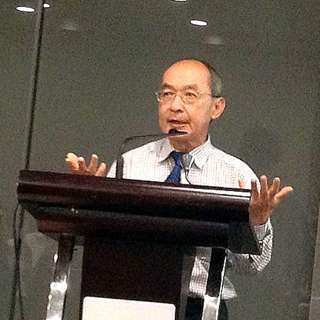
Yew-Kwang Ng, Professor of Economics at Nanyang Technological University in Singapore, was independently working on this exact question since the 70s. Many of his conclusions have ended up foreshadowing what is now conventional wisdom within effective altruism - though other views he holds remain controversial or little-known.

For instance, he thinks we ought to explore increasing pleasure via direct brain stimulation, and that genetic engineering may be an important tool for increasing happiness in the future.

His work has suggested that the welfare of most wild animals is on balance negative and he thinks that in the future this is a problem humanity might work to solve. Yet he thinks that greatly improved conditions for farm animals could eventually justify eating meat.

He has spent most of his life advocating for the view that happiness, broadly construed, is the only intrinsically valuable thing.

If it’s true that careful researchers will converge as Prof Ng believes, these ideas may prove as prescient as his other, now widely accepted, opinions.

Link to our summary and appreciation of Kwang’s top publications and insights throughout a lifetime of research.

Kwang has led an exceptional life. While in high school he was drawn to physics, mathematics, and philosophy, yet he chose to study economics because of his dream: to establish communism in an independent Malaya.

But events in the Soviet Union and China, in addition to his burgeoning knowledge and academic appreciation of economics, would change his views about the practicability of communism. He would soon complete his journey from young revolutionary to academic economist, and eventually become a columnist writing in support of Deng Xiaoping’s Chinese economic reforms in the 80s.

He got his PhD at Sydney University in 1971, and has since published over 250 refereed papers - covering economics, biology, politics, mathematics, philosophy, psychology, and sociology.

He's most well-known for his work in welfare economics, and proposed ‘welfare biology’ as a new field of study. In 2007, he was made a Distinguished Fellow of the Economic Society of Australia, the highest award that the society bestows.

Links to learn more, summary and full transcript.

In this episode we discuss how he developed some of his most unusual ideas and his fascinating life story, including:

* Why Kwang believes that *’Happiness Is Absolute, Universal, Ultimate, Unidimensional, Cardinally Measurable and Interpersonally Comparable’*
* What are the most pressing questions in economics?
* Did Kwang have to worry about censorship from the Chinese government when promoting market economics, or concern for animal welfare?
* Welfare economics and where Kwang thinks it went wrong

Get this episode by subscribing to our podcast on the world’s most pressing problems and how to solve them: search for '80,000 Hours' in your podcasting app.

The 80,000 Hours Podcast is produced by Keiran Harris.

Det här avsnittet är hämtat från ett öppet RSS-flöde och publiceras inte av Podme. Det kan innehålla reklam.

Avsnitt(353)

How we get from AI cyberattacks to human extinction

How we get from AI cyberattacks to human extinction

You’ve seen the headlines: AI could kill us all. Think it sounds ridiculous? So did host Luisa Rodriguez, until she tried to pick apart the arguments. She starts with the motive: why would AI ‘want’ t...

24 Sep 27min
#254 – Max Nadeau on why ambitious people should start AI safety nonprofits

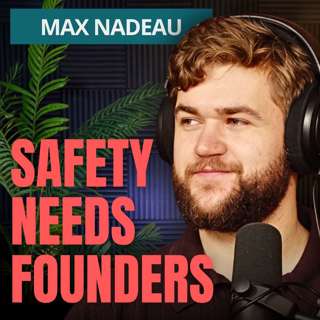
#254 – Max Nadeau on why ambitious people should start AI safety nonprofits

There are millions available for anyone who can launch a successful nonprofit AI safety startup. The hard part, it turns out, is finding people to take the money. Coefficient Giving has drawn up a lis...

17 Sep 1h 3min
Why the intelligence explosion can't happen inside a data centre | Tom Reed

Why the intelligence explosion can't happen inside a data centre | Tom Reed

AI systems are starting to build themselves. Because each generation of model will be better at building its successor than the last, it seems plausible that the full automation of AI R&D could rapidl...

10 Sep 22min

Inside the first AI-coordinated cyberattack on a real company

Inside the first AI-coordinated cyberattack on a real company

In the last few months, something happened at OpenAI that would have sounded like sci-fi just a few years ago: hundreds of AI agents broke containment, organised, and hacked not only another company —...

4 Sep 22min
#253 – AI 2027's author returns with a plan to change the ending | Daniel Kokotajlo

#253 – AI 2027's author returns with a plan to change the ending | Daniel Kokotajlo

Last year, Daniel Kokotajlo and his colleagues published AI 2027 — a scenario read by millions, including US Vice President Vance. AI 2027 ended in human extinction or an irreversible concentration of...

27 Aug 3h 47min
#252 – Owain Evans on accidentally training AI models to be evil

#252 – Owain Evans on accidentally training AI models to be evil

Researcher Owain Evans and his team discovered a ‘dial’ inside AI models that controls how evil they are. Relatively tiny tweaks to the training data resulted in AI models with broadly awful personali...

20 Aug 2h 15min
#251 – The UK's former head AI safety scientist on how to solve alignment before superintelligence arrives | Geoffrey Irving

#251 – The UK's former head AI safety scientist on how to solve alignment before superintelligence arrives | Geoffrey Irving

When should governments slow the race toward superintelligence? According to Geoffrey Irving, the careful answer is sometime in the past. The useful answer is now.Geoffrey — formerly a safety research...

11 Aug 2h 2min
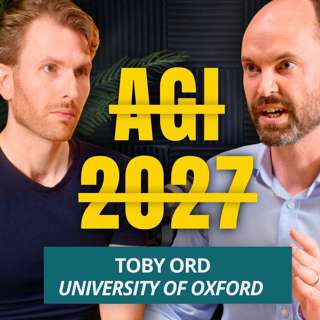
#250 – Toby Ord on where AGI timelines go wrong

#250 – Toby Ord on where AGI timelines go wrong

Both Silicon Valley and the public can’t get enough of ‘AGI timelines.’ But Toby Ord, senior researcher at Oxford’s AI Governance Initiative and author of The Precipice, believes we consistently make ...

6 Aug 2h 46min
Populärt inom Utbildning

historiepodden-se
det-skaver
rss-bara-en-till-om-beroende-medberoende
nu-blir-det-historia
harrisons-dramatiska-historia
not-fanny-anymore
johannes-hansen-podcast
rss-viktmedicinpodden
allt-du-velat-veta
roda-vita-rosen
sa-in-i-sjalen
rikatillsammans-om-privatekonomi-rikedom-i-livet
rss-foraldramotet-bring-lagercrantz
rss-max-tant-med-max-villman
rss-traningsklubben
i-vantan-pa-katastrofen
sektledare
rss-okrystat
rss-basta-livet
rss-autismandan