
#49 - Rachel Glennerster on a year's worth of education for 30c & other development 'best buys'

#49 - Rachel Glennerster on a year's worth of education for 30c & other development 'best buys'

If I told you it's possible to deliver an extra year of ideal primary-level education for under $1, would you believe me? Hopefully not - the claim is absurd on its face.

But it may be true nonetheless. The very best education interventions are phenomenally cost-effective, and they're not the kinds of things you'd expect, says Dr Rachel Glennerster.

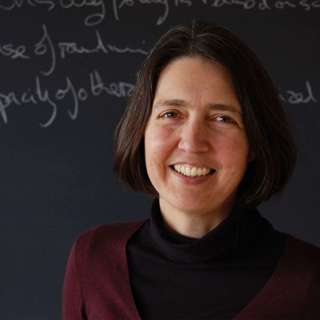
She's Chief Economist at the UK's foreign aid agency DFID, and used to run J-PAL, the world-famous anti-poverty research centre based in MIT's Economics Department, where she studied the impact of a wide range of approaches to improving education, health, and governing institutions. According to Dr Glennerster:

"...when we looked at the cost effectiveness of education programs, there were a ton of zeros, and there were a ton of zeros on the things that we spend most of our money on. So more teachers, more books, more inputs, like smaller class sizes - at least in the developing world - seem to have no impact, and that's where most government money gets spent."

"But measurements for the top ones - the most cost effective programs - say they deliver 460 LAYS per £100 spent ($US130). LAYS are Learning-Adjusted Years of Schooling. Each one is the equivalent of the best possible year of education you can have - Singapore-level."

Links to learn more, summary and full transcript.

"...the two programs that come out as spectacularly effective... well, the first is just rearranging kids in a class."

"You have to test the kids, so that you can put the kids who are performing at grade two level in the grade two class, and the kids who are performing at grade four level in the grade four class, even if they're different ages - and they learn so much better. So that's why it's so phenomenally cost effective because, it really doesn't cost anything."

"The other one is providing information. So sending information over the phone [for example about how much more people earn if they do well in school and graduate]. So these really small nudges. Now none of those nudges will individually transform any kid's life, but they are so cheap that you get these fantastic returns on investment - and we do very little of that kind of thing."

In this episode, Dr Glennerster shares her decades of accumulated wisdom on which anti-poverty programs are overrated, which are neglected opportunities, and how we can know the difference, across a range of fields including health, empowering women and macroeconomic policy.

Regular listeners will be wondering - have we forgotten all about the lessons from episode 30 of the show with Dr Eva Vivalt? She threw several buckets of cold water on the hope that we could accurately measure the effectiveness of social programs at all.

According to Vivalt, her dataset of hundreds of randomised controlled trials indicates that social science findings don’t generalize well at all. The results of a trial at a school in Namibia tell us remarkably little about how a similar program will perform if delivered at another school in Namibia - let alone if it's attempted in India instead.

Rachel offers a different and more optimistic interpretation of Eva's findings. To learn more and figure out who you sympathise with more, you'll just have to listen to the episode.

Regardless, Vivalt and Glennerster agree that we should continue to run these kinds of studies, and today’s episode delves into the latest ideas in global health and development.

Get this episode by subscribing: type '80,000 Hours' into your podcasting app.

The 80,000 Hours Podcast is produced by Keiran Harris.

Det här avsnittet är hämtat från ett öppet RSS-flöde och publiceras inte av Podme. Det kan innehålla reklam.

Avsnitt(351)

Why the intelligence explosion can't happen inside a data centre | Tom Reed

Why the intelligence explosion can't happen inside a data centre | Tom Reed

AI systems are starting to build themselves. Because each generation of model will be better at building its successor than the last, it seems plausible that the full automation of AI R&D could rapidl...

10 Sep 22min

Inside the first AI-coordinated cyberattack on a real company

Inside the first AI-coordinated cyberattack on a real company

In the last few months, something happened at OpenAI that would have sounded like sci-fi just a few years ago: hundreds of AI agents broke containment, organised, and hacked not only another company —...

4 Sep 22min

#253 – AI 2027's author returns with a plan to change the ending | Daniel Kokotajlo

#253 – AI 2027's author returns with a plan to change the ending | Daniel Kokotajlo

Last year, Daniel Kokotajlo and his colleagues published AI 2027 — a scenario read by millions, including US Vice President Vance. AI 2027 ended in human extinction or an irreversible concentration of...

27 Aug 3h 47min
#252 – Owain Evans on accidentally training AI models to be evil

#252 – Owain Evans on accidentally training AI models to be evil

Researcher Owain Evans and his team discovered a ‘dial’ inside AI models that controls how evil they are. Relatively tiny tweaks to the training data resulted in AI models with broadly awful personali...

20 Aug 2h 15min
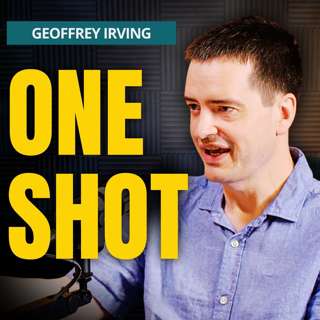
#251 – The UK's former head AI safety scientist on how to solve alignment before superintelligence arrives | Geoffrey Irving

#251 – The UK's former head AI safety scientist on how to solve alignment before superintelligence arrives | Geoffrey Irving

When should governments slow the race toward superintelligence? According to Geoffrey Irving, the careful answer is sometime in the past. The useful answer is now.Geoffrey — formerly a safety research...

11 Aug 2h 2min

#250 – Toby Ord on where AGI timelines go wrong

#250 – Toby Ord on where AGI timelines go wrong

Both Silicon Valley and the public can’t get enough of ‘AGI timelines.’ But Toby Ord, senior researcher at Oxford’s AI Governance Initiative and author of The Precipice, believes we consistently make ...

6 Aug 2h 46min
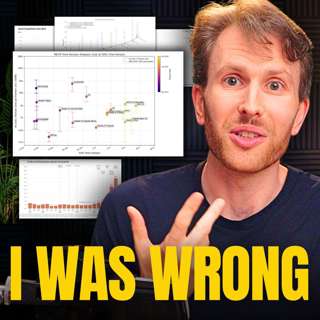
What the hell happened with AGI timelines in 2026? – Rob Wiblin

What the hell happened with AGI timelines in 2026? – Rob Wiblin

Last October, famed coder Andrej Karpathy called AI agents “slop.” Two months later he completely reversed his view, describing them as “alien tools” that are “rocking the profession.”He was far from ...

4 Aug 49min

#249 – Spencer Greenberg on staying sane while trying to save the world

#249 – Spencer Greenberg on staying sane while trying to save the world

If you genuinely believe that humanity could be wiped out by AI or a pandemic, what is the appropriate amount of fear to feel?“As much as possible” can seem like the only reasonable answer. If the wor...

28 Juli 2h 9min
Populärt inom Utbildning

historiepodden-se
rss-bara-en-till-om-beroende-medberoende
det-skaver
nu-blir-det-historia
harrisons-dramatiska-historia
allt-du-velat-veta
not-fanny-anymore
johannes-hansen-podcast
rss-viktmedicinpodden
sa-in-i-sjalen
rss-basta-livet
rikatillsammans-om-privatekonomi-rikedom-i-livet
roda-vita-rosen
i-vantan-pa-katastrofen
rss-max-tant-med-max-villman
rss-foraldramotet-bring-lagercrantz
rss-autismandan
rss-traningsklubben
sektledare
rss-sjalsligt-avkladd