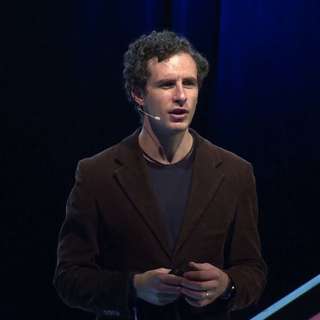

#52 - Glen Weyl on uprooting capitalism and democracy for a just society

#52 - Glen Weyl on uprooting capitalism and democracy for a just society

Pro-market economists love to wax rhapsodic about the capacity of markets to pull together the valuable local information spread across all of society about what people want and how to make it.

But when it comes to politics and voting - which also aim to aggregate the preferences and knowledge found in millions of individuals - the enthusiasm for finding clever institutional designs often turns to skepticism.

Today's guest, freewheeling economist Glen Weyl, won't have it, and is on a warpath to reform liberal democratic institutions in order to save them. Just last year he wrote Radical Markets: Uprooting Capitalism and Democracy for a Just Society with Eric Posner, but has already moved on, saying "in the 6 months since the book came out I've made more intellectual progress than in the whole 10 years before that."

Weyl believes we desperately need more efficient, equitable and decentralised ways to organise society, that take advantage of what each person knows, and his research agenda has already been making breakthroughs.

Links to learn more, summary and full transcript

Our high impact job board

Join our newsletter

Despite a history in the best economics departments in the world - Harvard, Princeton, Yale and the University of Chicago - he is too worried for the future to sit in his office writing papers. Instead he has left the academy to try to inspire a social movement, RadicalxChange, with a vision of social reform as expansive as his own.

You can sign up for their conference in Detroit in March here

Economist Alex Tabarrok called his latest proposal, known as 'liberal radicalism', "a quantum leap in public-goods mechanism-design" - we explain how it works in the show. But the proposal, however good in theory, might struggle in the real world because it requires large subsidies, and compensates for people's selfishness so effectively that it might even be an overcorrection.

An earlier mechanism - 'quadratic voting' (QV) - would allow people to express the relative strength of their preferences in the democratic process. No longer would 51 people who support a proposal, but barely care about the issue, outvote 49 incredibly passionate opponents, predictably making society worse in the process. We explain exactly how in the episode.

Weyl points to studies showing that people are more likely to vote strongly not only about issues they *care* more about, but issues they *know* more about. He expects that allowing people to specialise and indicate when they know what they're talking about will create a democracy that does more to aggregate careful judgement, rather than just passionate ignorance.

But these and indeed all of Weyl's ideas have faced criticism. Some say the risk of unintended consequences is too great, or that they solve the wrong problem. Others see these proposals as unproven, impractical, or just another example of an intellectual engaged in grand social planning. I raise these concerns to see how he responds.

As big a topic as all of that is, this extended conversation also goes into the blockchain, problems with the effective altruism community and how auctions could replace private property. Don't miss it.

Get this episode by subscribing to our podcast on the world’s most pressing problems and how to solve them: type '80,000 Hours' into your podcasting app.

The 80,000 Hours Podcast is produced by Keiran Harris.

Avsnitt(326)

#132 Classic episode – Nova DasSarma on why information security may be critical to the safe development of AI systems

#132 Classic episode – Nova DasSarma on why information security may be critical to the safe development of AI systems

If a business has spent $100 million developing a product, it’s a fair bet that they don’t want it stolen in two seconds and uploaded to the web where anyone can use it for free.This problem exists in...

31 Jan 20252h 41min

#138 Classic episode – Sharon Hewitt Rawlette on why pleasure and pain are the only things that intrinsically matter

#138 Classic episode – Sharon Hewitt Rawlette on why pleasure and pain are the only things that intrinsically matter

What in the world is intrinsically good — good in itself even if it has no other effects? Over the millennia, people have offered many answers: joy, justice, equality, accomplishment, loving god, wisd...

22 Jan 20252h 25min
#134 Classic episode – Ian Morris on what big-picture history teaches us

#134 Classic episode – Ian Morris on what big-picture history teaches us

Wind back 1,000 years and the moral landscape looks very different to today. Most farming societies thought slavery was natural and unobjectionable, premarital sex was an abomination, women should obe...

15 Jan 20253h 40min

#140 Classic episode – Bear Braumoeller on the case that war isn’t in decline

#140 Classic episode – Bear Braumoeller on the case that war isn’t in decline

Is war in long-term decline? Steven Pinker's The Better Angels of Our Nature brought this previously obscure academic question to the centre of public debate, and pointed to rates of death in war to a...

8 Jan 20252h 48min

2024 Highlightapalooza! (The best of The 80,000 Hours Podcast this year)

2024 Highlightapalooza! (The best of The 80,000 Hours Podcast this year)

"A shameless recycling of existing content to drive additional audience engagement on the cheap… or the single best, most valuable, and most insight-dense episode we put out in the entire year, depend...

27 Dec 20242h 50min

#211 – Sam Bowman on why housing still isn't fixed and what would actually work

#211 – Sam Bowman on why housing still isn't fixed and what would actually work

Rich countries seem to find it harder and harder to do anything that creates some losers. People who don’t want houses, offices, power stations, trains, subway stations (or whatever) built in their ar...

19 Dec 20243h 25min

#210 – Cameron Meyer Shorb on dismantling the myth that we can’t do anything to help wild animals

#210 – Cameron Meyer Shorb on dismantling the myth that we can’t do anything to help wild animals

"I really don’t want to give the impression that I think it is easy to make predictable, controlled, safe interventions in wild systems where there are many species interacting. I don’t think it’s eas...

29 Nov 20243h 21min

#209 – Rose Chan Loui on OpenAI’s gambit to ditch its nonprofit

#209 – Rose Chan Loui on OpenAI’s gambit to ditch its nonprofit

One OpenAI critic calls it “the theft of at least the millennium and quite possibly all of human history.” Are they right?Back in 2015 OpenAI was but a humble nonprofit. That nonprofit started a for-p...

27 Nov 20241h 22min

Populärt inom Utbildning

historiepodden-se
rss-bara-en-till-om-missbruk-medberoende-2
det-skaver
alska-oss
harrisons-dramatiska-historia
rss-foraldramotet-bring-lagercrantz
nu-blir-det-historia
roda-vita-rosen
johannes-hansen-podcast
sektledare
rss-viktmedicinpodden
i-vantan-pa-katastrofen
rss-sjalsligt-avkladd
rss-max-tant-med-max-villman
allt-du-velat-veta
sa-in-i-sjalen
not-fanny-anymore
rib-podcast
rss-relationsrevolutionen
rss-traningsklubben