
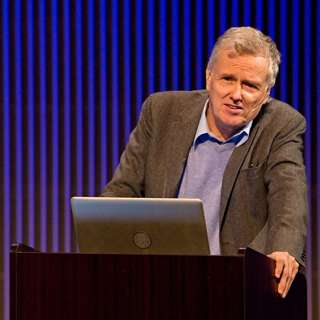
#74 – Dr Greg Lewis on COVID-19 & catastrophic biological risks

#74 – Dr Greg Lewis on COVID-19 & catastrophic biological risks

Our lives currently revolve around the global emergency of COVID-19; you’re probably reading this while confined to your house, as the death toll from the worst pandemic since 1918 continues to rise.

The question of how to tackle COVID-19 has been foremost in the minds of many, including here at 80,000 Hours.

Today's guest, Dr Gregory Lewis, acting head of the Biosecurity Research Group at Oxford University's Future of Humanity Institute, puts the crisis in context, explaining how COVID-19 compares to other diseases, pandemics of the past, and possible worse crises in the future.

COVID-19 is a vivid reminder that we are unprepared to contain or respond to new pathogens.

How would we cope with a virus that was even more contagious and even more deadly? Greg's work focuses on these risks -- of outbreaks that threaten our entire future through an unrecoverable collapse of civilisation, or even the extinction of humanity.

Links to learn more, summary and full transcript.

If such a catastrophe were to occur, Greg believes it’s more likely to be caused by accidental or deliberate misuse of biotechnology than by a pathogen developed by nature.

There are a few direct causes for concern: humans now have the ability to produce some of the most dangerous diseases in history in the lab; technological progress may enable the creation of pathogens which are nastier than anything we see in nature; and most biotechnology has yet to even be conceived, so we can’t assume all the dangers will be familiar.

This is grim stuff, but it needn’t be paralysing. In the years following COVID-19, humanity may be inspired to better prepare for the existential risks of the next century: improving our science, updating our policy options, and enhancing our social cohesion.

COVID-19 is a tragedy of stunning proportions, and its immediate threat is undoubtedly worthy of significant resources.

But we will get through it; if a future biological catastrophe poses an existential risk, we may not get a second chance. It is therefore vital to learn every lesson we can from this pandemic, and provide our descendants with the security we wish for ourselves.

Today’s episode is the hosting debut of our Strategy Advisor, Howie Lempel.

80,000 Hours has focused on COVID-19 for the last few weeks and published over ten pieces about it, and a substantial benefit of this interview was to help inform our own views. As such, at times this episode may feel like eavesdropping on a private conversation, and it is likely to be of most interest to people primarily focused on making the long-term future go as well as possible.

In this episode, Howie and Greg cover:

• Reflections on the first few months of the pandemic
• Common confusions around COVID-19
• How COVID-19 compares to other diseases
• What types of interventions have been available to policymakers
• Arguments for and against working on global catastrophic biological risks (GCBRs)
• How to know if you’re a good fit to work on GCBRs
• The response of the effective altruism community, as well as 80,000 Hours in particular, to COVID-19
• And much more.

Chapters:

  • Rob’s intro (00:00:00)
  • The interview begins (00:03:15)
  • What is COVID-19? (00:16:05)
  • If you end up infected, how severe is it likely to be? (00:19:21)
  • How does COVID-19 compare to other diseases? (00:25:42)
  • Common confusions around COVID-19 (00:32:02)
  • What types of interventions were available to policymakers? (00:46:20)
  • Nonpharmaceutical Interventions (01:04:18)
  • What can you do personally? (01:18:25)
  • Reflections on the first few months of the pandemic (01:23:46)
  • Global catastrophic biological risks (GCBRs) (01:26:17)
  • Counterarguments to working on GCBRs (01:45:56)
  • How do GCBRs compare to other problems? (01:49:05)
  • Careers (01:59:50)
  • The response of the effective altruism community to COVID-19 (02:11:42)
  • The response of 80,000 Hours to COVID-19 (02:28:12)


Get this episode by subscribing: type '80,000 Hours' into your podcasting app. Or read the linked transcript.

Producer: Keiran Harris.
Audio mastering: Ben Cordell.
Transcriptions: Zakee Ulhaq.

Avsnitt(320)

#60 - Phil Tetlock on why accurate forecasting matters for everything, and how you can do it better

#60 - Phil Tetlock on why accurate forecasting matters for everything, and how you can do it better

Have you ever been infuriated by a doctor's unwillingness to give you an honest, probabilistic estimate about what to expect? Or a lawyer who won't tell you the chances you'll win your case? Their beh...

28 Juni 20192h 11min

#59 – Cass Sunstein on how change happens, and why it's so often abrupt & unpredictable

#59 – Cass Sunstein on how change happens, and why it's so often abrupt & unpredictable

It can often feel hopeless to be an activist seeking social change on an obscure issue where most people seem opposed or at best indifferent to you. But according to a new book by Professor Cass Sunst...

17 Juni 20191h 43min

#58 – Pushmeet Kohli of DeepMind on designing robust & reliable AI systems and how to succeed in AI

#58 – Pushmeet Kohli of DeepMind on designing robust & reliable AI systems and how to succeed in AI

When you're building a bridge, responsibility for making sure it won't fall over isn't handed over to a few 'bridge not falling down engineers'. Making sure a bridge is safe to use and remains standin...

3 Juni 20191h 30min

Rob Wiblin on human nature, new technology, and living a happy, healthy & ethical life

Rob Wiblin on human nature, new technology, and living a happy, healthy & ethical life

This is a cross-post of some interviews Rob did recently on two other podcasts — Mission Daily (from 2m) and The Good Life (from 1h13m). Some of the content will be familiar to regular listeners — bu...

13 Maj 20192h 18min
#57 – Tom Kalil on how to do the most good in government

#57 – Tom Kalil on how to do the most good in government

You’re 29 years old, and you’ve just been given a job in the White House. How do you quickly figure out how the US Executive Branch behemoth actually works, so that you can have as much impact as poss...

23 Apr 20192h 50min

#56 - Persis Eskander on wild animal welfare and what, if anything, to do about it

#56 - Persis Eskander on wild animal welfare and what, if anything, to do about it

Elephants in chains at travelling circuses; pregnant pigs trapped in coffin sized crates at factory farms; deers living in the wild. We should welcome the last as a pleasant break from the horror, rig...

15 Apr 20192h 57min

#55 – Lutter & Winter on founding charter cities with outstanding governance to end poverty

#55 – Lutter & Winter on founding charter cities with outstanding governance to end poverty

Governance matters. Policy change quickly took China from famine to fortune; Singapore from swamps to skyscrapers; and Hong Kong from fishing village to financial centre. Unfortunately, many governmen...

31 Mars 20192h 31min

#54 – OpenAI on publication norms, malicious uses of AI, and general-purpose learning algorithms

#54 – OpenAI on publication norms, malicious uses of AI, and general-purpose learning algorithms

OpenAI’s Dactyl is an AI system that can manipulate objects with a human-like robot hand. OpenAI Five is an AI system that can defeat humans at the video game Dota 2. The strange thing is they were bo...

19 Mars 20192h 53min

Populärt inom Utbildning

rss-bara-en-till-om-missbruk-medberoende-2
historiepodden-se
det-skaver
nu-blir-det-historia
rss-viktmedicinpodden
harrisons-dramatiska-historia
johannes-hansen-podcast
not-fanny-anymore
alska-oss
allt-du-velat-veta
roda-vita-rosen
sektledare
sa-in-i-sjalen
rss-sjalsligt-avkladd
i-vantan-pa-katastrofen
dumforklarat
rss-beratta-alltid-det-har
rss-max-tant-med-max-villman
rss-basta-livet
psykologsnack