
#75 – Michelle Hutchinson on what people most often ask 80,000 Hours

#75 – Michelle Hutchinson on what people most often ask 80,000 Hours

Since it was founded, 80,000 Hours has done one-on-one calls to supplement our online content and offer more personalised advice. We try to help people get clear on their most plausible paths, the key uncertainties they face in choosing between them, and provide resources, pointers, and introductions to help them in those paths.

I (Michelle Hutchinson) joined the team a couple of years ago after working at Oxford's Global Priorities Institute, and these days I'm 80,000 Hours' Head of Advising. Since then, chatting to hundreds of people about their career plans has given me some idea of the kinds of things it’s useful for people to hear about when thinking through their careers.

So we thought it would be useful to discuss some on the show for everyone to hear.

Links to learn more, summary and full transcript.
See over 500 vacancies on our job board.
Apply for one-on-one career advising.

Among other common topics, we cover:

• Why traditional careers advice involves thinking through what types of roles you enjoy followed by which of those are impactful, while we recommend going the other way: ranking roles on impact, and then going down the list to find the one you think you’d most flourish in.
• That if you’re pitching your job search at the right level of role, you’ll need to apply to a large number of different jobs. So it's wise to broaden your options, by applying for both stretch and backup roles, and not over-emphasising a small number of organisations.
• Our suggested process for writing a longer term career plan: 1. shortlist your best medium to long-term career options, then 2. figure out the key uncertainties in choosing between them, and 3. map out concrete next steps to resolve those uncertainties.
• Why many listeners aren't spending enough time finding out about what the day-to-day work is like in paths they're considering, or reaching out to people for advice or opportunities.
• The difficulty of maintaining the ambition to increase your social impact, while also being proud of and motivated by what you're already accomplishing.

I also thought it might be useful to give people a sense of what I do and don’t do in advising calls, to help them figure out if they should sign up for it.

If you’re wondering whether you’ll benefit from advising, bear in mind that it tends to be more useful to people:

1. With similar views to 80,000 Hours on what the world’s most pressing problems are, because we’ve done most research on the problems we think it’s most important to address.
2. Who don’t yet have close connections with people working at effective altruist organisations.
3. Who aren’t strongly locationally constrained.

If you’re unsure, it doesn’t take long to apply, and a lot of people say they find the application form itself helps them reflect on their plans. We’re particularly keen to hear from people from under-represented backgrounds.

Also in this episode:

• I describe mistakes I’ve made in advising, and career changes made by people I’ve spoken with.
• Rob and I argue about what risks to take with your career, like when it’s sensible to take a study break, or start from the bottom in a new career path.
• I try to forecast how I’ll change after I have a baby, Rob speculates wildly on what motherhood is like, and Arden and I mercilessly mock Rob.

Chapters:

  • Rob’s intro (00:00:00)
  • The interview begins (00:02:50)
  • The process of advising (00:09:34)
  • We’re not just excited about our priority paths (00:14:37)
  • Common things Michelle says during advising (00:18:13)
  • Interpersonal comparisons (00:31:18)
  • Thinking about current impact (00:40:31)
  • Applying to different kinds of orgs (00:42:29)
  • Difference in impact between jobs / causes (00:49:04)
  • Common mistakes (00:55:40)
  • Career change stories (01:11:44)
  • When is advising really useful for people? (01:24:28)
  • Managing risk in careers (01:55:29)


Producer: Keiran Harris.
Audio mastering: Ben Cordell.
Transcriptions: Zakee Ulhaq.

Avsnitt(324)

#19 - Samantha Pitts-Kiefer on working next to the White House trying to prevent nuclear war

#19 - Samantha Pitts-Kiefer on working next to the White House trying to prevent nuclear war

Rogue elements within a state’s security forces enrich dozens of kilograms of uranium. It’s then assembled into a crude nuclear bomb. The bomb is transported on a civilian aircraft to Washington D.C, ...

14 Feb 20181h 4min

#18 - Ofir Reich on using data science to end poverty & the spurious action-inaction distinction

#18 - Ofir Reich on using data science to end poverty & the spurious action-inaction distinction

Ofir Reich started out doing math in the military, before spending 8 years in tech startups - but then made a sharp turn to become a data scientist focussed on helping the global poor. At UC Berkeley...

31 Jan 20181h 18min

#17 - Will MacAskill on moral uncertainty, utilitarianism & how to avoid being a moral monster

#17 - Will MacAskill on moral uncertainty, utilitarianism & how to avoid being a moral monster

Immanuel Kant is a profoundly influential figure in modern philosophy, and was one of the earliest proponents for universal democracy and international cooperation. He also thought that women have no ...

19 Jan 20181h 52min

#16 - Michelle Hutchinson on global priorities research & shaping the ideas of intellectuals

#16 - Michelle Hutchinson on global priorities research & shaping the ideas of intellectuals

In the 40s and 50s neoliberalism was a fringe movement within economics. But by the 80s it had become a dominant school of thought in public policy, and achieved major policy changes across the Englis...

22 Dec 201755min

#15 - Phil Tetlock on how chimps beat Berkeley undergrads and when it’s wise to defer to the wise

#15 - Phil Tetlock on how chimps beat Berkeley undergrads and when it’s wise to defer to the wise

Prof Philip Tetlock is a social science legend. Over forty years he has researched whose predictions we can trust, whose we can’t and why - and developed methods that allow all of us to be better at p...

20 Nov 20171h 24min
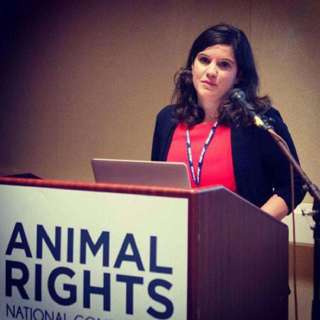
#14 - Sharon Nunez & Jose Valle on going undercover to expose animal abuse

#14 - Sharon Nunez & Jose Valle on going undercover to expose animal abuse

What if you knew that ducks were being killed with pitchforks? Rabbits dumped alive into containers? Or pigs being strangled with forklifts? Would you be willing to go undercover to expose the crime? ...

13 Nov 20171h 25min

#13 - Claire Walsh on testing which policies work & how to get governments to listen to the results

#13 - Claire Walsh on testing which policies work & how to get governments to listen to the results

In both rich and poor countries, government policy is often based on no evidence at all and many programs don’t work. This has particularly harsh effects on the global poor - in some countries governm...

31 Okt 201752min

#12 - Beth Cameron works to stop you dying in a pandemic. Here’s what keeps her up at night.

#12 - Beth Cameron works to stop you dying in a pandemic. Here’s what keeps her up at night.

“When you're in the middle of a crisis and you have to ask for money, you're already too late.” That’s Dr Beth Cameron, who leads Global Biological Policy and Programs at the Nuclear Threat Initiative...

25 Okt 20171h 45min

Populärt inom Utbildning

historiepodden-se
rss-bara-en-till-om-missbruk-medberoende-2
det-skaver
alska-oss
harrisons-dramatiska-historia
nu-blir-det-historia
rss-viktmedicinpodden
sektledare
johannes-hansen-podcast
not-fanny-anymore
allt-du-velat-veta
rss-sjalsligt-avkladd
roda-vita-rosen
i-vantan-pa-katastrofen
rss-max-tant-med-max-villman
sa-in-i-sjalen
rss-om-vi-ska-vara-arliga
rikatillsammans-om-privatekonomi-rikedom-i-livet
polisutbildningspodden
rss-basta-livet