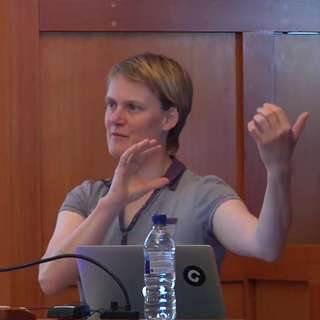
#86 – Hilary Greaves on Pascal's mugging, strong longtermism, and whether existing can be good for us

#86 – Hilary Greaves on Pascal's mugging, strong longtermism, and whether existing can be good for us

Had World War 1 never happened, you might never have existed.

It’s very unlikely that the exact chain of events that led to your conception would have happened otherwise — so perhaps you wouldn't have been born.

Would that mean that it's better for you that World War 1 happened (regardless of whether it was better for the world overall)?

On the one hand, if you're living a pretty good life, you might think the answer is yes – you get to live rather than not.

On the other hand, it sounds strange to say that it's better for you to be alive, because if you'd never existed there'd be no you to be worse off. But if you wouldn't be worse off if you hadn't existed, can you be better off because you do?

In this episode, philosophy professor Hilary Greaves – Director of Oxford University’s Global Priorities Institute – helps untangle this puzzle for us and walks me and Rob through the space of possible answers. She argues that philosophers have been too quick to conclude what she calls existence non-comparativism – i.e, that it can't be better for someone to exist vs. not.

Links to learn more, summary and full transcript.

Where we come down on this issue matters. If people are not made better off by existing and having good lives, you might conclude that bringing more people into existence isn't better for them, and thus, perhaps, that it's not better at all.

This would imply that bringing about a world in which more people live happy lives might not actually be a good thing (if the people wouldn't otherwise have existed) — which would affect how we try to make the world a better place.

Those wanting to have children in order to give them the pleasure of a good life would in some sense be mistaken. And if humanity stopped bothering to have kids and just gradually died out we would have no particular reason to be concerned.

Furthermore it might mean we should deprioritise issues that primarily affect future generations, like climate change or the risk of humanity accidentally wiping itself out.

This is our second episode with Professor Greaves. The first one was a big hit, so we thought we'd come back and dive into even more complex ethical issues.

We discuss:

• The case for different types of ‘strong longtermism’ — the idea that we ought morally to try to make the very long run future go as well as possible
• What it means for us to be 'clueless' about the consequences of our actions
• Moral uncertainty -- what we should do when we don't know which moral theory is correct
• Whether we should take a bet on a really small probability of a really great outcome
• The field of global priorities research at the Global Priorities Institute and beyond

Chapters:

  • The interview begins (00:02:53)
  • The Case for Strong Longtermism (00:05:49)
  • Compatible moral views (00:20:03)
  • Defining cluelessness (00:39:26)
  • Why cluelessness isn’t an objection to longtermism (00:51:05)
  • Theories of what to do under moral uncertainty (01:07:42)
  • Pascal’s mugging (01:16:37)
  • Comparing Existence and Non-Existence (01:30:58)
  • Philosophers who reject existence comparativism (01:48:56)
  • Lives framework (02:01:52)
  • Global priorities research (02:09:25)


Get this episode by subscribing: type 80,000 Hours into your podcasting app. Or read the linked transcript.

Producer: Keiran Harris.
Audio mastering: Ben Cordell.
Transcriptions: Zakee Ulhaq.

Avsnitt(323)

#41 - David Roodman on incarceration, geomagnetic storms, & becoming a world-class researcher

#41 - David Roodman on incarceration, geomagnetic storms, & becoming a world-class researcher

With 698 inmates per 100,000 citizens, the U.S. is by far the leader among large wealthy nations in incarceration. But what effect does imprisonment actually have on crime? According to David Roodman...

28 Aug 20182h 18min

#40 - Katja Grace on forecasting future technology & how much we should trust expert predictions

#40 - Katja Grace on forecasting future technology & how much we should trust expert predictions

Experts believe that artificial intelligence will be better than humans at driving trucks by 2027, working in retail by 2031, writing bestselling books by 2049, and working as surgeons by 2053. But ho...

21 Aug 20182h 11min
#39 - Spencer Greenberg on the scientific approach to solving difficult everyday questions

#39 - Spencer Greenberg on the scientific approach to solving difficult everyday questions

Will Trump be re-elected? Will North Korea give up their nuclear weapons? Will your friend turn up to dinner? Spencer Greenberg, founder of ClearerThinking.org has a process for working out such real...

7 Aug 20182h 17min

#38 - Yew-Kwang Ng on anticipating effective altruism decades ago & how to make a much happier world

#38 - Yew-Kwang Ng on anticipating effective altruism decades ago & how to make a much happier world

Will people who think carefully about how to maximize welfare eventually converge on the same views? The effective altruism community has spent a lot of time over the past 10 years debating how best t...

26 Juli 20181h 59min
#37 - GiveWell picks top charities by estimating the unknowable. James Snowden on how they do it.

#37 - GiveWell picks top charities by estimating the unknowable. James Snowden on how they do it.

What’s the value of preventing the death of a 5-year-old child, compared to a 20-year-old, or an 80-year-old? The global health community has generally regarded the value as proportional to the numbe...

16 Juli 20181h 44min

#36 - Tanya Singh on ending the operations management bottleneck in effective altruism

#36 - Tanya Singh on ending the operations management bottleneck in effective altruism

Almost nobody is able to do groundbreaking physics research themselves, and by the time his brilliance was appreciated, Einstein was hardly limited by funding. But what if you could find a way to unlo...

11 Juli 20182h 4min

#35 - Tara Mac Aulay on the audacity to fix the world without asking permission

#35 - Tara Mac Aulay on the audacity to fix the world without asking permission

"You don't need permission. You don't need to be allowed to do something that's not in your job description. If you think that it's gonna make your company or your organization more successful and mor...

21 Juni 20181h 22min

Rob Wiblin on the art/science of a high impact career

Rob Wiblin on the art/science of a high impact career

Today's episode is a cross-post of an interview I did with The Jolly Swagmen Podcast which came out this week. I recommend regular listeners skip to 24 minutes in to avoid hearing things they already ...

8 Juni 20181h 31min

Populärt inom Utbildning

historiepodden-se
rss-bara-en-till-om-missbruk-medberoende-2
det-skaver
alska-oss
sektledare
nu-blir-det-historia
rss-viktmedicinpodden
harrisons-dramatiska-historia
not-fanny-anymore
allt-du-velat-veta
johannes-hansen-podcast
roda-vita-rosen
rss-max-tant-med-max-villman
i-vantan-pa-katastrofen
sa-in-i-sjalen
rss-sjalsligt-avkladd
rss-basta-livet
sex-pa-riktigt-med-marika-smith
vi-gar-till-historien
rss-beratta-alltid-det-har