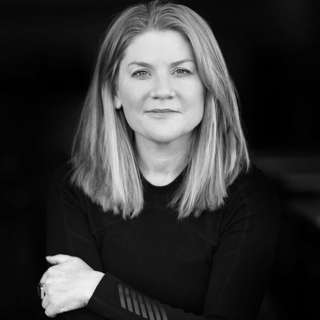

#95 – Kelly Wanser on whether to deliberately intervene in the climate

#95 – Kelly Wanser on whether to deliberately intervene in the climate

How long do you think it’ll be before we’re able to bend the weather to our will? A massive rainmaking program in China, efforts to seed new oases in the Arabian peninsula, or chemically induce snow for skiers in Colorado.

100 years? 50 years? 20?

Those who know how to write a teaser hook for a podcast episode will have correctly guessed that all these things are already happening today. And the techniques being used could be turned to managing climate change as well.

Today’s guest, Kelly Wanser, founded SilverLining — a nonprofit organization that advocates research into climate interventions, such as seeding or brightening clouds, to ensure that we maintain a safe climate.

Links to learn more, summary and full transcript.

Kelly says that current climate projections, even if we do everything right from here on out, imply that two degrees of global warming are now unavoidable. And the same scientists who made those projections fear the flow-through effect that warming could have.

Since our best case scenario may already be too dangerous, SilverLining focuses on ways that we could intervene quickly in the climate if things get especially grim — their research serving as a kind of insurance policy.

After considering everything from mirrors in space, to shiny objects on the ocean, to materials on the Arctic, their scientists concluded that the most promising approach was leveraging one of the ways that the Earth already regulates its temperature — the reflection of sunlight off particles and clouds in the atmosphere.

Cloud brightening is a climate control approach that uses the spraying of a fine mist of sea water into clouds to make them 'whiter' so they reflect even more sunlight back into space.

These ‘streaks’ in clouds are already created by ships because the particulates from their diesel engines inadvertently make clouds a bit brighter.

Kelly says that scientists estimate that we're already lowering the global temperature this way by 0.5–1.1ºC, without even intending to.

While fossil fuel particulates are terrible for human health, they think we could replicate this effect by simply spraying sea water up into clouds. But so far there hasn't been funding to measure how much temperature change you get for a given amount of spray.

And we won't want to dive into these methods head first because the atmosphere is a complex system we can't yet properly model, and there are many things to check first. For instance, chemicals that reflect light from the upper atmosphere might totally change wind patterns in the stratosphere. Or they might not — for all the discussion of global warming the climate is surprisingly understudied.

The public tends to be skeptical of climate interventions, otherwise known as geoengineering, so in this episode we cover a range of possible objections, such as:

• It being riskier than doing nothing
• That it will inevitably be dangerously political
• And the risk of the 'double catastrophe', where a pandemic stops our climate interventions and temperatures sky-rocket at the worst time.

Kelly and Rob also talk about:

• The many climate interventions that are already happening
• The most promising ideas in the field
• And whether people would be more accepting if we found ways to intervene that had nothing to do with making the world a better place.

Chapters:
• Rob’s intro (00:00:00)
• The interview begins (00:01:37)
• Existing climate interventions (00:06:44)
• Most promising ideas (00:16:23)
• Doing good by accident (00:28:39)
• Objections to this approach (00:31:16)
• How much could countries do individually? (00:47:19)
• Government funding (00:50:08)
• Is global coordination possible? (00:53:01)
• Malicious use (00:57:07)
• Careers and SilverLining (01:04:03)
• Rob’s outro (01:23:34)

Producer: Keiran Harris.
Audio mastering: Ben Cordell.
Transcriptions: Sofia Davis-Fogel.

Det här avsnittet är hämtat från ett öppet RSS-flöde och publiceras inte av Podme. Det kan innehålla reklam.

Avsnitt(349)

AI 2027's author returns with a plan to change the ending | Daniel Kokotajlo

AI 2027's author returns with a plan to change the ending | Daniel Kokotajlo

Last year, Daniel Kokotajlo and his colleagues published AI 2027 — a scenario read by millions, including US Vice President Vance. AI 2027 ended in human extinction or an irreversible concentration of...

27 Aug 3h 47min

Owain Evans on accidentally training AI models to be evil

Owain Evans on accidentally training AI models to be evil

Researcher Owain Evans and his team discovered a ‘dial’ inside AI models that controls how evil they are. Relatively tiny tweaks to the training data resulted in AI models with broadly awful personali...

20 Aug 2h 15min

#251 – The UK's former head AI safety scientist on how to solve alignment before superintelligence arrives | Geoffrey Irving

#251 – The UK's former head AI safety scientist on how to solve alignment before superintelligence arrives | Geoffrey Irving

When should governments slow the race toward superintelligence? According to Geoffrey Irving, the careful answer is sometime in the past. The useful answer is now.Geoffrey — formerly a safety research...

11 Aug 2h 2min

#250 – Toby Ord on where AGI timelines go wrong

#250 – Toby Ord on where AGI timelines go wrong

Both Silicon Valley and the public can’t get enough of ‘AGI timelines.’ But Toby Ord, senior researcher at Oxford’s AI Governance Initiative and author of The Precipice, believes we consistently make ...

6 Aug 2h 46min

What the hell happened with AGI timelines in 2026? – Rob Wiblin

What the hell happened with AGI timelines in 2026? – Rob Wiblin

Last October, famed coder Andrej Karpathy called AI agents “slop.” Two months later he completely reversed his view, describing them as “alien tools” that are “rocking the profession.”He was far from ...

4 Aug 49min

#249 – Spencer Greenberg on staying sane while trying to save the world

#249 – Spencer Greenberg on staying sane while trying to save the world

If you genuinely believe that humanity could be wiped out by AI or a pandemic, what is the appropriate amount of fear to feel?“As much as possible” can seem like the only reasonable answer. If the wor...

28 Juli 2h 9min

#248 – Jasmine Sun on what the people building AI really believe

#248 – Jasmine Sun on what the people building AI really believe

Many AI researchers believe mass job displacement is coming — and some even think there’s a chance their technology will kill everyone. But they’re building it anyway. Writer and journalist Jasmine Su...

21 Juli 1h 6min

#247 – Anton Leicht on how middle powers avoid losing everything in a post-AI world

#247 – Anton Leicht on how middle powers avoid losing everything in a post-AI world

In a post-AGI world, can a country without access to frontier AI even be considered sovereign anymore?Anton Leicht says once frontier AI becomes a core economic input, the countries that own it will p...

14 Juli 1h 33min

Populärt inom Utbildning

historiepodden-se
det-skaver
rss-bara-en-till-om-beroende-medberoende
nu-blir-det-historia
harrisons-dramatiska-historia
not-fanny-anymore
rss-viktmedicinpodden
roda-vita-rosen
johannes-hansen-podcast
rikatillsammans-om-privatekonomi-rikedom-i-livet
i-vantan-pa-katastrofen
allt-du-velat-veta
rss-ar-det-rimligt
sa-in-i-sjalen
rss-max-tant-med-max-villman
rss-foraldramotet-bring-lagercrantz
rss-basta-livet
rss-autismandan
sektledare
sex-pa-riktigt-med-marika-smith