
#106 – Cal Newport on an industrial revolution for office work

#106 – Cal Newport on an industrial revolution for office work

If you wanted to start a university department from scratch, and attract as many superstar researchers as possible, what’s the most attractive perk you could offer?

How about just not needing an email address.

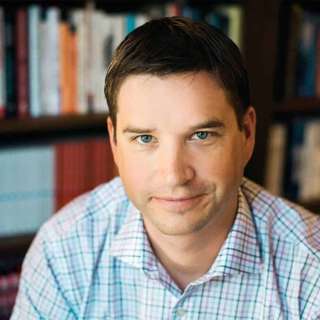
According to today's guest, Cal Newport — computer science professor and best-selling author of A World Without Email — it should seem obscene and absurd for a world-renowned vaccine researcher with decades of experience to spend a third of their time fielding requests from HR, building management, finance, and so on. Yet with offices organised the way they are today, nothing could be more natural.

Links to learn more, summary and full transcript.

But this isn’t just a problem at the elite level — this affects almost all of us. A typical U.S. office worker checks their email 80 times a day, once every six minutes on average. Data analysis by RescueTime found that a third of users checked email or Slack every three minutes or more, averaged over a full work day.

Each time that happens our focus is broken, killing our momentum on the knowledge work we're supposedly paid to do.

When we lament how much email and chat have reduced our focus and filled our days with anxiety and frenetic activity, we most naturally blame 'weakness of will'. If only we had the discipline to check Slack and email once a day, all would be well — or so the story goes.

Cal believes that line of thinking fundamentally misunderstands how we got to a place where knowledge workers can rarely find more than five consecutive minutes to spend doing just one thing.

Since the Industrial Revolution, a combination of technology and better organization have allowed the manufacturing industry to produce a hundred-fold as much with the same number of people.

Cal says that by comparison, it's not clear that specialised knowledge workers like scientists, authors, or senior managers are *any* more productive than they were 50 years ago. If the knowledge sector could achieve even a tiny fraction of what manufacturing has, and find a way to coordinate its work that raised productivity by just 1%, that would generate on the order of $100 billion globally each year.

Since the 1990s, when everyone got an email address and most lost their assistants, that lack of direction has led to what Cal calls the 'hyperactive hive mind': everyone sends emails and chats to everyone else, all through the day, whenever they need something.

Cal points out that this is so normal we don't even think of it as a way of organising work, but it is: it's what happens when management does nothing to enable teams to decide on a better way of organising themselves.

A few industries have made progress taming the 'hyperactive hive mind'. But on Cal's telling, this barely scratches the surface of the improvements that are possible within knowledge work. And reigning in the hyperactive hive mind won't just help people do higher quality work, it will free them from the 24/7 anxiety that there's someone somewhere they haven't gotten back to.

In this interview Cal and Rob also cover:
• Is this really one of the world's most pressing problems?
• The historical origins of the 'hyperactive hive mind'
• The harm caused by attention switching
• Who's working to solve the problem and how
• Cal's top productivity advice for high school students, university students, and early career workers
• And much more

Chapters:

  • Rob’s intro (00:00:00)
  • The interview begins (00:02:02)
  • The hyperactive hivemind (00:04:11)
  • Scale of the harm (00:08:40)
  • Is email making professors stupid? (00:22:09)
  • Why haven't we already made these changes? (00:29:38)
  • Do people actually prefer the hyperactive hivemind? (00:43:31)
  • Solutions (00:55:52)
  • Advocacy (01:10:47)
  • How to Be a High School Superstar (01:23:03)
  • How to Win at College (01:27:46)
  • So Good They Can't Ignore You (01:31:47)
  • Personal barriers (01:42:51)
  • George Marshall (01:47:11)
  • Rob’s outro (01:49:18)

Producer: Keiran Harris
Audio mastering: Ben Cordell
Transcriptions: Sofia Davis-Fogel

Avsnitt(333)

AI might let a few people control everything — permanently (article by Rose Hadshar)

AI might let a few people control everything — permanently (article by Rose Hadshar)

Power is already concentrated today: over 800 million people live on less than $3 a day, the three richest men in the world are worth over $1 trillion, and almost six billion people live in countries ...

12 Dec 20251h
#230 – Dean Ball on how AI is a huge deal — but we shouldn’t regulate it yet

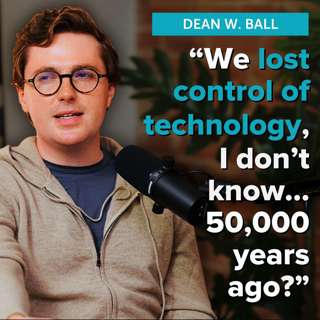
#230 – Dean Ball on how AI is a huge deal — but we shouldn’t regulate it yet

Former White House staffer Dean Ball thinks it's very likely some form of 'superintelligence' arrives in under 20 years. He thinks AI being used for bioweapon research is "a real threat model, obvious...

10 Dec 20252h 54min

#229 – Marius Hobbhahn on the race to solve AI scheming before models go superhuman

#229 – Marius Hobbhahn on the race to solve AI scheming before models go superhuman

We often worry about AI models “hallucinating” or making honest mistakes. But what happens when a model knows the truth, but decides to deceive you anyway to achieve a goal of its own? This isn’t sci-...

3 Dec 20253h 3min
Rob & Luisa chat kids, the 2016 fertility crash, and how the 50s invented parenting that makes us miserable

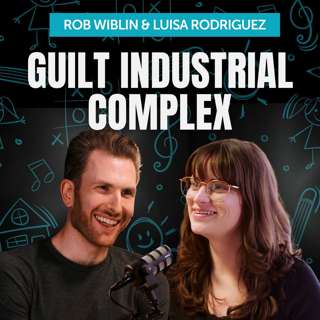
Rob & Luisa chat kids, the 2016 fertility crash, and how the 50s invented parenting that makes us miserable

Global fertility rates aren’t just falling: the rate of decline is accelerating. From 2006 to 2016, fertility dropped gradually, but since 2016 the rate of decline has increased 4.5-fold. In many weal...

25 Nov 20251h 59min
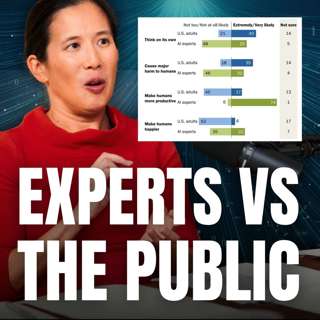
#228 – Eileen Yam on how we're completely out of touch with what the public thinks about AI

#228 – Eileen Yam on how we're completely out of touch with what the public thinks about AI

If you work in AI, you probably think it’s going to boost productivity, create wealth, advance science, and improve your life. If you’re a member of the American public, you probably strongly disagree...

20 Nov 20251h 43min
OpenAI: The nonprofit refuses to be killed (with Tyler Whitmer)

OpenAI: The nonprofit refuses to be killed (with Tyler Whitmer)

Last December, the OpenAI business put forward a plan to completely sideline its nonprofit board. But two state attorneys general have now blocked that effort and kept that board very much alive and k...

11 Nov 20251h 56min
#227 – Helen Toner on the geopolitics of AGI in China and the Middle East

#227 – Helen Toner on the geopolitics of AGI in China and the Middle East

With the US racing to develop AGI and superintelligence ahead of China, you might expect the two countries to be negotiating how they’ll deploy AI, including in the military, without coming to blows. ...

5 Nov 20252h 20min

#226 – Holden Karnofsky on unexploited opportunities to make AI safer — and all his AGI takes

#226 – Holden Karnofsky on unexploited opportunities to make AI safer — and all his AGI takes

For years, working on AI safety usually meant theorising about the ‘alignment problem’ or trying to convince other people to give a damn. If you could find any way to help, the work was frustrating an...

30 Okt 20254h 30min

Populärt inom Utbildning

historiepodden-se
rss-bara-en-till-om-missbruk-medberoende-2
det-skaver
nu-blir-det-historia
not-fanny-anymore
johannes-hansen-podcast
harrisons-dramatiska-historia
allt-du-velat-veta
rss-viktmedicinpodden
roda-vita-rosen
rss-foraldramotet-bring-lagercrantz
sektledare
i-vantan-pa-katastrofen
sa-in-i-sjalen
rss-max-tant-med-max-villman
rikatillsammans-om-privatekonomi-rikedom-i-livet
rss-sjalsligt-avkladd
sex-pa-riktigt-med-marika-smith
rss-traningsklubben
rss-dr-bjorklund