
#157 – Ezra Klein on existential risk from AI and what DC could do about it

#157 – Ezra Klein on existential risk from AI and what DC could do about it

In Oppenheimer, scientists detonate a nuclear weapon despite thinking there's some 'near zero' chance it would ignite the atmosphere, putting an end to life on Earth. Today, scientists working on AI think the chance their work puts an end to humanity is vastly higher than that.

In response, some have suggested we launch a Manhattan Project to make AI safe via enormous investment in relevant R&D. Others have suggested that we need international organisations modelled on those that slowed the proliferation of nuclear weapons. Others still seek a research slowdown by labs while an auditing and licencing scheme is created.

Today's guest — journalist Ezra Klein of The New York Times — has watched policy discussions and legislative battles play out in DC for 20 years.

Links to learn more, summary and full transcript.

Like many people he has also taken a big interest in AI this year, writing articles such as “This changes everything.” In his first interview on the show in 2021, he flagged AI as one topic that DC would regret not having paid more attention to. So we invited him on to get his take on which regulatory proposals have promise, and which seem either unhelpful or politically unviable.

Out of the ideas on the table right now, Ezra favours a focus on direct government funding — both for AI safety research and to develop AI models designed to solve problems other than making money for their operators. He is sympathetic to legislation that would require AI models to be legible in a way that none currently are — and embraces the fact that that will slow down the release of models while businesses figure out how their products actually work.

By contrast, he's pessimistic that it's possible to coordinate countries around the world to agree to prevent or delay the deployment of dangerous AI models — at least not unless there's some spectacular AI-related disaster to create such a consensus. And he fears attempts to require licences to train the most powerful ML models will struggle unless they can find a way to exclude and thereby appease people working on relatively safe consumer technologies rather than cutting-edge research.

From observing how DC works, Ezra expects that even a small community of experts in AI governance can have a large influence on how the the US government responds to AI advances. But in Ezra's view, that requires those experts to move to DC and spend years building relationships with people in government, rather than clustering elsewhere in academia and AI labs.

In today's brisk conversation, Ezra and host Rob Wiblin cover the above as well as:

They cover:

  • Whether it's desirable to slow down AI research
  • The value of engaging with current policy debates even if they don't seem directly important
  • Which AI business models seem more or less dangerous
  • Tensions between people focused on existing vs emergent risks from AI
  • Two major challenges of being a new parent

Get this episode by subscribing to our podcast on the world’s most pressing problems and how to solve them: type ‘80,000 Hours’ into your podcasting app. Or read the transcript below.

Producer: Keiran Harris
Audio Engineering Lead: Ben Cordell

Technical editing: Milo McGuire

Transcriptions: Katy Moore

Avsnitt(321)

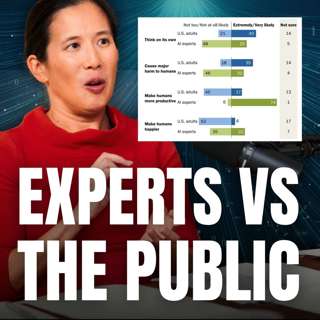
#228 – Eileen Yam on how we're completely out of touch with what the public thinks about AI

#228 – Eileen Yam on how we're completely out of touch with what the public thinks about AI

If you work in AI, you probably think it’s going to boost productivity, create wealth, advance science, and improve your life. If you’re a member of the American public, you probably strongly disagree...

20 Nov 20251h 43min
OpenAI: The nonprofit refuses to be killed (with Tyler Whitmer)

OpenAI: The nonprofit refuses to be killed (with Tyler Whitmer)

Last December, the OpenAI business put forward a plan to completely sideline its nonprofit board. But two state attorneys general have now blocked that effort and kept that board very much alive and k...

11 Nov 20251h 56min
#227 – Helen Toner on the geopolitics of AGI in China and the Middle East

#227 – Helen Toner on the geopolitics of AGI in China and the Middle East

With the US racing to develop AGI and superintelligence ahead of China, you might expect the two countries to be negotiating how they’ll deploy AI, including in the military, without coming to blows. ...

5 Nov 20252h 20min

#226 – Holden Karnofsky on unexploited opportunities to make AI safer — and all his AGI takes

#226 – Holden Karnofsky on unexploited opportunities to make AI safer — and all his AGI takes

For years, working on AI safety usually meant theorising about the ‘alignment problem’ or trying to convince other people to give a damn. If you could find any way to help, the work was frustrating an...

30 Okt 20254h 30min

#225 – Daniel Kokotajlo on what a hyperspeed robot economy might look like

#225 – Daniel Kokotajlo on what a hyperspeed robot economy might look like

When Daniel Kokotajlo talks to security experts at major AI labs, they tell him something chilling: “Of course we’re probably penetrated by the CCP already, and if they really wanted something, they c...

27 Okt 20252h 12min
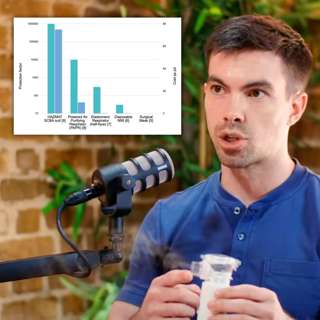
#224 – There's a cheap and low-tech way to save humanity from any engineered disease | Andrew Snyder-Beattie

#224 – There's a cheap and low-tech way to save humanity from any engineered disease | Andrew Snyder-Beattie

Conventional wisdom is that safeguarding humanity from the worst biological risks — microbes optimised to kill as many as possible — is difficult bordering on impossible, making bioweapons humanity’s ...

2 Okt 20252h 31min
Inside the Biden admin’s AI policy approach | Jake Sullivan, Biden’s NSA | via The Cognitive Revolution

Inside the Biden admin’s AI policy approach | Jake Sullivan, Biden’s NSA | via The Cognitive Revolution

Jake Sullivan was the US National Security Advisor from 2021-2025. He joined our friends on The Cognitive Revolution podcast in August to discuss AI as a critical national security issue. We thought i...

26 Sep 20251h 5min
#223 – Neel Nanda on leading a Google DeepMind team at 26 – and advice if you want to work at an AI company (part 2)

#223 – Neel Nanda on leading a Google DeepMind team at 26 – and advice if you want to work at an AI company (part 2)

At 26, Neel Nanda leads an AI safety team at Google DeepMind, has published dozens of influential papers, and mentored 50 junior researchers — seven of whom now work at major AI companies. His secret?...

15 Sep 20251h 46min

Populärt inom Utbildning

historiepodden-se
rss-bara-en-till-om-missbruk-medberoende-2
det-skaver
nu-blir-det-historia
sektledare
harrisons-dramatiska-historia
not-fanny-anymore
johannes-hansen-podcast
rss-viktmedicinpodden
roda-vita-rosen
rss-sjalsligt-avkladd
allt-du-velat-veta
sa-in-i-sjalen
rss-beratta-alltid-det-har
rss-max-tant-med-max-villman
i-vantan-pa-katastrofen
alska-oss
rikatillsammans-om-privatekonomi-rikedom-i-livet
sektpodden
polisutbildningspodden