
#164 – Kevin Esvelt on cults that want to kill everyone, stealth vs wildfire pandemics, and how he felt inventing gene drives

#164 – Kevin Esvelt on cults that want to kill everyone, stealth vs wildfire pandemics, and how he felt inventing gene drives

"Imagine a fast-spreading respiratory HIV. It sweeps around the world. Almost nobody has symptoms. Nobody notices until years later, when the first people who are infected begin to succumb. They might die, something else debilitating might happen to them, but by that point, just about everyone on the planet would have been infected already.

And then it would be a race. Can we come up with some way of defusing the thing? Can we come up with the equivalent of HIV antiretrovirals before it's too late?" — Kevin Esvelt

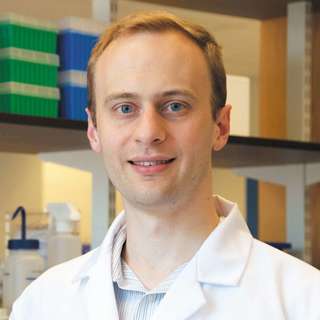
In today’s episode, host Luisa Rodriguez interviews Kevin Esvelt — a biologist at the MIT Media Lab and the inventor of CRISPR-based gene drive — about the threat posed by engineered bioweapons.

Links to learn more, summary and full transcript.

They cover:

  • Why it makes sense to focus on deliberately released pandemics
  • Case studies of people who actually wanted to kill billions of humans
  • How many people have the technical ability to produce dangerous viruses
  • The different threats of stealth and wildfire pandemics that could crash civilisation
  • The potential for AI models to increase access to dangerous pathogens
  • Why scientists try to identify new pandemic-capable pathogens, and the case against that research
  • Technological solutions, including UV lights and advanced PPE
  • Using CRISPR-based gene drive to fight diseases and reduce animal suffering
  • And plenty more.

Producer and editor: Keiran Harris
Audio Engineering Lead: Ben Cordell
Technical editing: Simon Monsour
Additional content editing: Katy Moore and Luisa Rodriguez
Transcriptions: Katy Moore

Avsnitt(333)

#138 Classic episode – Sharon Hewitt Rawlette on why pleasure and pain are the only things that intrinsically matter

#138 Classic episode – Sharon Hewitt Rawlette on why pleasure and pain are the only things that intrinsically matter

What in the world is intrinsically good — good in itself even if it has no other effects? Over the millennia, people have offered many answers: joy, justice, equality, accomplishment, loving god, wisd...

22 Jan 20252h 25min
#134 Classic episode – Ian Morris on what big-picture history teaches us

#134 Classic episode – Ian Morris on what big-picture history teaches us

Wind back 1,000 years and the moral landscape looks very different to today. Most farming societies thought slavery was natural and unobjectionable, premarital sex was an abomination, women should obe...

15 Jan 20253h 40min

#140 Classic episode – Bear Braumoeller on the case that war isn’t in decline

#140 Classic episode – Bear Braumoeller on the case that war isn’t in decline

Is war in long-term decline? Steven Pinker's The Better Angels of Our Nature brought this previously obscure academic question to the centre of public debate, and pointed to rates of death in war to a...

8 Jan 20252h 48min

2024 Highlightapalooza! (The best of The 80,000 Hours Podcast this year)

2024 Highlightapalooza! (The best of The 80,000 Hours Podcast this year)

"A shameless recycling of existing content to drive additional audience engagement on the cheap… or the single best, most valuable, and most insight-dense episode we put out in the entire year, depend...

27 Dec 20242h 50min

#211 – Sam Bowman on why housing still isn't fixed and what would actually work

#211 – Sam Bowman on why housing still isn't fixed and what would actually work

Rich countries seem to find it harder and harder to do anything that creates some losers. People who don’t want houses, offices, power stations, trains, subway stations (or whatever) built in their ar...

19 Dec 20243h 25min
#210 – Cameron Meyer Shorb on dismantling the myth that we can’t do anything to help wild animals

#210 – Cameron Meyer Shorb on dismantling the myth that we can’t do anything to help wild animals

"I really don’t want to give the impression that I think it is easy to make predictable, controlled, safe interventions in wild systems where there are many species interacting. I don’t think it’s eas...

29 Nov 20243h 21min

#209 – Rose Chan Loui on OpenAI’s gambit to ditch its nonprofit

#209 – Rose Chan Loui on OpenAI’s gambit to ditch its nonprofit

One OpenAI critic calls it “the theft of at least the millennium and quite possibly all of human history.” Are they right?Back in 2015 OpenAI was but a humble nonprofit. That nonprofit started a for-p...

27 Nov 20241h 22min

#208 – Elizabeth Cox on the case that TV shows, movies, and novels can improve the world

#208 – Elizabeth Cox on the case that TV shows, movies, and novels can improve the world

"I think stories are the way we shift the Overton window — so widen the range of things that are acceptable for policy and palatable to the public. Almost by definition, a lot of things that are going...

21 Nov 20242h 22min

Populärt inom Utbildning

historiepodden-se
rss-bara-en-till-om-missbruk-medberoende-2
det-skaver
harrisons-dramatiska-historia
nu-blir-det-historia
rss-viktmedicinpodden
johannes-hansen-podcast
not-fanny-anymore
roda-vita-rosen
rss-foraldramotet-bring-lagercrantz
sektledare
allt-du-velat-veta
i-vantan-pa-katastrofen
sa-in-i-sjalen
rss-sjalsligt-avkladd
sex-pa-riktigt-med-marika-smith
rss-basta-livet
rikatillsammans-om-privatekonomi-rikedom-i-livet
rss-pa-insidan-med-bjorn-rudman
rss-traningsklubben