#186 – Dean Spears on why babies are born small in Uttar Pradesh, and how to save their lives

#186 – Dean Spears on why babies are born small in Uttar Pradesh, and how to save their lives

"I work in a place called Uttar Pradesh, which is a state in India with 240 million people. One in every 33 people in the whole world lives in Uttar Pradesh. It would be the fifth largest country if it were its own country. And if it were its own country, you’d probably know about its human development challenges, because it would have the highest neonatal mortality rate of any country except for South Sudan and Pakistan. Forty percent of children there are stunted. Only two-thirds of women are literate. So Uttar Pradesh is a place where there are lots of health challenges.

"And then even within that, we’re working in a district called Bahraich, where about 4 million people live. So even that district of Uttar Pradesh is the size of a country, and if it were its own country, it would have a higher neonatal mortality rate than any other country. In other words, babies born in Bahraich district are more likely to die in their first month of life than babies born in any country around the world." — Dean Spears

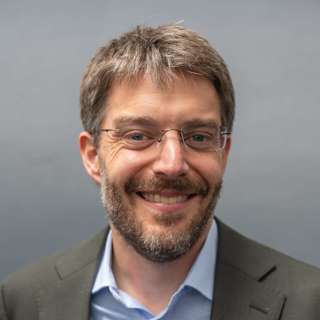
In today’s episode, host Luisa Rodriguez speaks to Dean Spears — associate professor of economics at the University of Texas at Austin and founding director of r.i.c.e. — about his experience implementing a surprisingly low-tech but highly cost-effective kangaroo mother care programme in Uttar Pradesh, India to save the lives of vulnerable newborn infants.

Links to learn more, highlights, and full transcript.

They cover:

  • The shockingly high neonatal mortality rates in Uttar Pradesh, India, and how social inequality and gender dynamics contribute to poor health outcomes for both mothers and babies.
  • The remarkable benefits for vulnerable newborns that come from skin-to-skin contact and breastfeeding support.
  • The challenges and opportunities that come with working with a government hospital to implement new, evidence-based programmes.
  • How the currently small programme might be scaled up to save more newborns’ lives in other regions of Uttar Pradesh and beyond.
  • How targeted health interventions stack up against direct cash transfers.
  • Plus, a sneak peak into Dean’s new book, which explores the looming global population peak that’s expected around 2080, and the consequences of global depopulation.
  • And much more.

Chapters:

  • Why is low birthweight a major problem in Uttar Pradesh? (00:02:45)
  • Neonatal mortality and maternal health in Uttar Pradesh (00:06:10)
  • Kangaroo mother care (00:12:08)
  • What would happen without this intervention? (00:16:07)
  • Evidence of KMC’s effectiveness (00:18:15)
  • Longer-term outcomes (00:32:14)
  • GiveWell’s support and implementation challenges (00:41:13)
  • How can KMC be so cost effective? (00:52:38)
  • Programme evaluation (00:57:21)
  • Is KMC is better than direct cash transfers? (00:59:12)
  • Expanding the programme and what skills are needed (01:01:29)
  • Fertility and population decline (01:07:28)
  • What advice Dean would give his younger self (01:16:09)

Producer and editor: Keiran Harris
Audio engineering lead: Ben Cordell
Technical editing: Simon Monsour, Milo McGuire, and Dominic Armstrong
Additional content editing: Katy Moore and Luisa Rodriguez
Transcriptions: Katy Moore

Avsnitt(333)

#138 Classic episode – Sharon Hewitt Rawlette on why pleasure and pain are the only things that intrinsically matter

#138 Classic episode – Sharon Hewitt Rawlette on why pleasure and pain are the only things that intrinsically matter

What in the world is intrinsically good — good in itself even if it has no other effects? Over the millennia, people have offered many answers: joy, justice, equality, accomplishment, loving god, wisd...

22 Jan 20252h 25min
#134 Classic episode – Ian Morris on what big-picture history teaches us

#134 Classic episode – Ian Morris on what big-picture history teaches us

Wind back 1,000 years and the moral landscape looks very different to today. Most farming societies thought slavery was natural and unobjectionable, premarital sex was an abomination, women should obe...

15 Jan 20253h 40min

#140 Classic episode – Bear Braumoeller on the case that war isn’t in decline

#140 Classic episode – Bear Braumoeller on the case that war isn’t in decline

Is war in long-term decline? Steven Pinker's The Better Angels of Our Nature brought this previously obscure academic question to the centre of public debate, and pointed to rates of death in war to a...

8 Jan 20252h 48min

2024 Highlightapalooza! (The best of The 80,000 Hours Podcast this year)

2024 Highlightapalooza! (The best of The 80,000 Hours Podcast this year)

"A shameless recycling of existing content to drive additional audience engagement on the cheap… or the single best, most valuable, and most insight-dense episode we put out in the entire year, depend...

27 Dec 20242h 50min

#211 – Sam Bowman on why housing still isn't fixed and what would actually work

#211 – Sam Bowman on why housing still isn't fixed and what would actually work

Rich countries seem to find it harder and harder to do anything that creates some losers. People who don’t want houses, offices, power stations, trains, subway stations (or whatever) built in their ar...

19 Dec 20243h 25min
#210 – Cameron Meyer Shorb on dismantling the myth that we can’t do anything to help wild animals

#210 – Cameron Meyer Shorb on dismantling the myth that we can’t do anything to help wild animals

"I really don’t want to give the impression that I think it is easy to make predictable, controlled, safe interventions in wild systems where there are many species interacting. I don’t think it’s eas...

29 Nov 20243h 21min

#209 – Rose Chan Loui on OpenAI’s gambit to ditch its nonprofit

#209 – Rose Chan Loui on OpenAI’s gambit to ditch its nonprofit

One OpenAI critic calls it “the theft of at least the millennium and quite possibly all of human history.” Are they right?Back in 2015 OpenAI was but a humble nonprofit. That nonprofit started a for-p...

27 Nov 20241h 22min

#208 – Elizabeth Cox on the case that TV shows, movies, and novels can improve the world

#208 – Elizabeth Cox on the case that TV shows, movies, and novels can improve the world

"I think stories are the way we shift the Overton window — so widen the range of things that are acceptable for policy and palatable to the public. Almost by definition, a lot of things that are going...

21 Nov 20242h 22min

Populärt inom Utbildning

rss-bara-en-till-om-missbruk-medberoende-2
historiepodden-se
det-skaver
harrisons-dramatiska-historia
allt-du-velat-veta
nu-blir-det-historia
johannes-hansen-podcast
roda-vita-rosen
rss-viktmedicinpodden
rss-foraldramotet-bring-lagercrantz
sektledare
i-vantan-pa-katastrofen
not-fanny-anymore
sa-in-i-sjalen
rss-max-tant-med-max-villman
rss-sjalsligt-avkladd
rss-basta-livet
rss-traningsklubben
rikatillsammans-om-privatekonomi-rikedom-i-livet
alska-oss