
#188 – Matt Clancy on whether science is good

#188 – Matt Clancy on whether science is good

"Suppose we make these grants, we do some of those experiments I talk about. We discover, for example — I’m just making this up — but we give people superforecasting tests when they’re doing peer review, and we find that you can identify people who are super good at picking science. And then we have this much better targeted science, and we’re making progress at a 10% faster rate than we normally would have. Over time, that aggregates up, and maybe after 10 years, we’re a year ahead of where we would have been if we hadn’t done this kind of stuff.

"Now, suppose in 10 years we’re going to discover a cheap new genetic engineering technology that anyone can use in the world if they order the right parts off of Amazon. That could be great, but could also allow bad actors to genetically engineer pandemics and basically try to do terrible things with this technology. And if we’ve brought that forward, and that happens at year nine instead of year 10 because of some of these interventions we did, now we start to think that if that’s really bad, if these people using this technology causes huge problems for humanity, it begins to sort of wash out the benefits of getting the science a little bit faster." —Matt Clancy

In today’s episode, host Luisa Rodriguez speaks to Matt Clancy — who oversees Open Philanthropy’s Innovation Policy programme — about his recent work modelling the risks and benefits of the increasing speed of scientific progress.

Links to learn more, highlights, and full transcript.

They cover:

  • Whether scientific progress is actually net positive for humanity.
  • Scenarios where accelerating science could lead to existential risks, such as advanced biotechnology being used by bad actors.
  • Why Matt thinks metascience research and targeted funding could improve the scientific process and better incentivise outcomes that are good for humanity.
  • Whether Matt trusts domain experts or superforecasters more when estimating how the future will turn out.
  • Why Matt is sceptical that AGI could really cause explosive economic growth.
  • And much more.

Chapters:

  • Is scientific progress net positive for humanity? (00:03:00)
  • The time of biological perils (00:17:50)
  • Modelling the benefits of science (00:25:48)
  • Income and health gains from scientific progress (00:32:49)
  • Discount rates (00:42:14)
  • How big are the returns to science? (00:51:08)
  • Forecasting global catastrophic biological risks from scientific progress (01:05:20)
  • What’s the value of scientific progress, given the risks? (01:15:09)
  • Factoring in extinction risk (01:21:56)
  • How science could reduce extinction risk (01:30:18)
  • Are we already too late to delay the time of perils? (01:42:38)
  • Domain experts vs superforecasters (01:46:03)
  • What Open Philanthropy’s Innovation Policy programme settled on (01:53:47)
  • Explosive economic growth (02:06:28)
  • Matt’s favourite thought experiment (02:34:57)

Producer and editor: Keiran Harris
Audio engineering lead: Ben Cordell
Technical editing: Simon Monsour, Milo McGuire, and Dominic Armstrong
Additional content editing: Katy Moore and Luisa Rodriguez
Transcriptions: Katy Moore

Avsnitt(332)

#230 – Dean Ball on how AI is a huge deal — but we shouldn’t regulate it yet

#230 – Dean Ball on how AI is a huge deal — but we shouldn’t regulate it yet

Former White House staffer Dean Ball thinks it's very likely some form of 'superintelligence' arrives in under 20 years. He thinks AI being used for bioweapon research is "a real threat model, obvious...

10 Dec 20252h 54min

#229 – Marius Hobbhahn on the race to solve AI scheming before models go superhuman

#229 – Marius Hobbhahn on the race to solve AI scheming before models go superhuman

We often worry about AI models “hallucinating” or making honest mistakes. But what happens when a model knows the truth, but decides to deceive you anyway to achieve a goal of its own? This isn’t sci-...

3 Dec 20253h 3min
Rob & Luisa chat kids, the 2016 fertility crash, and how the 50s invented parenting that makes us miserable

Rob & Luisa chat kids, the 2016 fertility crash, and how the 50s invented parenting that makes us miserable

Global fertility rates aren’t just falling: the rate of decline is accelerating. From 2006 to 2016, fertility dropped gradually, but since 2016 the rate of decline has increased 4.5-fold. In many weal...

25 Nov 20251h 59min
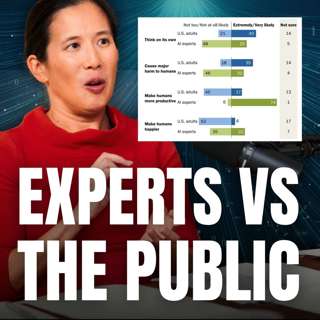
#228 – Eileen Yam on how we're completely out of touch with what the public thinks about AI

#228 – Eileen Yam on how we're completely out of touch with what the public thinks about AI

If you work in AI, you probably think it’s going to boost productivity, create wealth, advance science, and improve your life. If you’re a member of the American public, you probably strongly disagree...

20 Nov 20251h 43min
OpenAI: The nonprofit refuses to be killed (with Tyler Whitmer)

OpenAI: The nonprofit refuses to be killed (with Tyler Whitmer)

Last December, the OpenAI business put forward a plan to completely sideline its nonprofit board. But two state attorneys general have now blocked that effort and kept that board very much alive and k...

11 Nov 20251h 56min
#227 – Helen Toner on the geopolitics of AGI in China and the Middle East

#227 – Helen Toner on the geopolitics of AGI in China and the Middle East

With the US racing to develop AGI and superintelligence ahead of China, you might expect the two countries to be negotiating how they’ll deploy AI, including in the military, without coming to blows. ...

5 Nov 20252h 20min

#226 – Holden Karnofsky on unexploited opportunities to make AI safer — and all his AGI takes

#226 – Holden Karnofsky on unexploited opportunities to make AI safer — and all his AGI takes

For years, working on AI safety usually meant theorising about the ‘alignment problem’ or trying to convince other people to give a damn. If you could find any way to help, the work was frustrating an...

30 Okt 20254h 30min

#225 – Daniel Kokotajlo on what a hyperspeed robot economy might look like

#225 – Daniel Kokotajlo on what a hyperspeed robot economy might look like

When Daniel Kokotajlo talks to security experts at major AI labs, they tell him something chilling: “Of course we’re probably penetrated by the CCP already, and if they really wanted something, they c...

27 Okt 20252h 12min

Populärt inom Utbildning

rss-bara-en-till-om-missbruk-medberoende-2
historiepodden-se
det-skaver
nu-blir-det-historia
allt-du-velat-veta
johannes-hansen-podcast
harrisons-dramatiska-historia
not-fanny-anymore
roda-vita-rosen
rss-viktmedicinpodden
sektledare
rss-foraldramotet-bring-lagercrantz
alska-oss
i-vantan-pa-katastrofen
sa-in-i-sjalen
rss-max-tant-med-max-villman
rss-om-vi-ska-vara-arliga
rss-sjalsligt-avkladd
rss-basta-livet
sex-pa-riktigt-med-marika-smith