#191 (Part 2) – Carl Shulman on government and society after AGI

#191 (Part 2) – Carl Shulman on government and society after AGI

This is the second part of our marathon interview with Carl Shulman. The first episode is on the economy and national security after AGI. You can listen to them in either order!

If we develop artificial general intelligence that's reasonably aligned with human goals, it could put a fast and near-free superhuman advisor in everyone's pocket. How would that affect culture, government, and our ability to act sensibly and coordinate together?

It's common to worry that AI advances will lead to a proliferation of misinformation and further disconnect us from reality. But in today's conversation, AI expert Carl Shulman argues that this underrates the powerful positive applications the technology could have in the public sphere.

Links to learn more, highlights, and full transcript.

As Carl explains, today the most important questions we face as a society remain in the "realm of subjective judgement" -- without any "robust, well-founded scientific consensus on how to answer them." But if AI 'evals' and interpretability advance to the point that it's possible to demonstrate which AI models have truly superhuman judgement and give consistently trustworthy advice, society could converge on firm or 'best-guess' answers to far more cases.

If the answers are publicly visible and confirmable by all, the pressure on officials to act on that advice could be great.

That's because when it's hard to assess if a line has been crossed or not, we usually give people much more discretion. For instance, a journalist inventing an interview that never happened will get fired because it's an unambiguous violation of honesty norms — but so long as there's no universally agreed-upon standard for selective reporting, that same journalist will have substantial discretion to report information that favours their preferred view more often than that which contradicts it.

Similarly, today we have no generally agreed-upon way to tell when a decision-maker has behaved irresponsibly. But if experience clearly shows that following AI advice is the wise move, not seeking or ignoring such advice could become more like crossing a red line — less like making an understandable mistake and more like fabricating your balance sheet.

To illustrate the possible impact, Carl imagines how the COVID pandemic could have played out in the presence of AI advisors that everyone agrees are exceedingly insightful and reliable. But in practice, a significantly superhuman AI might suggest novel approaches better than any we can suggest.

In the past we've usually found it easier to predict how hard technologies like planes or factories will change than to imagine the social shifts that those technologies will create — and the same is likely happening for AI.

Carl Shulman and host Rob Wiblin discuss the above, as well as:

  • The risk of society using AI to lock in its values.
  • The difficulty of preventing coups once AI is key to the military and police.
  • What international treaties we need to make this go well.
  • How to make AI superhuman at forecasting the future.
  • Whether AI will be able to help us with intractable philosophical questions.
  • Whether we need dedicated projects to make wise AI advisors, or if it will happen automatically as models scale.
  • Why Carl doesn't support AI companies voluntarily pausing AI research, but sees a stronger case for binding international controls once we're closer to 'crunch time.'
  • Opportunities for listeners to contribute to making the future go well.

Chapters:

  • Cold open (00:00:00)
  • Rob’s intro (00:01:16)
  • The interview begins (00:03:24)
  • COVID-19 concrete example (00:11:18)
  • Sceptical arguments against the effect of AI advisors (00:24:16)
  • Value lock-in (00:33:59)
  • How democracies avoid coups (00:48:08)
  • Where AI could most easily help (01:00:25)
  • AI forecasting (01:04:30)
  • Application to the most challenging topics (01:24:03)
  • How to make it happen (01:37:50)
  • International negotiations and coordination and auditing (01:43:54)
  • Opportunities for listeners (02:00:09)
  • Why Carl doesn't support enforced pauses on AI research (02:03:58)
  • How Carl is feeling about the future (02:15:47)
  • Rob’s outro (02:17:37)


Producer and editor: Keiran Harris

Audio engineering team: Ben Cordell, Simon Monsour, Milo McGuire, and Dominic Armstrong

Transcriptions: Katy Moore

Avsnitt(324)

#230 – Dean Ball on how AI is a huge deal — but we shouldn’t regulate it yet

#230 – Dean Ball on how AI is a huge deal — but we shouldn’t regulate it yet

Former White House staffer Dean Ball thinks it's very likely some form of 'superintelligence' arrives in under 20 years. He thinks AI being used for bioweapon research is "a real threat model, obvious...

10 Dec 20252h 54min

#229 – Marius Hobbhahn on the race to solve AI scheming before models go superhuman

#229 – Marius Hobbhahn on the race to solve AI scheming before models go superhuman

We often worry about AI models “hallucinating” or making honest mistakes. But what happens when a model knows the truth, but decides to deceive you anyway to achieve a goal of its own? This isn’t sci-...

3 Dec 20253h 3min

Rob & Luisa chat kids, the 2016 fertility crash, and how the 50s invented parenting that makes us miserable

Rob & Luisa chat kids, the 2016 fertility crash, and how the 50s invented parenting that makes us miserable

Global fertility rates aren’t just falling: the rate of decline is accelerating. From 2006 to 2016, fertility dropped gradually, but since 2016 the rate of decline has increased 4.5-fold. In many weal...

25 Nov 20251h 59min
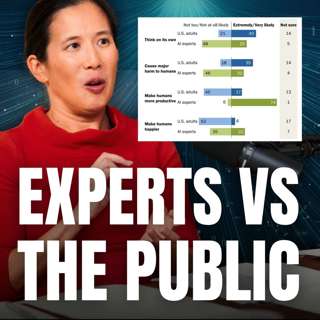
#228 – Eileen Yam on how we're completely out of touch with what the public thinks about AI

#228 – Eileen Yam on how we're completely out of touch with what the public thinks about AI

If you work in AI, you probably think it’s going to boost productivity, create wealth, advance science, and improve your life. If you’re a member of the American public, you probably strongly disagree...

20 Nov 20251h 43min

OpenAI: The nonprofit refuses to be killed (with Tyler Whitmer)

OpenAI: The nonprofit refuses to be killed (with Tyler Whitmer)

Last December, the OpenAI business put forward a plan to completely sideline its nonprofit board. But two state attorneys general have now blocked that effort and kept that board very much alive and k...

11 Nov 20251h 56min
#227 – Helen Toner on the geopolitics of AGI in China and the Middle East

#227 – Helen Toner on the geopolitics of AGI in China and the Middle East

With the US racing to develop AGI and superintelligence ahead of China, you might expect the two countries to be negotiating how they’ll deploy AI, including in the military, without coming to blows. ...

5 Nov 20252h 20min

#226 – Holden Karnofsky on unexploited opportunities to make AI safer — and all his AGI takes

#226 – Holden Karnofsky on unexploited opportunities to make AI safer — and all his AGI takes

For years, working on AI safety usually meant theorising about the ‘alignment problem’ or trying to convince other people to give a damn. If you could find any way to help, the work was frustrating an...

30 Okt 20254h 30min

#225 – Daniel Kokotajlo on what a hyperspeed robot economy might look like

#225 – Daniel Kokotajlo on what a hyperspeed robot economy might look like

When Daniel Kokotajlo talks to security experts at major AI labs, they tell him something chilling: “Of course we’re probably penetrated by the CCP already, and if they really wanted something, they c...

27 Okt 20252h 12min

Populärt inom Utbildning

historiepodden-se
rss-bara-en-till-om-missbruk-medberoende-2
det-skaver
alska-oss
harrisons-dramatiska-historia
nu-blir-det-historia
rss-viktmedicinpodden
sektledare
johannes-hansen-podcast
not-fanny-anymore
allt-du-velat-veta
rss-sjalsligt-avkladd
roda-vita-rosen
i-vantan-pa-katastrofen
rss-max-tant-med-max-villman
sa-in-i-sjalen
rss-om-vi-ska-vara-arliga
rikatillsammans-om-privatekonomi-rikedom-i-livet
polisutbildningspodden
rss-basta-livet