

#197 – Nick Joseph on whether Anthropic's AI safety policy is up to the task

#197 – Nick Joseph on whether Anthropic's AI safety policy is up to the task

The three biggest AI companies — Anthropic, OpenAI, and DeepMind — have now all released policies designed to make their AI models less likely to go rogue or cause catastrophic damage as they approach, and eventually exceed, human capabilities. Are they good enough?

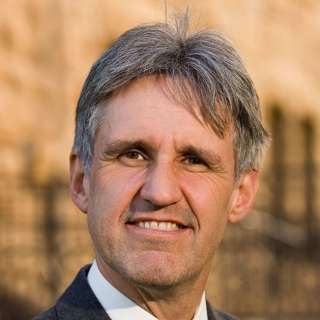
That’s what host Rob Wiblin tries to hash out in this interview (recorded May 30) with Nick Joseph — one of the original cofounders of Anthropic, its current head of training, and a big fan of Anthropic’s “responsible scaling policy” (or “RSP”). Anthropic is the most safety focused of the AI companies, known for a culture that treats the risks of its work as deadly serious.

Links to learn more, highlights, video, and full transcript.

As Nick explains, these scaling policies commit companies to dig into what new dangerous things a model can do — after it’s trained, but before it’s in wide use. The companies then promise to put in place safeguards they think are sufficient to tackle those capabilities before availability is extended further. For instance, if a model could significantly help design a deadly bioweapon, then its weights need to be properly secured so they can’t be stolen by terrorists interested in using it that way.

As capabilities grow further — for example, if testing shows that a model could exfiltrate itself and spread autonomously in the wild — then new measures would need to be put in place to make that impossible, or demonstrate that such a goal can never arise.

Nick points out what he sees as the biggest virtues of the RSP approach, and then Rob pushes him on some of the best objections he’s found to RSPs being up to the task of keeping AI safe and beneficial. The two also discuss whether it's essential to eventually hand over operation of responsible scaling policies to external auditors or regulatory bodies, if those policies are going to be able to hold up against the intense commercial pressures that might end up arrayed against them.

In addition to all of that, Nick and Rob talk about:

  • What Nick thinks are the current bottlenecks in AI progress: people and time (rather than data or compute).
  • What it’s like working in AI safety research at the leading edge, and whether pushing forward capabilities (even in the name of safety) is a good idea.
  • What it’s like working at Anthropic, and how to get the skills needed to help with the safe development of AI.

And as a reminder, if you want to let us know your reaction to this interview, or send any other feedback, our inbox is always open at podcast@80000hours.org.

Chapters:

  • Cold open (00:00:00)
  • Rob’s intro (00:01:00)
  • The interview begins (00:03:44)
  • Scaling laws (00:04:12)
  • Bottlenecks to further progress in making AIs helpful (00:08:36)
  • Anthropic’s responsible scaling policies (00:14:21)
  • Pros and cons of the RSP approach for AI safety (00:34:09)
  • Alternatives to RSPs (00:46:44)
  • Is an internal audit really the best approach? (00:51:56)
  • Making promises about things that are currently technically impossible (01:07:54)
  • Nick’s biggest reservations about the RSP approach (01:16:05)
  • Communicating “acceptable” risk (01:19:27)
  • Should Anthropic’s RSP have wider safety buffers? (01:26:13)
  • Other impacts on society and future work on RSPs (01:34:01)
  • Working at Anthropic (01:36:28)
  • Engineering vs research (01:41:04)
  • AI safety roles at Anthropic (01:48:31)
  • Should concerned people be willing to take capabilities roles? (01:58:20)
  • Recent safety work at Anthropic (02:10:05)
  • Anthropic culture (02:14:35)
  • Overrated and underrated AI applications (02:22:06)
  • Rob’s outro (02:26:36)

Producer and editor: Keiran Harris
Audio engineering by Ben Cordell, Milo McGuire, Simon Monsour, and Dominic Armstrong
Video engineering: Simon Monsour
Transcriptions: Katy Moore

Avsnitt(326)

#132 Classic episode – Nova DasSarma on why information security may be critical to the safe development of AI systems

#132 Classic episode – Nova DasSarma on why information security may be critical to the safe development of AI systems

If a business has spent $100 million developing a product, it’s a fair bet that they don’t want it stolen in two seconds and uploaded to the web where anyone can use it for free.This problem exists in...

31 Jan 20252h 41min

#138 Classic episode – Sharon Hewitt Rawlette on why pleasure and pain are the only things that intrinsically matter

#138 Classic episode – Sharon Hewitt Rawlette on why pleasure and pain are the only things that intrinsically matter

What in the world is intrinsically good — good in itself even if it has no other effects? Over the millennia, people have offered many answers: joy, justice, equality, accomplishment, loving god, wisd...

22 Jan 20252h 25min
#134 Classic episode – Ian Morris on what big-picture history teaches us

#134 Classic episode – Ian Morris on what big-picture history teaches us

Wind back 1,000 years and the moral landscape looks very different to today. Most farming societies thought slavery was natural and unobjectionable, premarital sex was an abomination, women should obe...

15 Jan 20253h 40min

#140 Classic episode – Bear Braumoeller on the case that war isn’t in decline

#140 Classic episode – Bear Braumoeller on the case that war isn’t in decline

Is war in long-term decline? Steven Pinker's The Better Angels of Our Nature brought this previously obscure academic question to the centre of public debate, and pointed to rates of death in war to a...

8 Jan 20252h 48min

2024 Highlightapalooza! (The best of The 80,000 Hours Podcast this year)

2024 Highlightapalooza! (The best of The 80,000 Hours Podcast this year)

"A shameless recycling of existing content to drive additional audience engagement on the cheap… or the single best, most valuable, and most insight-dense episode we put out in the entire year, depend...

27 Dec 20242h 50min

#211 – Sam Bowman on why housing still isn't fixed and what would actually work

#211 – Sam Bowman on why housing still isn't fixed and what would actually work

Rich countries seem to find it harder and harder to do anything that creates some losers. People who don’t want houses, offices, power stations, trains, subway stations (or whatever) built in their ar...

19 Dec 20243h 25min

#210 – Cameron Meyer Shorb on dismantling the myth that we can’t do anything to help wild animals

#210 – Cameron Meyer Shorb on dismantling the myth that we can’t do anything to help wild animals

"I really don’t want to give the impression that I think it is easy to make predictable, controlled, safe interventions in wild systems where there are many species interacting. I don’t think it’s eas...

29 Nov 20243h 21min

#209 – Rose Chan Loui on OpenAI’s gambit to ditch its nonprofit

#209 – Rose Chan Loui on OpenAI’s gambit to ditch its nonprofit

One OpenAI critic calls it “the theft of at least the millennium and quite possibly all of human history.” Are they right?Back in 2015 OpenAI was but a humble nonprofit. That nonprofit started a for-p...

27 Nov 20241h 22min

Populärt inom Utbildning

historiepodden-se
rss-bara-en-till-om-missbruk-medberoende-2
det-skaver
alska-oss
harrisons-dramatiska-historia
nu-blir-det-historia
not-fanny-anymore
roda-vita-rosen
johannes-hansen-podcast
sektledare
rss-viktmedicinpodden
sa-in-i-sjalen
i-vantan-pa-katastrofen
allt-du-velat-veta
rss-max-tant-med-max-villman
rss-sjalsligt-avkladd
rss-basta-livet
rikatillsammans-om-privatekonomi-rikedom-i-livet
rss-traningsklubben
sex-pa-riktigt-med-marika-smith