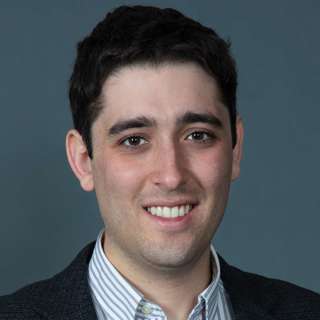

#200 – Ezra Karger on what superforecasters and experts think about existential risks

#200 – Ezra Karger on what superforecasters and experts think about existential risks

"It’s very hard to find examples where people say, 'I’m starting from this point. I’m starting from this belief.' So we wanted to make that very legible to people. We wanted to say, 'Experts think this; accurate forecasters think this.' They might both be wrong, but we can at least start from here and figure out where we’re coming into a discussion and say, 'I am much less concerned than the people in this report; or I am much more concerned, and I think people in this report were missing major things.' But if you don’t have a reference set of probabilities, I think it becomes much harder to talk about disagreement in policy debates in a space that’s so complicated like this." —Ezra Karger

In today’s episode, host Luisa Rodriguez speaks to Ezra Karger — research director at the Forecasting Research Institute — about FRI’s recent Existential Risk Persuasion Tournament to come up with estimates of a range of catastrophic risks.

Links to learn more, highlights, and full transcript.

They cover:

  • How forecasting can improve our understanding of long-term catastrophic risks from things like AI, nuclear war, pandemics, and climate change.
  • What the Existential Risk Persuasion Tournament (XPT) is, how it was set up, and the results.
  • The challenges of predicting low-probability, high-impact events.
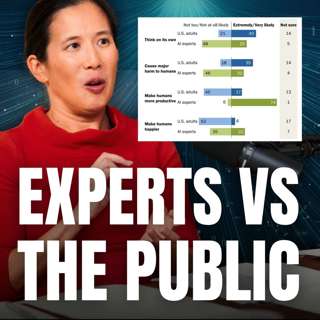
  • Why superforecasters’ estimates of catastrophic risks seem so much lower than experts’, and which group Ezra puts the most weight on.
  • The specific underlying disagreements that superforecasters and experts had about how likely catastrophic risks from AI are.
  • Why Ezra thinks forecasting tournaments can help build consensus on complex topics, and what he wants to do differently in future tournaments and studies.
  • Recent advances in the science of forecasting and the areas Ezra is most excited about exploring next.
  • Whether large language models could help or outperform human forecasters.
  • How people can improve their calibration and start making better forecasts personally.
  • Why Ezra thinks high-quality forecasts are relevant to policymakers, and whether they can really improve decision-making.
  • And plenty more.

Chapters:

  • Cold open (00:00:00)
  • Luisa’s intro (00:01:07)
  • The interview begins (00:02:54)
  • The Existential Risk Persuasion Tournament (00:05:13)
  • Why is this project important? (00:12:34)
  • How was the tournament set up? (00:17:54)
  • Results from the tournament (00:22:38)
  • Risk from artificial intelligence (00:30:59)
  • How to think about these numbers (00:46:50)
  • Should we trust experts or superforecasters more? (00:49:16)
  • The effect of debate and persuasion (01:02:10)
  • Forecasts from the general public (01:08:33)
  • How can we improve people’s forecasts? (01:18:59)
  • Incentives and recruitment (01:26:30)
  • Criticisms of the tournament (01:33:51)
  • AI adversarial collaboration (01:46:20)
  • Hypotheses about stark differences in views of AI risk (01:51:41)
  • Cruxes and different worldviews (02:17:15)
  • Ezra’s experience as a superforecaster (02:28:57)
  • Forecasting as a research field (02:31:00)
  • Can large language models help or outperform human forecasters? (02:35:01)
  • Is forecasting valuable in the real world? (02:39:11)
  • Ezra’s book recommendations (02:45:29)
  • Luisa's outro (02:47:54)


Producer: Keiran Harris
Audio engineering: Dominic Armstrong, Ben Cordell, Milo McGuire, and Simon Monsour
Content editing: Luisa Rodriguez, Katy Moore, and Keiran Harris
Transcriptions: Katy Moore

Avsnitt(317)

#220 – Ryan Greenblatt on the 4 most likely ways for AI to take over, and the case for and against AGI in <8 years

#220 – Ryan Greenblatt on the 4 most likely ways for AI to take over, and the case for and against AGI in <8 years

Ryan Greenblatt — lead author on the explosive paper “Alignment faking in large language models” and chief scientist at Redwood Research — thinks there’s a 25% chance that within four years, AI will b...

8 Juli 20252h 50min

#219 – Toby Ord on graphs AI companies would prefer you didn't (fully) understand

#219 – Toby Ord on graphs AI companies would prefer you didn't (fully) understand

The era of making AI smarter just by making it bigger is ending. But that doesn’t mean progress is slowing down — far from it. AI models continue to get much more powerful, just using very different m...

24 Juni 20252h 48min

#218 – Hugh White on why Trump is abandoning US hegemony – and that’s probably good

#218 – Hugh White on why Trump is abandoning US hegemony – and that’s probably good

For decades, US allies have slept soundly under the protection of America’s overwhelming military might. Donald Trump — with his threats to ditch NATO, seize Greenland, and abandon Taiwan — seems hell...

12 Juni 20252h 48min

#217 – Beth Barnes on the most important graph in AI right now — and the 7-month rule that governs its progress

#217 – Beth Barnes on the most important graph in AI right now — and the 7-month rule that governs its progress

AI models today have a 50% chance of successfully completing a task that would take an expert human one hour. Seven months ago, that number was roughly 30 minutes — and seven months before that, 15 mi...

2 Juni 20253h 47min

Beyond human minds: The bewildering frontier of consciousness in insects, AI, and more

Beyond human minds: The bewildering frontier of consciousness in insects, AI, and more

What if there’s something it’s like to be a shrimp — or a chatbot?For centuries, humans have debated the nature of consciousness, often placing ourselves at the very top. But what about the minds of o...

23 Maj 20253h 34min

Don’t believe OpenAI’s “nonprofit” spin (emergency pod with Tyler Whitmer)

Don’t believe OpenAI’s “nonprofit” spin (emergency pod with Tyler Whitmer)

OpenAI’s recent announcement that its nonprofit would “retain control” of its for-profit business sounds reassuring. But this seemingly major concession, celebrated by so many, is in itself largely me...

15 Maj 20251h 12min

The case for and against AGI by 2030 (article by Benjamin Todd)

The case for and against AGI by 2030 (article by Benjamin Todd)

More and more people have been saying that we might have AGI (artificial general intelligence) before 2030. Is that really plausible? This article by Benjamin Todd looks into the cases for and against...

12 Maj 20251h

Emergency pod: Did OpenAI give up, or is this just a new trap? (with Rose Chan Loui)

Emergency pod: Did OpenAI give up, or is this just a new trap? (with Rose Chan Loui)

When attorneys general intervene in corporate affairs, it usually means something has gone seriously wrong. In OpenAI’s case, it appears to have forced a dramatic reversal of the company’s plans to si...

8 Maj 20251h 2min

Populärt inom Utbildning

rss-bara-en-till-om-missbruk-medberoende-2
historiepodden-se
det-skaver
nu-blir-det-historia
harrisons-dramatiska-historia
johannes-hansen-podcast
rss-sjalsligt-avkladd
alska-oss
allt-du-velat-veta
sektledare
not-fanny-anymore
roda-vita-rosen
sa-in-i-sjalen
rss-max-tant-med-max-villman
rss-om-vi-ska-vara-arliga
rikatillsammans-om-privatekonomi-rikedom-i-livet
i-vantan-pa-katastrofen
sektpodden
psykologsnack
rss-basta-livet