
The future of space: congested and contested

The future of space: congested and contested

Space might be a big place but the United Nations regards it as ‘congested, contested and competitive’.

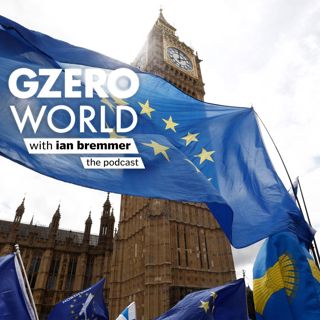
This latest episode of Next Giant Leap, a podcast produced by GZERO Media in partnership with the space company MDA Space, explores the threats and tensions as space becomes busier and of greater strategic importance for an increasing number of countries.

“We have to avoid, by all means, that it becomes a Wild West,” says Tanja Masson-Zwaan, a space law expert at Leiden University in the Netherlands. She adds, “We have regulations, laws and treaties that have been in place for the last fifty years, but we need more to govern this new frontier of space utilization, because the rules that we have are basic principles and do not go into the details.”

Satellites are now being deployed to Low Earth Orbit at a rate of thousands every year. This zone of space is already littered with old defunct satellites and the remains of discarded sections of rockets which have accumulated over more than five decades. The risk of collisions is increasing, raising fears of a runaway cascade of space debris.

Tests of anti-satellite (ASAT) weapons have showered still more debris into Low Earth Orbit. Since 2007, China, the United States, India and Russia have conducted ASAT tests. Last year the United States announced its own moratorium on ASAT tests and, through a United Nations resolution, it has called for other nations to follow suit. So far China, Russia and India have not signed up. So is space set to become a new theater for conflict and weapons proliferation?

“Look at how satellites have become embedded in our way of life,” says Kevin Whale, senior director of defense strategy at MDA Space. “If we wreck space, it’s almost one step down from nuclear catastrophe”.

Within a few years, a new phase of the space race will begin. Both the United States and China will be competing to get people to the moon and exploit its resources, particularly water ice in craters at the lunar south pole.

According to Scott Pace, director of the Space Policy Institute at George Washington University, “The Outer Space Treaty says space is the province of all mankind, meaning it's open to usage really by everybody. On the other hand, the principles say we should avoid harmful interference. And so the question is, how do we go about balancing those two imperatives: open to everybody but avoid harmful interference?”

Host: Kevin Fong

Guests: Tanja Masson-Zwaan, Scott Pace, Kevin Whale

Subscribe to the GZERO World with Ian Bremmer Podcast on Apple Podcasts, Spotify, or your preferred podcast platform, to receive new episodes as soon as they're published.


Hosted by Simplecast, an AdsWizz company. See pcm.adswizz.com for information about our collection and use of personal data for advertising.

Det här avsnittet är hämtat från ett öppet RSS-flöde och publiceras inte av Podme. Det kan innehålla reklam.

Avsnitt(437)

The human cost of Iran's war, with Yeganeh Torbati

The human cost of Iran's war, with Yeganeh Torbati

Iran’s government emerged from the war with a powerful new story to tell: it withstood attacks from the United States and Israel, kept its grip on power, and gained fresh leverage in the region. But t...

11 Juli 22min

America at 250: Patriotism, Trump, and America's future, with Bill Maher

America at 250: Patriotism, Trump, and America's future, with Bill Maher

America turns 250 at a time when even celebrating the country can feel political. In the latest episode of the GZERO World podcast, Ian Bremmer sits down with comedian and political commentator Bill M...

4 Juli 20min

The future of the Democratic party, with Josh Shapiro

The future of the Democratic party, with Josh Shapiro

What can Democrats learn from winning in America's ultimate swing state? On the latest episode of the GZERO World podcast, Ian Bremmer sits down with Pennsylvania Governor Josh Shapiro to discuss the ...

20 Juni 23min

World Cup politics, with the Financial Times' Simon Kuper

World Cup politics, with the Financial Times' Simon Kuper

The World Cup descends on North America this week, bringing with it billions of viewers, billions of dollars, and no shortage of political controversy. But according World Cup Fever author Simon Kuper...

12 Juni 24min

The Supreme Court's biggest tests ahead, with Emily Bazelon

The Supreme Court's biggest tests ahead, with Emily Bazelon

From birthright citizenship to the independence of federal agencies, the Supreme Court is poised to decide a series of cases that could redefine the balance of power in Washington. Yale legal scholar ...

6 Juni 25min

Winners and losers of the Iran war, with Kori Schake

Winners and losers of the Iran war, with Kori Schake

Operation Epic Fury may be over, but the Iran war is far from resolved. On this week's episode, American Enterprise Institute Kori Schake joins Ian Bremmer to discuss the conflict's global ripple effe...

16 Maj 21min

How AI is transforming warfare and the US military with Katrina Manson

How AI is transforming warfare and the US military with Katrina Manson

Ian Bremmer's guest this week is author and Bloomberg defense tech reporter Katrina Manson, who spent years reporting on Project Maven for her new book on the Pentagon's AI push. The program launched ...

9 Maj 36min

Cuba's Trump standoff and economic crisis with Michael Bustamante

Cuba's Trump standoff and economic crisis with Michael Bustamante

Historian Michael Bustamante joins Ian Bremmer to discuss Cuba's economic freefall, Trump's end game, and the hopes of Cuban Americans. This week, Ian Bremmer sits down with University of Miami histor...

25 Apr 24min

Populärt inom Politik & nyheter

svenska-fall
tv4-nyheterna-story
p3-krim
aftonbladet-krim
flashback-forever
aftonbladet-daily
de-fyras-gang
motiv
rss-krimstad
spar
rss-sanning-konsekvens
rss-vad-fan-hande
mannen-utan-spar
kungligt
grans
rss-expressen-dok
olyckan-inifran
rss-aftonbladet-krim
politiken
sydsvenskan-dok