Episode 894: DKA and HHS

Episode 894: DKA and HHS

Contributor: Ricky Dhaliwal, MD

Educational Pearls:

What are DKA and HHS?

  • DKA (Diabetic Ketoacidosis) and HHS (Hyperosmolar Hyperglycemic State) are both acute hyperglycemic states.

DKA

  • More common in type 1 diabetes.

  • Triggered by decreased circulating insulin.

    • The body needs energy but cannot use glucose because it can't get it into the cells.

    • This leads to increased metabolism of free fatty acids and the increased production of ketones.

    • The buildup of ketones causes acidosis.

    • The kidneys attempt to compensate for the acidosis by increasing diuresis.

  • These patients present as dry and altered, with sweet-smelling breath and Kussmaul (fast and deep) respirations.

HSS

  • More common in type 2 diabetes.

  • In this condition there is still enough circulating insulin to avoid the breakdown of fats for energy but not enough insulin to prevent hyperglycemia.

  • Serum glucose levels are very high – around 600 to 1200 mg/dl.

  • Also presents similarly to DKA with the patient being dry and altered.

Important labs to monitor

  • Serum glucose

  • Potassium

  • Phosphorus

  • Magnesium

  • Anion gap (Na - Cl - HCO3)

  • Renal function (Creatinine and BUN)

  • ABG/VBG for pH

  • Urinalysis and urine ketones by dipstick

Treatment

  • Identify the cause, i.e. Has the patient stopped taking their insulin?

  • Aggressive hydration with isotonic fluids.

    • Normal Saline (NS) vs Lactated Ringers (LR)?

      • LR might resolve the DKA/HHS faster with less risk of hypernatremia.

  • Should you bolus with insulin?

  • No, just start a drip.

    • 0.1-0.14 units per kg of insulin.

  • Make sure you have your potassium back before starting insulin as the insulin can shift the potassium into the cells and lead to dangerous hypokalemia.

  • Should you treat hyponatremia?

    • Make sure to correct for hyperglycemia before treating. This artificially depresses the sodium.

  • Should you give bicarb?

    • Replace if the pH < 6.9. Otherwise, it won't do anything to help.

  • Don't intubate, if the patient is breathing fast it is because they are compensating for their acidosis.

References

  1. Andrade-Castellanos, C. A., Colunga-Lozano, L. E., Delgado-Figueroa, N., & Gonzalez-Padilla, D. A. (2016). Subcutaneous rapid-acting insulin analogues for diabetic ketoacidosis. The Cochrane database of systematic reviews, 2016(1), CD011281. https://doi.org/10.1002/14651858.CD011281.pub2

  2. Chaithongdi, N., Subauste, J. S., Koch, C. A., & Geraci, S. A. (2011). Diagnosis and management of hyperglycemic emergencies. Hormones (Athens, Greece), 10(4), 250–260. https://doi.org/10.14310/horm.2002.1316

  3. Dhatariya, K. K., Glaser, N. S., Codner, E., & Umpierrez, G. E. (2020). Diabetic ketoacidosis. Nature reviews. Disease primers, 6(1), 40. https://doi.org/10.1038/s41572-020-0165-1

  4. Duhon, B., Attridge, R. L., Franco-Martinez, A. C., Maxwell, P. R., & Hughes, D. W. (2013). Intravenous sodium bicarbonate therapy in severely acidotic diabetic ketoacidosis. The Annals of pharmacotherapy, 47(7-8), 970–975. https://doi.org/10.1345/aph.1S014

  5. Modi, A., Agrawal, A., & Morgan, F. (2017). Euglycemic Diabetic Ketoacidosis: A Review. Current diabetes reviews, 13(3), 315–321. https://doi.org/10.2174/1573399812666160421121307

  6. Self, W. H., Evans, C. S., Jenkins, C. A., Brown, R. M., Casey, J. D., Collins, S. P., Coston, T. D., Felbinger, M., Flemmons, L. N., Hellervik, S. M., Lindsell, C. J., Liu, D., McCoin, N. S., Niswender, K. D., Slovis, C. M., Stollings, J. L., Wang, L., Rice, T. W., Semler, M. W., & Pragmatic Critical Care Research Group (2020). Clinical Effects of Balanced Crystalloids vs Saline in Adults With Diabetic Ketoacidosis: A Subgroup Analysis of Cluster Randomized Clinical Trials. JAMA network open, 3(11), e2024596. https://doi.org/10.1001/jamanetworkopen.2020.24596

Summarized by Jeffrey Olson MS2 | Edited by Meg Joyce & Jorge Chalit, OMSII

Avsnitt(1146)

Podcast #303: Lazarus Effect

Podcast #303: Lazarus Effect

Author: Dylan Luyten, M.D. Educational Pearls The Lazarus phenomenon is the delayed return of spontaneous circulation after cessation of CPR. A prospective study in Finland found 5 out of 840 patient...

9 Mars 20183min

Podcast #302: Flu

Podcast #302: Flu

Author: Jared Scott, M.D. Educational Pearls Flu is widespread throughout the US (through Jan 20th 2018). All age groups have seen surge in hospitalizations, but 65 + age group has seen the largest s...

7 Mars 20183min

Podcast #301: Biliary Pathology

Podcast #301: Biliary Pathology

Author: Don Stader, M.D. Educational Pearls Common pathologies include cholecystitis, choledocholithiasis, and in concerningly ascending cholangitis. Cholecystitis is obstruction at the cystic duct l...

5 Mars 20183min

Opioid Safety Summit: Admiral Winnefeld's Strategy to Wage War on the Opioid Epidemic

Opioid Safety Summit: Admiral Winnefeld's Strategy to Wage War on the Opioid Epidemic

Since the tragic overdose of his son, Admiral Winnefeld has developed an intriguing strategy on how to combat the Opioid Epidemic.

27 Feb 20180s

Dreamland in Denver Part VI: "Dreamland"

Dreamland in Denver Part VI: "Dreamland"

Sam Quinones, American journalist and author of the critically acclaimed book, Dreamland: The True Tale of America's Opiate Epidemic, shares the story of how he discovered the truth about the Opiate E...

16 Feb 201843min
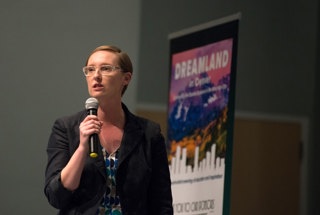
Dreamland in Denver Part V: "Tales from a Harm Reductionist"

Dreamland in Denver Part V: "Tales from a Harm Reductionist"

Lisa Raville, executive director of The Harm Reduction Action Center in Denver, shares tales from her perspective as a Harm Reductionist.

16 Feb 201810min
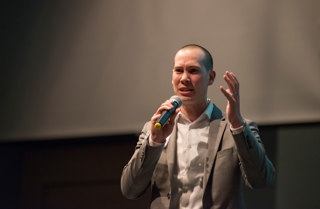
Dreamland in Denver Part IV: "Doing Harm: Medicine's Role in Creating the Opioid Crisis."

Dreamland in Denver Part IV: "Doing Harm: Medicine's Role in Creating the Opioid Crisis."

Emergency Medical Minute's very own Donald Stader, MD explains Medicine's contribution to the catastrophe that is the Opioid Epidemic.

16 Feb 201819min

Dreamland in Denver Part III:  "Opioid Mythbusters: 10 Fallacies that Fueled the Opiate Crisis"

Dreamland in Denver Part III: "Opioid Mythbusters: 10 Fallacies that Fueled the Opiate Crisis"

Dr. Robert Valuck, director of the Colorado Consortium, presents 10 fallacies that have fueled the Opioid Epidemic.

16 Feb 201819min

Populärt inom Vetenskap

p3-dystopia
dumma-manniskor
svd-nyhetsartiklar
allt-du-velat-veta
det-morka-psyket
kapitalet-en-podd-om-ekonomi
pojkmottagningen
sexet
rss-ufo-bortom-rimligt-tvivel
rss-vetenskapsradion-2
rss-vetenskapsradion
dumforklarat
halsorevolutionen
rss-broccolipodden-en-podcast-som-inte-handlar-om-broccoli
medicinvetarna
rss-experimentet
bildningspodden
vetenskapsradion
hacka-livet
intergalaktiskt