
Episode 894: DKA and HHS

Episode 894: DKA and HHS

Contributor: Ricky Dhaliwal, MD

Educational Pearls:

What are DKA and HHS?

  • DKA (Diabetic Ketoacidosis) and HHS (Hyperosmolar Hyperglycemic State) are both acute hyperglycemic states.

DKA

  • More common in type 1 diabetes.

  • Triggered by decreased circulating insulin.

    • The body needs energy but cannot use glucose because it can't get it into the cells.

    • This leads to increased metabolism of free fatty acids and the increased production of ketones.

    • The buildup of ketones causes acidosis.

    • The kidneys attempt to compensate for the acidosis by increasing diuresis.

  • These patients present as dry and altered, with sweet-smelling breath and Kussmaul (fast and deep) respirations.

HSS

  • More common in type 2 diabetes.

  • In this condition there is still enough circulating insulin to avoid the breakdown of fats for energy but not enough insulin to prevent hyperglycemia.

  • Serum glucose levels are very high – around 600 to 1200 mg/dl.

  • Also presents similarly to DKA with the patient being dry and altered.

Important labs to monitor

  • Serum glucose

  • Potassium

  • Phosphorus

  • Magnesium

  • Anion gap (Na - Cl - HCO3)

  • Renal function (Creatinine and BUN)

  • ABG/VBG for pH

  • Urinalysis and urine ketones by dipstick

Treatment

  • Identify the cause, i.e. Has the patient stopped taking their insulin?

  • Aggressive hydration with isotonic fluids.

    • Normal Saline (NS) vs Lactated Ringers (LR)?

      • LR might resolve the DKA/HHS faster with less risk of hypernatremia.

  • Should you bolus with insulin?

  • No, just start a drip.

    • 0.1-0.14 units per kg of insulin.

  • Make sure you have your potassium back before starting insulin as the insulin can shift the potassium into the cells and lead to dangerous hypokalemia.

  • Should you treat hyponatremia?

    • Make sure to correct for hyperglycemia before treating. This artificially depresses the sodium.

  • Should you give bicarb?

    • Replace if the pH < 6.9. Otherwise, it won't do anything to help.

  • Don't intubate, if the patient is breathing fast it is because they are compensating for their acidosis.

References

  1. Andrade-Castellanos, C. A., Colunga-Lozano, L. E., Delgado-Figueroa, N., & Gonzalez-Padilla, D. A. (2016). Subcutaneous rapid-acting insulin analogues for diabetic ketoacidosis. The Cochrane database of systematic reviews, 2016(1), CD011281. https://doi.org/10.1002/14651858.CD011281.pub2

  2. Chaithongdi, N., Subauste, J. S., Koch, C. A., & Geraci, S. A. (2011). Diagnosis and management of hyperglycemic emergencies. Hormones (Athens, Greece), 10(4), 250–260. https://doi.org/10.14310/horm.2002.1316

  3. Dhatariya, K. K., Glaser, N. S., Codner, E., & Umpierrez, G. E. (2020). Diabetic ketoacidosis. Nature reviews. Disease primers, 6(1), 40. https://doi.org/10.1038/s41572-020-0165-1

  4. Duhon, B., Attridge, R. L., Franco-Martinez, A. C., Maxwell, P. R., & Hughes, D. W. (2013). Intravenous sodium bicarbonate therapy in severely acidotic diabetic ketoacidosis. The Annals of pharmacotherapy, 47(7-8), 970–975. https://doi.org/10.1345/aph.1S014

  5. Modi, A., Agrawal, A., & Morgan, F. (2017). Euglycemic Diabetic Ketoacidosis: A Review. Current diabetes reviews, 13(3), 315–321. https://doi.org/10.2174/1573399812666160421121307

  6. Self, W. H., Evans, C. S., Jenkins, C. A., Brown, R. M., Casey, J. D., Collins, S. P., Coston, T. D., Felbinger, M., Flemmons, L. N., Hellervik, S. M., Lindsell, C. J., Liu, D., McCoin, N. S., Niswender, K. D., Slovis, C. M., Stollings, J. L., Wang, L., Rice, T. W., Semler, M. W., & Pragmatic Critical Care Research Group (2020). Clinical Effects of Balanced Crystalloids vs Saline in Adults With Diabetic Ketoacidosis: A Subgroup Analysis of Cluster Randomized Clinical Trials. JAMA network open, 3(11), e2024596. https://doi.org/10.1001/jamanetworkopen.2020.24596

Summarized by Jeffrey Olson MS2 | Edited by Meg Joyce & Jorge Chalit, OMSII

Avsnitt(1145)

Dreamland in Denver Part I: "No Family is S.A.F.E. ...Yet"

Dreamland in Denver Part I: "No Family is S.A.F.E. ...Yet"

Admiral James Winnefeld and Mary Winnefeld speak publicly for the first time about the tragic overdose of their son, Jonathon, and how 'No Family is S.A.F.E...yet'.

16 Feb 201818min

Podcast #300: Probiotics

Podcast #300: Probiotics

Author: Peter Bakes, M.D. Educational Pearls Probiotics are living bacteria that are taken as an oral supplement. Most of the data to support their use is in the prevention of antibiotic-related diar...

7 Feb 20187min

Podcast #299: Black Death, Lice, Math, and Pottery

Podcast #299: Black Death, Lice, Math, and Pottery

Author: Chris Holmes, M.D. Educational Pearls It's estimated that about 25 million people died during the Black Plaque. Researchers have confirmed this number by assessing how much old, broken potter...

6 Feb 20183min
Podcast #298: Seizures

Podcast #298: Seizures

Author: Sam Killian, M.D. Educational Pearls The availability of antiepileptic treatment has changed in the last 30 years. A recent study in JAMA followed 18,000 pts with epilepsy for 30 years to as...

2 Feb 20183min
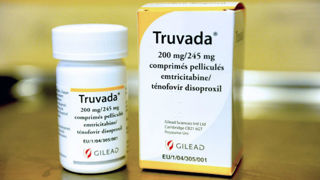
Podcast #297: Truvada

Podcast #297: Truvada

Educational Pearls Truvada (Emtricitabine/tenofovir) is a combination nucleotide reverse transcriptase inhibitor that can be used as pre-exposure prophylaxis (PrEP) for HIV. It has been shown to dram...

31 Jan 20184min
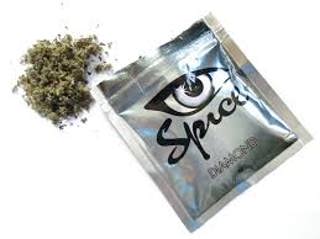
Podcast #296: Synthetic Cannabinoids

Podcast #296: Synthetic Cannabinoids

Author: Rachael Duncan, PharmD Educational Pearls A NEJM study report in July 2016 discussed a situation in New York during which 30 people became "zombie-like" after ingesting synthetic cannabinoids...

29 Jan 20185min
Podcast #295: UTI

Podcast #295: UTI

Author: Sam Killian, M.D. Educational Pearls Traditionally, UTI diagnosis has been dependent on urine culture, urinalysis and clinical symptoms. But a recent study casts some doubt on the utility of ...

26 Jan 20184min
Podcast #294: Rhabdomyolysis

Podcast #294: Rhabdomyolysis

Author: Michael Hunt, M.D. Educational Pearls Rhabdomyolysis is caused by the destruction of skeletal muscle that leads to the release of myoglobin, which causes renal failure. It presents with pain ...

22 Jan 20183min

Populärt inom Vetenskap

p3-dystopia
dumma-manniskor
svd-nyhetsartiklar
allt-du-velat-veta
det-morka-psyket
kapitalet-en-podd-om-ekonomi
pojkmottagningen
sexet
rss-ufo-bortom-rimligt-tvivel
rss-vetenskapsradion-2
rss-vetenskapsradion
dumforklarat
halsorevolutionen
rss-broccolipodden-en-podcast-som-inte-handlar-om-broccoli
medicinvetarna
rss-experimentet
bildningspodden
vetenskapsradion
hacka-livet
intergalaktiskt