Episode 918: Automated Blood Pressure Cuffs

Episode 918: Automated Blood Pressure Cuffs

Contributor: Aaron Lessen, MD

Educational Pearls:

How does an automated blood pressure cuff work?

  • Automated blood pressure cuffs work differently than taking a manual blood pressure.

  • While taking a manual blood pressure, one typically listens for Korotkoff sounds (turbulent flow) while slowly deflating the cuff.

  • An automatic blood pressure cuff only senses the pressure in the cuff itself and specifically pays attention to oscillations in the pressure caused by when the pressure of the cuff is between the systolic (heart squeezing) and diastolic (heart relaxed) pressures.

  • These oscillations are at a maximum when the pressure in the cuff matches the mean arterial pressure (MAP) and therefore the machines are most accurate at reporting the MAP.

  • The machines then use the MAP and other information about the oscillations to estimate the systolic and diastolic pressures, which are less accurate.

What should you do if you need more accurate systolic and diastolic blood pressures?

  • Take a manual blood pressure.

  • Get an arterial-line (a-line), which provides continuous data for the blood pressure at the end of a catheter.

What happens if the cuff is too big or too small for the patient?

  • If the cuff is too small it will overestimate the pressure.

  • If the cuff is too large it will underestimate the pressure.

What should you do if the cuff cycles a bunch of times before reporting a blood pressure?

  • It probably isn't very accurate so consider another method.

Bonus fact!

  • The MAP is not directly in the middle of the systolic and diastolic pressures but is weighted towards the diastolic pressure. The MAP can be calculated by adding two-thirds of the diastolic pressure to one third of the systolic pressure. For example if the BP is 120/90 the MAP is 100 mmHg.

References

  1. Benmira, A., Perez-Martin, A., Schuster, I., Aichoun, I., Coudray, S., Bereksi-Reguig, F., & Dauzat, M. (2016). From Korotkoff and Marey to automatic non-invasive oscillometric blood pressure measurement: does easiness come with reliability?. Expert review of medical devices, 13(2), 179–189. https://doi.org/10.1586/17434440.2016.1128821

  2. Liu, J., Li, Y., Li, J., Zheng, D., & Liu, C. (2022). Sources of automatic office blood pressure measurement error: a systematic review. Physiological measurement, 43(9), 10.1088/1361-6579/ac890e. https://doi.org/10.1088/1361-6579/ac890e

  3. Vilaplana J. M. (2006). Blood pressure measurement. Journal of renal care, 32(4), 210–213. https://doi.org/10.1111/j.1755-6686.2006.tb00025.x

Summarized by Jeffrey Olson, MS3 | Edited by Meg Joyce, MS1 & Jorge Chalit, OMS3

Donate: https://emergencymedicalminute.org/donate/

Avsnitt(1145)

Podcast # 390: Haloperidol for Pain

Podcast # 390: Haloperidol for Pain

Author: Gretchen Hinson, MD Educational Pearls: Reasonable approach of haloperidol 10 mg IM (or 5 mg IV) for pain relief in opioid-dependent patients; can repeat once Chronic opioid use results in ...

10 Okt 20185min

Podcast #389: BRUE

Podcast #389: BRUE

Educational Pearls: BRUE (Brief Resolved Unexplained Event) replaces what was previously called ALTE BRUE describes an event in a child less than one year of age with one or more of the following...

8 Okt 20184min
Podcast #388: Antibiotics for Appendicitis

Podcast #388: Antibiotics for Appendicitis

Author: Aaron Lessen, MD Educational Pearls: 5-year follow up study on antibiotic treatment for uncomplicated appendicitis showed 39.1% recurrence rate requiring appendectomy by 5 years Nearly 6...

5 Okt 20182min
Podcast #387: Fluoroquinolones are Perfectly Safe?

Podcast #387: Fluoroquinolones are Perfectly Safe?

Author: Don Stader, MD Educational Pearls: Fluoroquinolones can cause connective tissue disruption leading not only to tendon rupture but also aortic dissection Retrospective study from Taiwan s...

3 Okt 20183min

Podcast #386: Respecting Transgender Patients

Podcast #386: Respecting Transgender Patients

Author: Kasey Champion, MD Educational Pearls: Transgender populations are frequent victims of discrimination in healthcare Ask transgender patients what their preferred pronoun is It is somet...

1 Okt 20183min
Podcast #385: Probiotics

Podcast #385: Probiotics

Author: John Winkler, MD Educational Pearls: Probiotics are bacteria that are ingested to promote gut health but recent research casts doubt on their effectiveness. Recent study suggests that most...

28 Sep 20182min
Podcast #384: Don't stab a PTA?

Podcast #384: Don't stab a PTA?

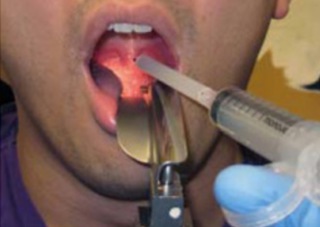
Author: Don Stader, MD Educational Pearls: Recent study suggests we may not need to drain uncomplicated peritonsillar abscesses Patients who received medical therapy alone had no difference in c...

26 Sep 20183min
Podcast #383: Prehospital Tubes

Podcast #383: Prehospital Tubes

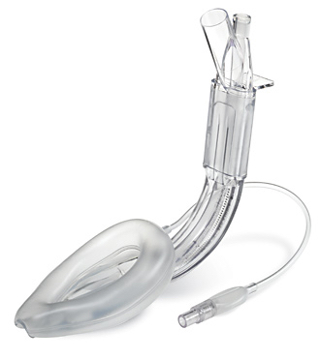
Author: Sam Killian, MD Educational Pearls: Two high quality randomized control trials published in 2018 demonstrated no difference in mortality or neurologic outcomes when using a supraglottic ai...

24 Sep 20184min

Populärt inom Vetenskap

p3-dystopia
dumma-manniskor
svd-nyhetsartiklar
allt-du-velat-veta
det-morka-psyket
kapitalet-en-podd-om-ekonomi
pojkmottagningen
sexet
rss-ufo-bortom-rimligt-tvivel
rss-vetenskapsradion-2
rss-vetenskapsradion
dumforklarat
halsorevolutionen
rss-broccolipodden-en-podcast-som-inte-handlar-om-broccoli
medicinvetarna
rss-experimentet
bildningspodden
vetenskapsradion
hacka-livet
intergalaktiskt